⚡TL; DR — MicroXRF and LIBS are both valuable methods for analyzing critical minerals, but they serve different purposes. LIBS is useful for quick, localized testing and detecting light elements like lithium, which are hard to measure with X-ray fluorescence. However, LIBS is micro-destructive and can be influenced by matrix effects, surface conditions, and calibration challenges.
MicroXRF excels when non-destructive, spatially resolved mineral chemistry is needed. It enables mapping of elemental distributions across thin sections, polished mounts, drill cores, ores, tailings, and process materials while keeping the sample intact for further analysis.
For critical minerals, the key question often isn’t just about element presence but about its precise location, the mineral phase it’s in, and its distribution within the sample. That’s where microXRF offers exceptional insights.
In summary: LIBS is a powerful point-analysis tool, especially for lithium, while microXRF provides the comprehensive chemical and mineralogical context necessary to better understand critical mineral systems and inform more intelligent analytical choices.
Estimated read time: ~8-10 minutes.
The critical minerals economy has changed the expectations placed on analytical laboratories. It is no longer enough to identify whether a strategic element is present in a geological sample. Researchers, mining companies, and advanced materials teams increasingly need to know where that element resides, which mineral phase hosts it, how it is distributed, and whether it is associated with recoverable or economically meaningful material.
Laser-Induced Breakdown Spectroscopy, or LIBS, and micro X-ray Fluorescence, or microXRF, are both valuable techniques for elemental analysis. LIBS offers speed, flexibility, and strong sensitivity to certain light elements, including lithium. MicroXRF offers non-destructive, spatially resolved elemental mapping across large and heterogeneous samples.
For critical minerals and mineral analysis, the distinction is strategic. LIBS often answers, “What is present at this spot?” MicroXRF answers, “How is the chemistry organized across the sample?”
That difference matters. In critical minerals work, context is often the difference between a detected element and a useful mineralogical insight.
The New Analytical Problem: Critical Minerals Are Not Just Elements
The global focus on critical minerals has created a surge of interest in lithium, cobalt, nickel, copper, rare earth elements, germanium, gallium, tungsten, uranium, and other strategic materials. But critical mineral analysis is rarely straightforward.
These elements are often heterogeneously distributed. They may occur in trace phases, accessory minerals, alteration zones, inclusions, grain boundaries, veinlets, rims, or fine intergrowths. In many cases, the economic or scientific value of the sample depends less on the bulk concentration and more on the host phase and spatial distribution.
A sample may contain a critical element, but that does not automatically mean the element is recoverable, economically meaningful, or mineralogically well understood. The real questions are more nuanced:
- Is the element hosted in a target mineral phase?
- Is it locked in gangue or distributed too diffusely to recover?
- Is it associated with alteration, sulfides, oxides, phosphates, or silicates?
- Is it concentrated in inclusions, rims, fractures, or zoning patterns?
- Where should higher-cost follow-up analysis be performed?
This is why spatially resolved chemistry has become so important. Critical minerals are not only an elemental problem. They are a mineralogical, textural, and process problem.
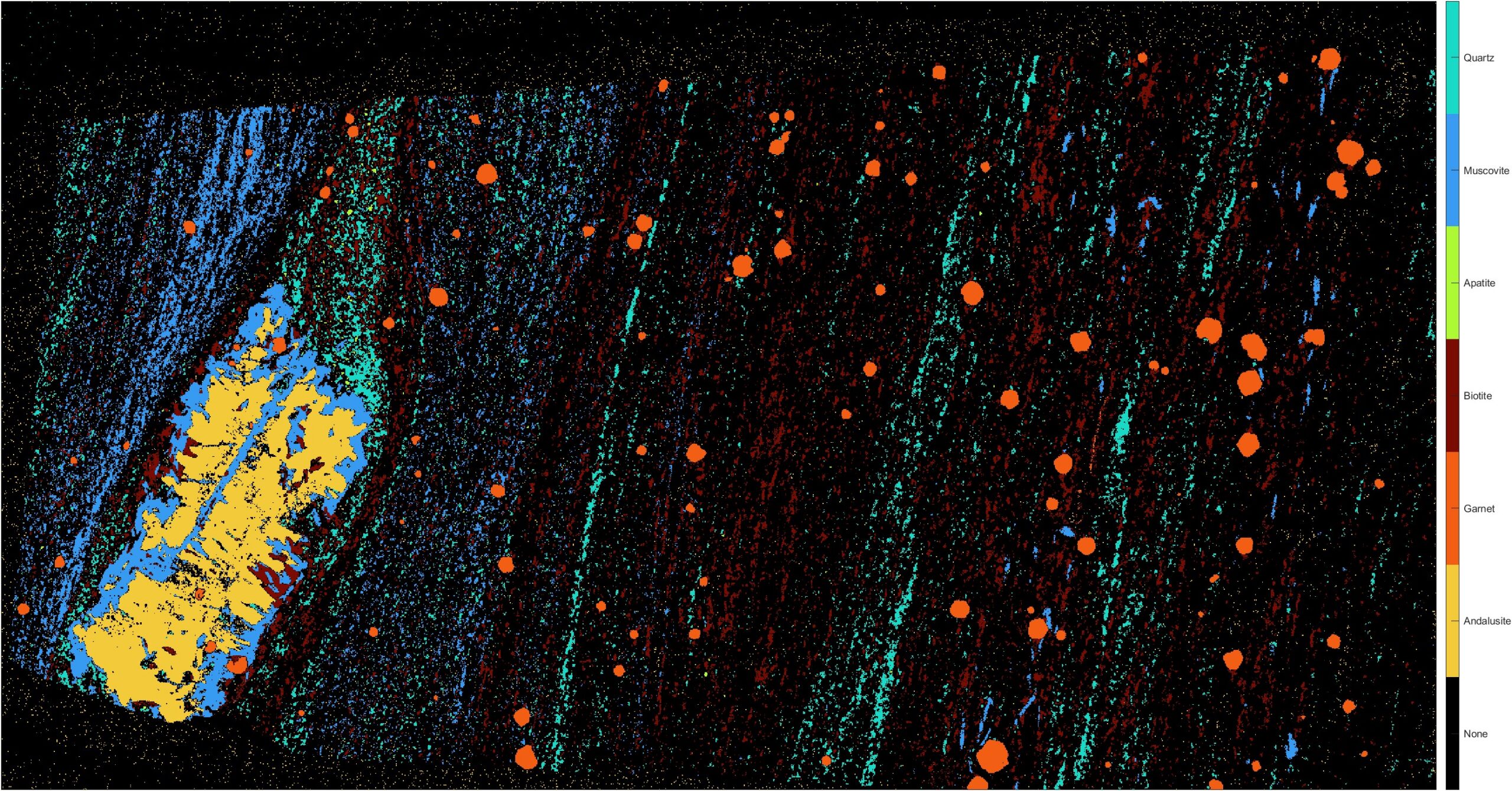
Figure 1. microXRF mineral phase map of a heterogeneous geological thin section.
This microXRF-derived phase map shows the spatial distribution of interpreted minerals, including quartz, muscovite, apatite, biotite, garnet, and andalusite. The map demonstrates how microXRF hyperspectral mapping can reveal mineralogical domains, textural relationships, and accessory phases across complex geological samples.
Two Technologies, Two Different Management Questions
In business terms, analytical technologies should be evaluated by the decisions they enable. LIBS and microXRF can both support elemental analysis, but they serve different decision-making roles.
LIBS is frequently valuable when speed, portability, point analysis, or light-element sensitivity is the central requirement. It can be especially useful when the target element is lithium or another low atomic number element that is difficult to measure by X-ray fluorescence.
MicroXRF is frequently valuable when the central requirement is non-destructive elemental mapping, mineralogical context, and large-area spatial interpretation. It is particularly useful when the sample is heterogeneous and the analyst needs to understand how elements are distributed across mineral phases.
The practical distinction is simple:
- LIBS is often strongest as a rapid, localized screening tool.
- MicroXRF is often strongest as a non-destructive chemical imaging platform.
Both are valuable. But they do not create the same type of insight.
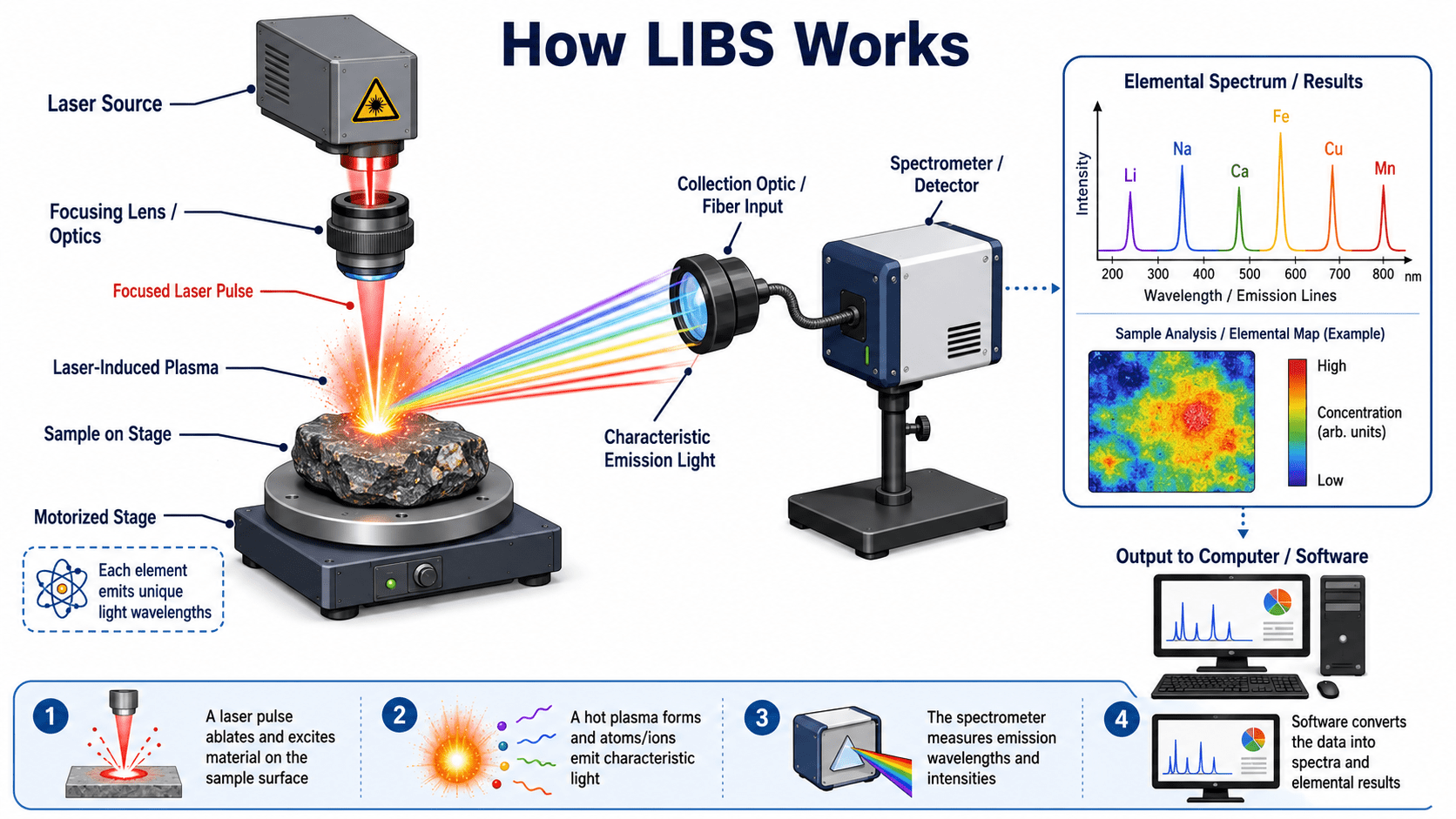
Figure 2. Diagram of how LIBS works.
LIBS uses a focused laser pulse to ablate a small amount of sample material and create a plasma. As the plasma cools, atoms and ions emit characteristic light, which a spectrometer measures to identify elements. LIBS is useful for rapid point analysis and light-element detection, but it is micro-destructive.
What LIBS Does Well
LIBS uses a focused laser pulse to ablate a small amount of sample material. The laser generates a plasma, and as the plasma cools, atoms and ions emit light at characteristic wavelengths. That light is measured and used to identify elements present in the ablated region.
The advantages of LIBS are clear.
It can be fast. It can be used for localized analysis. It can be adapted for field-portable workflows. It can detect certain light elements, including lithium, that are not well suited to conventional XRF analysis. In exploration settings, lithium-bearing minerals and other light-element targets can make LIBS a compelling technology.
For some applications, that is precisely what is needed: fast, targeted chemical information from a specific point or series of points.
But LIBS has trade-offs. It is micro-destructive. Each laser shot removes material. LIBS data can also be strongly affected by matrix effects, surface condition, plasma behavior, grain size, laser coupling, and calibration strategy. These factors are especially important in geological samples, where mineralogy and texture can vary dramatically over short distances.
The result is that LIBS can be highly useful, but the interpretation of LIBS data requires care, especially when moving from screening to quantification in complex mineral matrices.
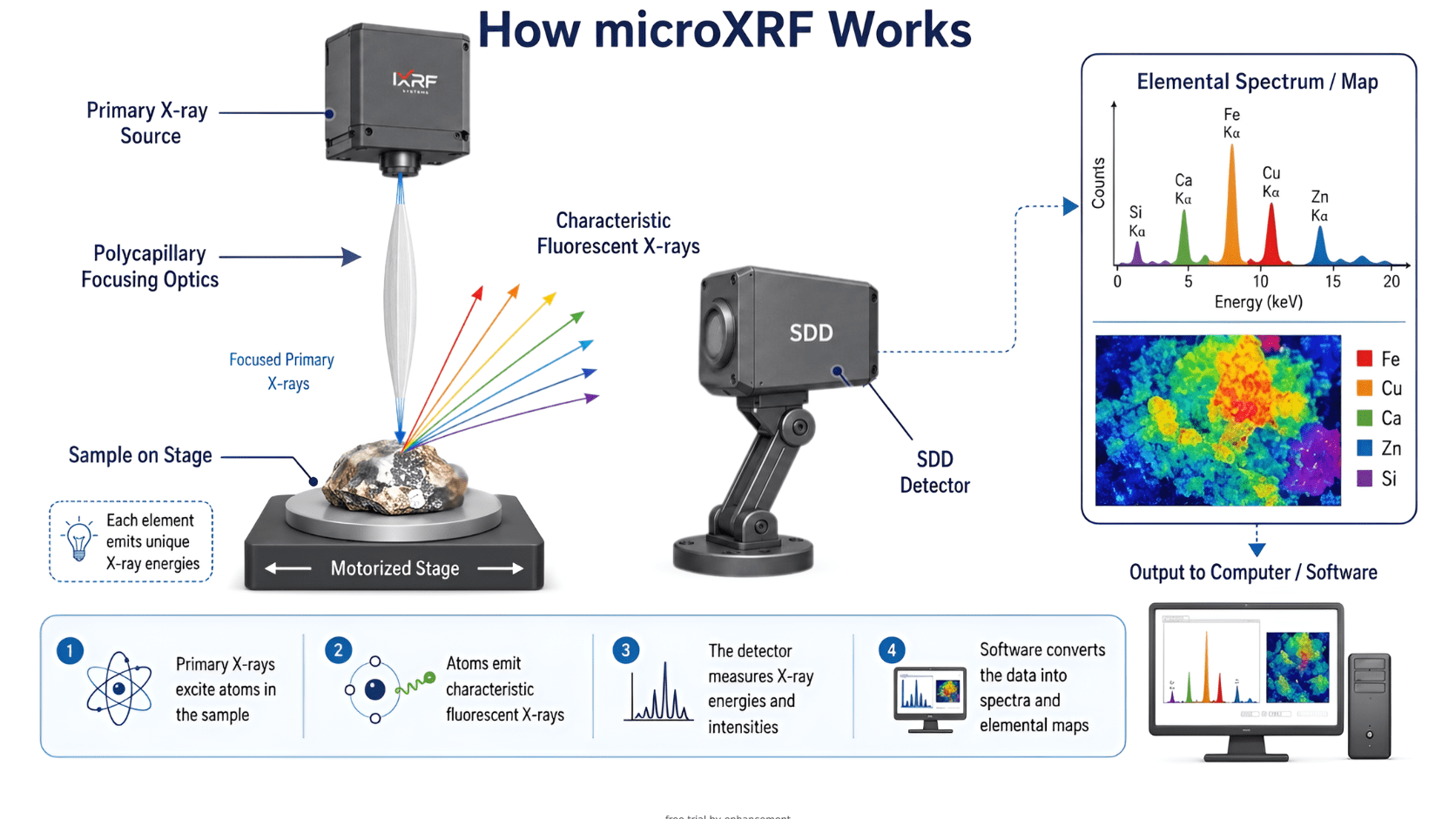
Figure 3. Diagram of how microXRF works.
microXRF uses a focused X-ray beam to excite atoms in a sample. Each element emits characteristic fluorescent X-rays, which are measured by a detector and converted into spectra and elemental maps. This makes microXRF especially useful for non-destructive mineral mapping and critical minerals analysis.
What microXRF Does Well
MicroXRF uses a focused X-ray beam to excite atoms in a sample. Those atoms emit characteristic fluorescent X-rays, which are then measured to determine elemental composition. Unlike LIBS, microXRF does not ablate the sample under normal operating conditions.
The strongest advantage of microXRF is that it preserves the sample while producing spatially resolved elemental maps. Every pixel in a microXRF map can contain a full spectrum, allowing the analyst to move from isolated measurements to chemical imaging.
This changes the workflow.
Instead of analyzing a few selected points and assuming they represent the broader sample, microXRF allows users to evaluate elemental distribution across a larger region. A thin section, polished mount, drill core piece, ore fragment, tailings sample, slag, or process material can be mapped and interpreted in context.
For mineral analysis, that context is often the core value.
MicroXRF can reveal whether copper is associated with sulfide phases, whether rare earth elements align with accessory minerals, whether cobalt is zoned within a specific phase, whether arsenic follows sulfide textures, whether tungsten appears in discrete grains, or whether critical elements are distributed across alteration features.
In other words, microXRF helps answer the questions that point measurements alone often leave unresolved.
The Strategic Difference: Detection vs. Interpretation
The most common mistake in comparing LIBS and microXRF is treating the decision as a simple sensitivity contest.
That framing is too narrow.
In critical minerals work, the goal is not always to maximize detection of a single element. The more important goal is often to build a defensible interpretation of the sample. That requires chemical, spatial, and mineralogical context.
LIBS may detect a target element at a specific point. MicroXRF may show how that target relates to the rest of the mineral system.
For example:
- LIBS may identify lithium in a pegmatite sample.
- MicroXRF may map potassium, rubidium, cesium, tantalum, niobium, tin, manganese, iron, and phosphorus distributions that help interpret mineral associations and guide follow-up analysis.
Or:
- LIBS may provide localized elemental results from a sulfide grain.
- MicroXRF may show the broader relationship among copper, zinc, lead, iron, sulfur, arsenic, nickel, cobalt, and silver across the entire assemblage.
Or:
- LIBS may screen for a trace element at selected locations.
- MicroXRF may reveal that the element is concentrated along rims, fractures, inclusions, or alteration domains.
The distinction is not academic. It affects how laboratories allocate analytical time, select follow-up techniques, communicate findings, and make exploration or processing decisions.
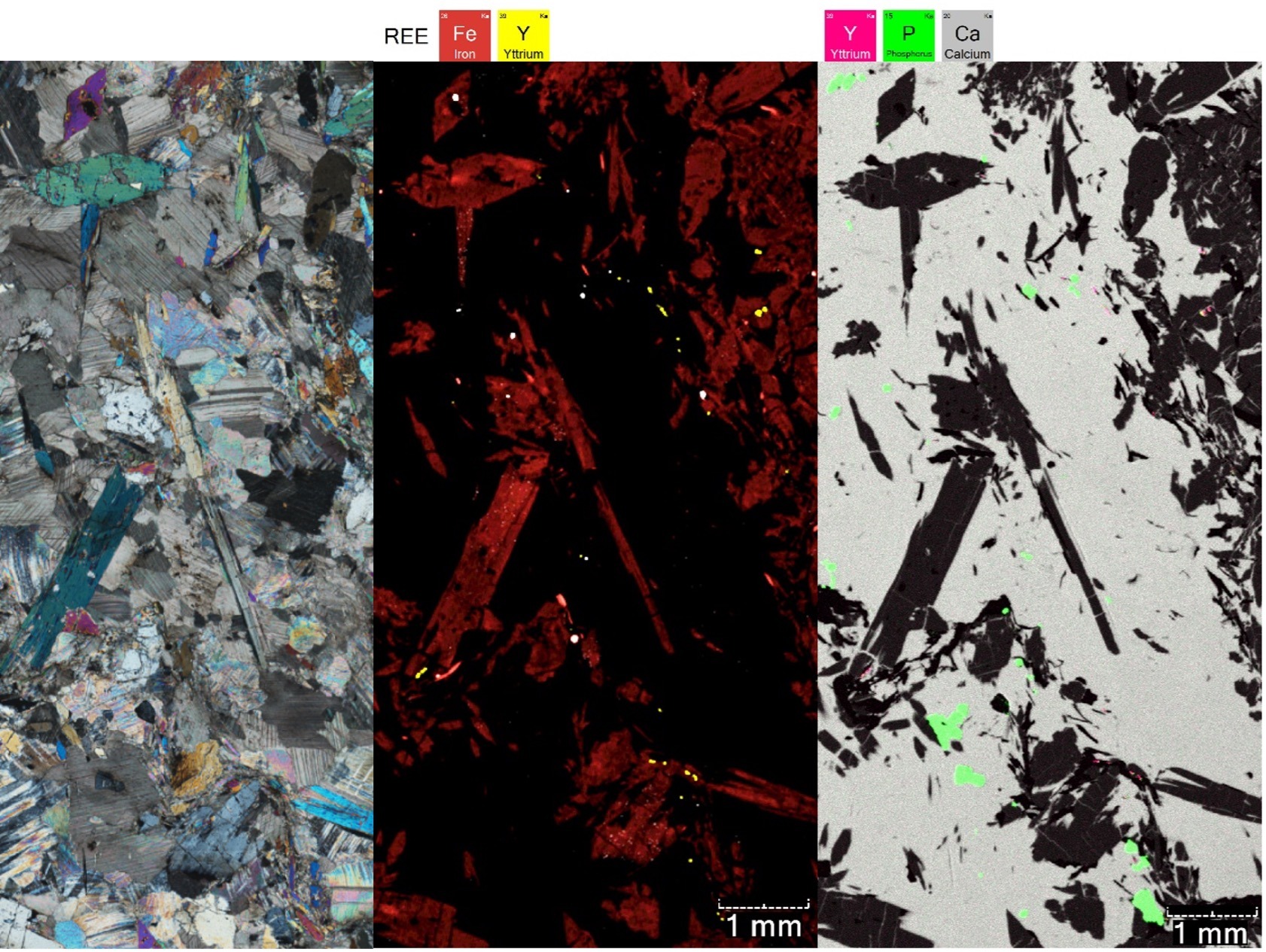
Figure 4. Correlative microXRF mapping of REE-bearing mineral phases.
An optical microscopy image is shown alongside microXRF elemental maps that highlight the spatial relationships among Fe, Y, P, and Ca. The maps reveal localized Y-rich features associated with phosphate-bearing regions, demonstrating how microXRF can connect mineral texture with elemental chemistry to identify accessory phases and critical-mineral indicators across a thin section.
Why Non-Destructive Analysis Matters
In many critical minerals workflows, samples are scarce, valuable, or irreplaceable. Drill core intervals may need to be archived. Museum specimens may need to be preserved. Academic collaborators may require the same sample for multiple techniques. Commercial clients may provide limited material. Process samples may need to be retained for validation or regulatory reasons.
A non-destructive method changes the economics of analysis.
MicroXRF allows laboratories to generate chemical maps while preserving the sample for follow-up work. The same region can later be examined by optical microscopy, SEM-EDS, EPMA, Raman spectroscopy, XRD, LA-ICP-MS, or other methods. This makes microXRF especially powerful as an upstream decision-support tool.
Rather than consuming the sample early in the workflow, microXRF helps laboratories decide where more invasive, expensive, or time-consuming methods should be applied.
This is an important operational advantage. It reduces wasted analysis, improves targeting, and helps preserve sample integrity.
The Critical Minerals Use Case
Critical minerals are often controlled by minor phases. These phases may be small, rare, or unevenly distributed. They may also be texturally complex.
Consider several common examples:
- Rare earth elements may be hosted in monazite, xenotime, bastnäsite, apatite, or other accessory minerals.
- Cobalt may occur in sulfides, oxides, arsenides, or as a substitution in other phases.
- Nickel may be hosted in sulfides, lateritic phases, or silicates.
- Germanium may substitute into sphalerite or occur in trace phases.
- Tungsten may appear as scheelite or wolframite.
- Copper may occur in sulfides, oxides, carbonates, or native phases.
- Uranium may be concentrated in discrete uranium-bearing minerals or associated with alteration zones.
In each case, bulk elemental analysis provides only part of the picture. A point measurement may also miss the broader context. What matters is the relationship between chemistry and mineral texture.
MicroXRF is valuable because it helps reveal that relationship.
Where Atlas Apex Fits
The Atlas Apex microXRF platform from IXRF Systems is designed for laboratories that need more than isolated elemental measurements. It enables high-spatial-resolution elemental mapping over practical sample areas, helping users evaluate complex mineral systems without destroying the specimen.
For critical mineral applications, this means users can:
- Identify elemental associations across heterogeneous samples
- Locate critical-element-rich regions of interest
- Map mineral zoning, alteration, and phase relationships
- Preserve samples for downstream analysis
- Screen large areas before selecting targets for higher-cost techniques
- Communicate results using intuitive elemental images and overlays
- Combine elemental mapping with quantitative and hyperspectral workflows
The value is not just that Atlas Apex can detect elements. The value is that it helps users understand how those elements are organized.
That is the difference between data and insight.
A Practical Framework for Choosing Between microXRF and LIBS
The right technique depends on the decision the laboratory needs to make.
| If the primary need is… | The stronger starting point is often… |
| Lithium detection | LIBS |
| Non-destructive sample preservation | microXRF |
| Large-area elemental mapping | microXRF |
| Rapid field screening | LIBS |
| Mineral association mapping | microXRF |
| Locating regions of interest for follow-up analysis | microXRF |
| Light-element point analysis | LIBS |
| Understanding spatial distribution across a thin section or polished mount | microXRF |
| Communicating chemical texture visually | microXRF |
| Fast localized ablation-based analysis | LIBS |
This framework is not meant to declare one technique universally superior. It is meant to align the tool with the analytical objective.
For critical minerals, that objective is increasingly spatial, contextual, and mineralogical.
The Best Workflows May Use Both
In sophisticated laboratories, microXRF and LIBS should not always be viewed as competing technologies. They can be complementary.
LIBS can provide information on elements that are challenging for XRF, such as lithium. MicroXRF can provide the broader elemental map needed to understand the mineral system around that lithium-bearing phase. MicroXRF can identify regions of interest before LIBS analysis. LIBS can add light-element information to areas already mapped by microXRF.
Together, the two techniques can create a more complete picture than either can provide alone.
But the sequencing matters. In many mineral analysis workflows, starting with a non-destructive microXRF map is a strategic advantage. It gives the analyst a sample-wide chemical framework before making decisions about more targeted, destructive, or specialized analyses.
The Bottom Line
The critical minerals era requires more than elemental detection. It requires interpretation.
LIBS is a powerful tool for rapid localized analysis and light-element detection, especially for applications involving lithium. But microXRF provides something fundamentally different: non-destructive, spatially resolved chemical context.
For mineral analysis, that context is often what determines whether a result is useful. It helps identify host phases, map elemental associations, reveal zoning, locate inclusions, guide follow-up analysis, and preserve valuable samples.
As critical minerals become more important to energy, defense, electronics, and advanced manufacturing supply chains, laboratories will need analytical strategies that connect chemistry with mineral texture.
That is where microXRF delivers exceptional value.
With the Atlas Apex microXRF platform, IXRF Systems helps researchers and industry professionals move beyond asking what is present in a sample. It helps them understand where it is, how it is distributed, and why it matters.
Ready to turn mineral chemistry into actionable insight?
If your team is evaluating critical minerals, complex ores, mine waste, process materials, or advanced geological samples, IXRF Systems can help you determine whether microXRF mapping is the right analytical strategy for your application.
Speak with an IXRF microXRF expert to discuss your samples, analytical goals, spatial resolution requirements, and workflow challenges. Our team can help you design a practical project, evaluate sample suitability, and demonstrate how Atlas Apex microXRF can reveal the elemental and mineralogical context behind your most important materials.
Start a conversation with IXRF Systems today and see what non-destructive elemental mapping can reveal in your samples.
Related FAQ
What is the difference between microXRF and LIBS?
MicroXRF uses a focused X-ray beam to generate elemental maps without destroying the sample. LIBS uses a laser pulse to ablate a small amount of material and analyze the emitted plasma light. MicroXRF is strongest for non-destructive elemental mapping, while LIBS is often useful for rapid point analysis and light elements such as lithium.
Is microXRF better than LIBS for critical minerals analysis?
MicroXRF and LIBS answer different questions. MicroXRF is often better when the goal is to understand mineral associations, elemental distribution, and spatial context. LIBS may be better when the goal is rapid localized analysis or detecting light elements such as lithium.
Can microXRF detect lithium?
Lithium is not well suited to conventional X-ray fluorescence because of its very low atomic number and low-energy X-ray emission. LIBS is generally better for lithium detection. However, microXRF can map associated elements and mineralogical indicators in lithium-bearing systems, such as potassium, rubidium, cesium, tantalum, niobium, tin, manganese, iron, and phosphorus.
Why is microXRF useful for critical minerals?
MicroXRF is useful for critical minerals because it shows where elements are located in a sample. This helps researchers identify host minerals, zoning, inclusions, alteration patterns, and elemental associations that may control recoverability or geological interpretation.
Is LIBS destructive?
LIBS is considered micro-destructive because each laser pulse removes a small amount of material from the sample surface. The ablation mark may be very small, but it can matter for rare, archived, valuable, or limited-volume samples.
Is microXRF non-destructive?
Yes. Under normal analytical conditions, microXRF is non-destructive. It can analyze geological samples, thin sections, polished mounts, drill core pieces, and process materials while preserving them for additional analysis.
Can microXRF and LIBS be used together?
Yes. microXRF and LIBS can be complementary. MicroXRF can map elemental distributions and identify regions of interest, while LIBS can provide additional information for light elements that are difficult to measure by XRF.
What samples can be analyzed by microXRF for mineral analysis?
MicroXRF can analyze many geological and mineral samples, including thin sections, polished mounts, rock chips, drill core pieces, ores, concentrates, tailings, slags, powders, and process materials.
Why does spatial context matter in mineral analysis?
Spatial context shows how elements are distributed across mineral phases and textures. This helps determine whether a critical element is concentrated in a recoverable mineral, locked in gangue, associated with alteration, or distributed too diffusely to be useful.
How does Atlas Apex microXRF support critical minerals research?
Atlas Apex microXRF supports critical minerals research by providing non-destructive elemental mapping, high-spatial-resolution analysis, large-area sample coverage, hyperspectral data collection, and software tools for mineralogical interpretation and workflow development.