Non-Destructive MicroXRF for Art and Archaeology
Analyze paintings, coins, ceramics, glass, manuscripts, and archaeological objects without removing or altering material.
IXRF microXRF systems identify and map elemental composition across cultural heritage objects with no cutting, sampling, conductive coating, or chemical preparation. With elemental coverage from carbon through uranium, focused spot sizes down to approximately 5 µm, and automated large-area mapping, Atlas Apex supports both fine-detail analysis and broader examination of complete objects and surfaces.
Why MicroXRF Suits Cultural Heritage Work
- Cultural heritage analysis often begins with one condition: the object must remain intact.
- MicroXRF examines the object as it is. No material needs to be removed, embedded, dissolved, or coated before analysis.
- Unlike a single spot measurement, an elemental map shows where each element is located across the object. This spatial information can reveal artistic technique, manufacturing methods, restoration history, and compositional differences that are not visible by eye.
The technique can help researchers and conservators:
- Identify pigments, alloys, glazes, and inks
- Map repairs, retouching, and later additions
- Compare elemental composition across an object
- Investigate features below or within surface layers
- Examine large areas and small details using the same instrument
- Preserve the object for exhibition, storage, or additional study
What MicroXRF Reveals in Art and Archaeology
Unlike a single spot measurement, an elemental map shows where each element is located across the object. This spatial information can reveal artistic technique, manufacturing methods, restoration history, and compositional differences that are not visible by eye.
Paintings and Painted Surfaces
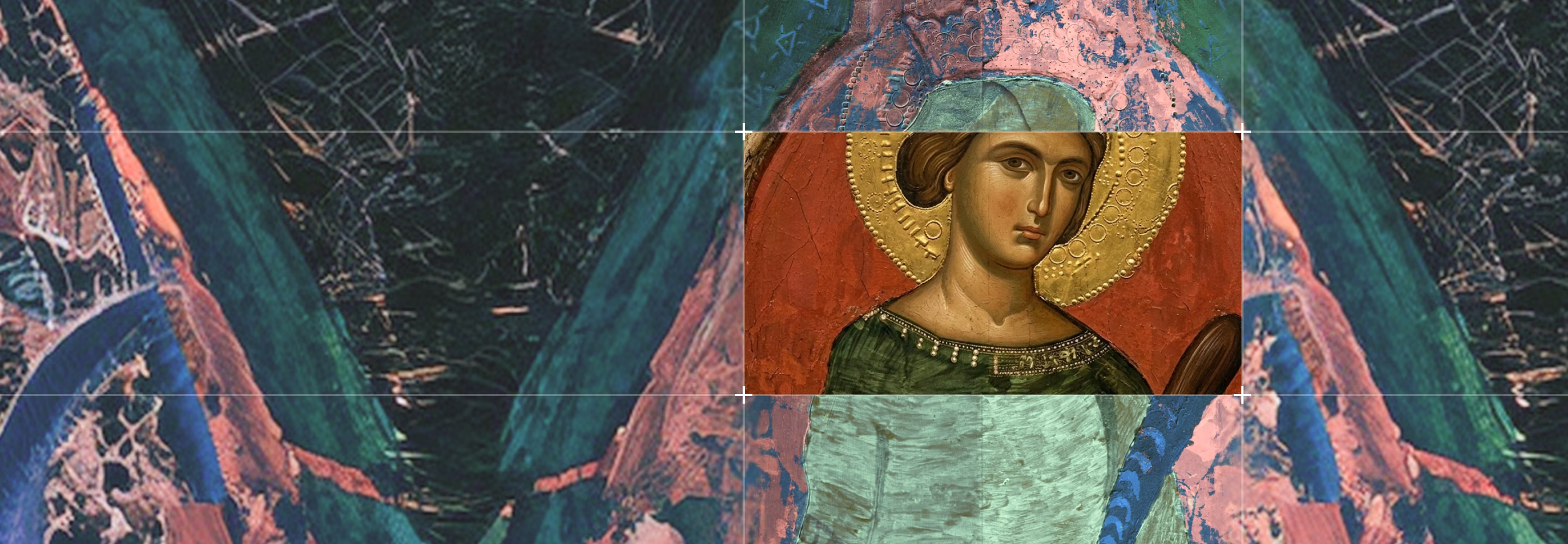
MicroXRF can map elemental distributions across paintings, panels, murals, and other decorated surfaces without removing material. Researchers can examine pigments, preparation layers, restorations, and compositional changes across large areas.
- Lead-, copper-, iron-, and mercury-based pigments
- Titanium- and zinc-containing whites
- Cobalt- and chromium-based colorants
- Ground and preparation layers
- Retouching and restoration materials
- Areas of pigment alteration or degradation
Elemental maps can reveal how pigments are distributed across an artwork, helping conservators and researchers investigate original paint layers, changes in an artist’s palette, earlier compositions beneath visible paint, and later interventions.
These chemical signatures can support conservation decisions, technical art history, and provenance or attribution studies when interpreted alongside imaging, historical, and visual evidence.
Ceramics, Glass, and Glazes
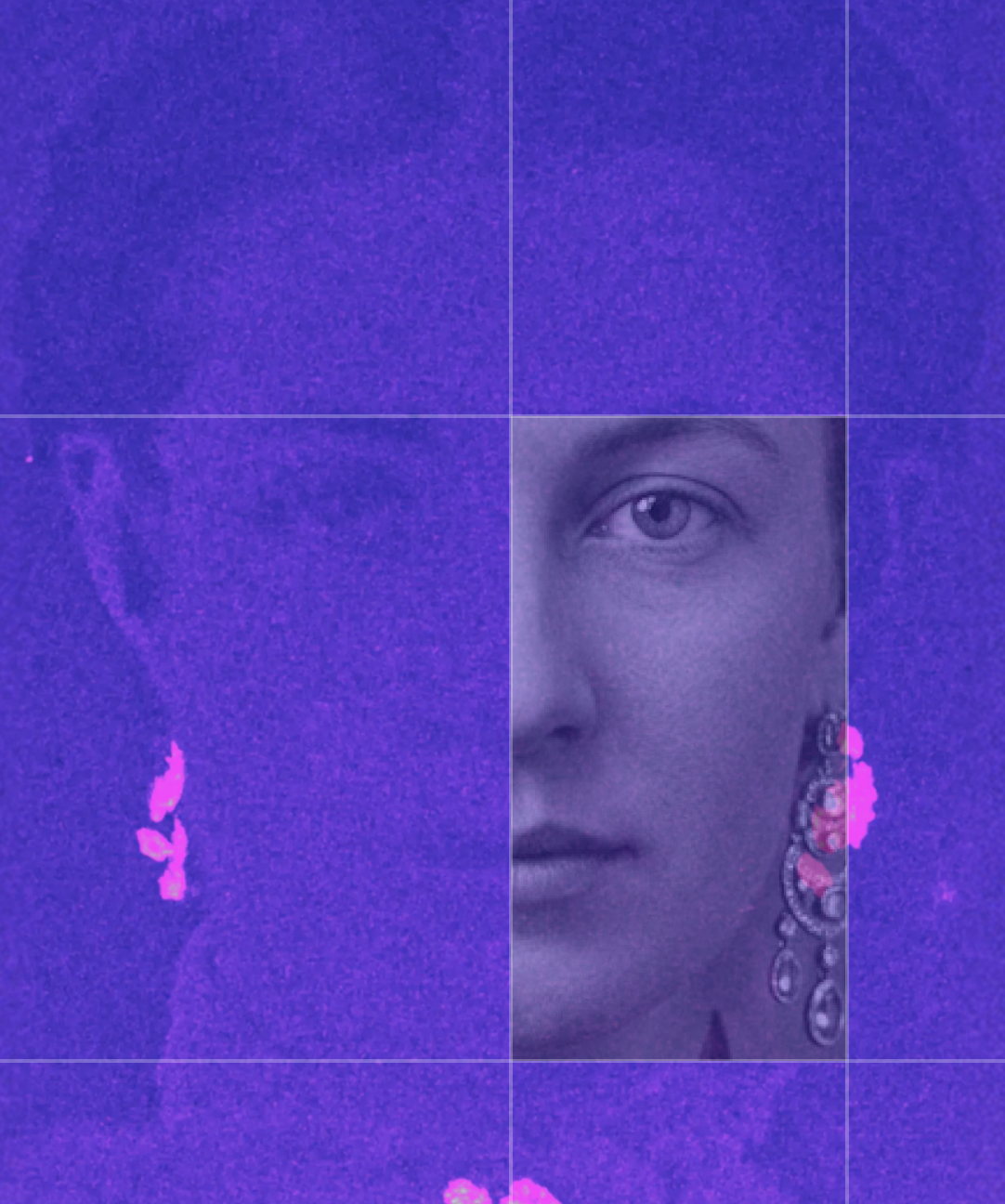
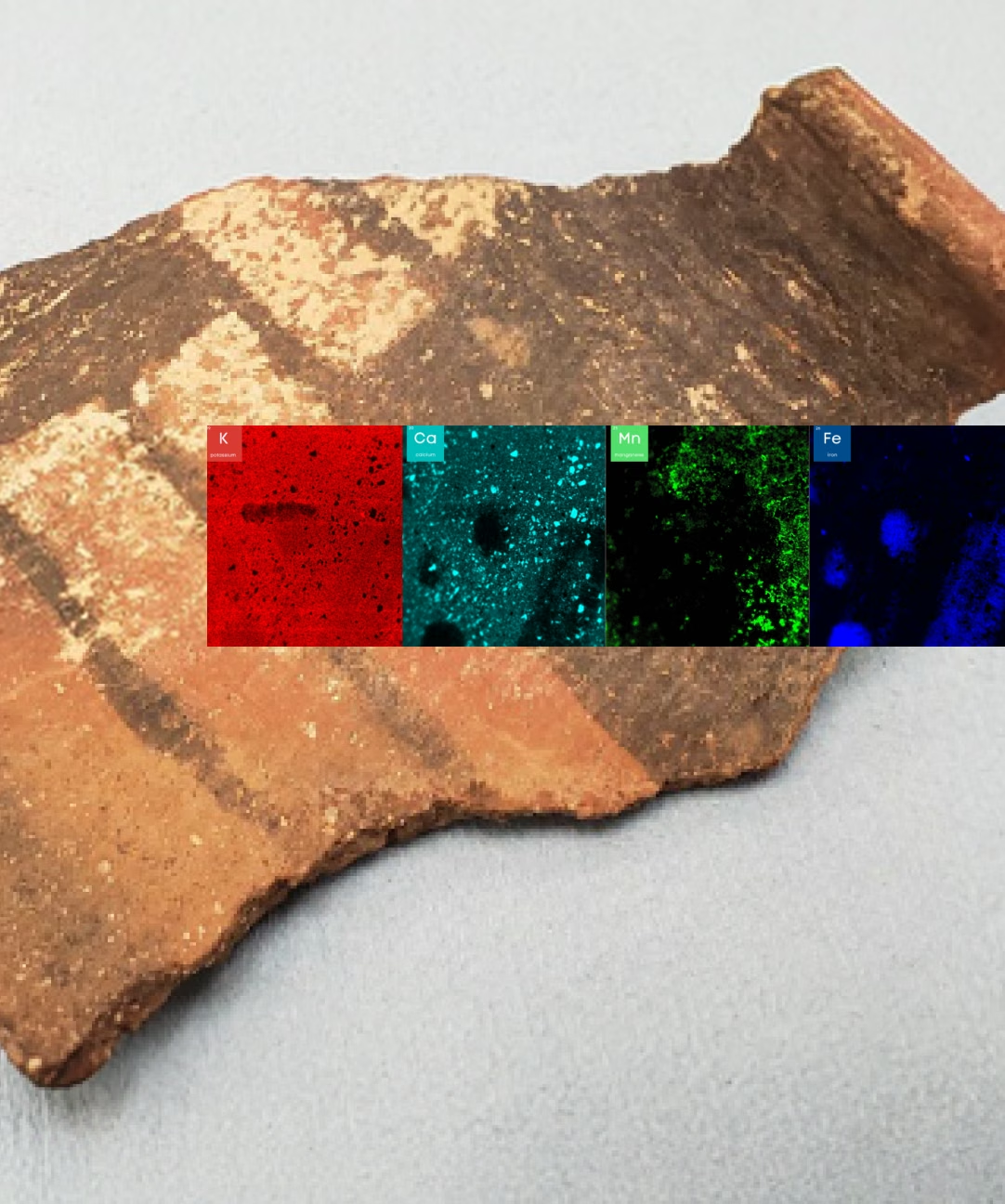
MicroXRF can examine ceramic bodies, glazes, decoration, and surface deposits without cutting a cross-section. Researchers can map elemental composition across complete objects, fragments, and archaeological specimens.
- Lead-bearing glazes
- Cobalt- and copper-based decoration
- Iron-rich ceramic bodies
- Tin-based opacifiers
- Manganese pigments
- Mineral inclusions
- Weathering and burial deposits
Elemental maps can reveal differences in raw materials, glaze recipes, pigments, and manufacturing techniques. Variations across an object can help distinguish production stages, decorative treatments, repairs, or areas affected by burial and environmental exposure.
Compositional evidence can also support studies of technological development, workshop practices, trade, and provenance when combined with archaeological and mineralogical context.
Metals, Coins, and Alloys
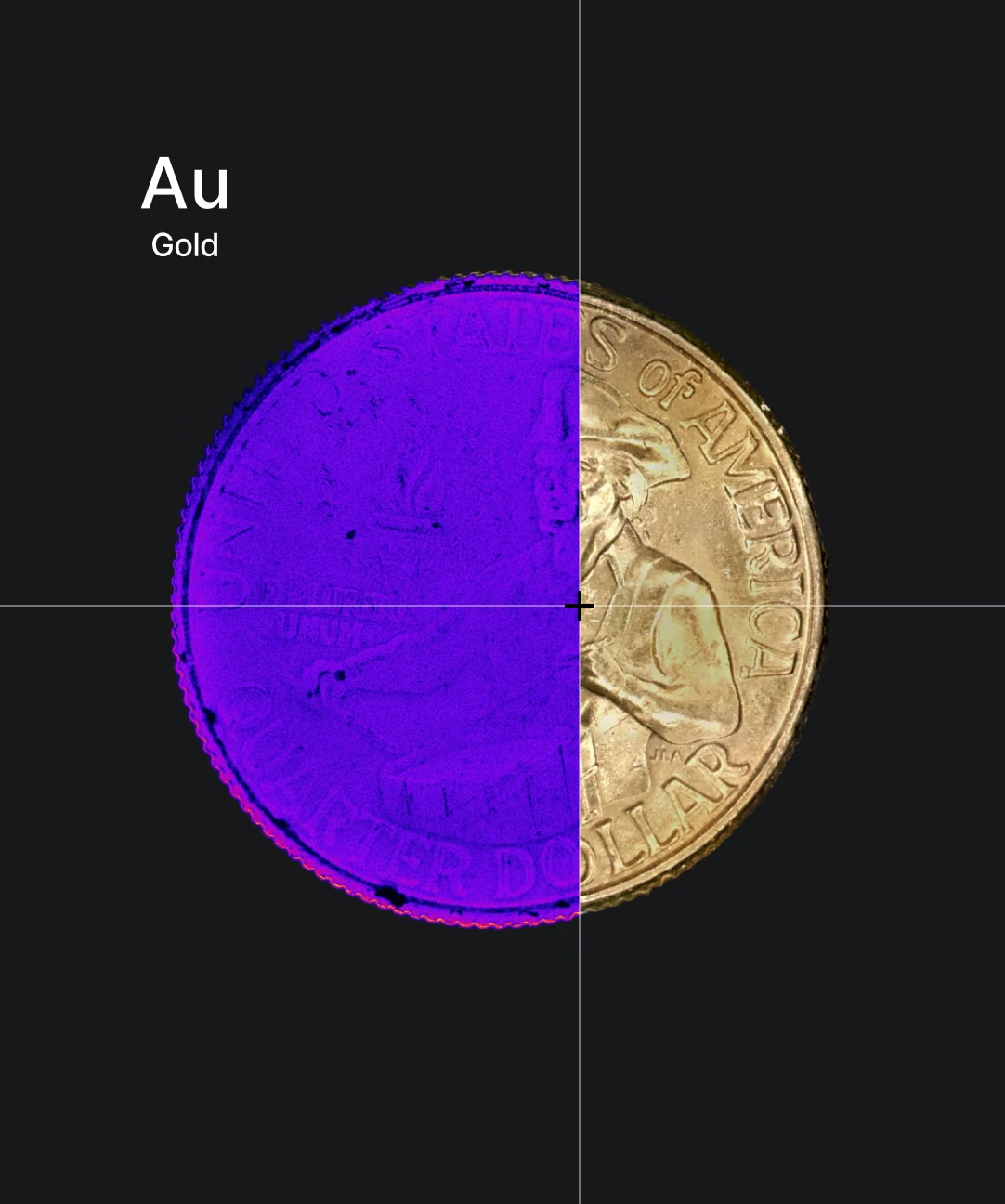
MicroXRF provides non-destructive elemental mapping of coins, metal artifacts, alloys, corrosion layers, and manufactured objects. Researchers can examine compositional variation across the surface while preserving the object for further study.
- Copper, bronze, and brass alloys
- Silver- and gold-bearing objects
- Lead and tin distributions
- Plating and surface enrichment
- Solder and joining materials
- Corrosion products
- Inclusions and compositional heterogeneity
Elemental maps can show how alloying elements, plating, corrosion, and manufacturing features vary across an artifact. This can help researchers investigate production methods, repairs, wear, surface treatments, and differences between original and altered material.
For coins and archaeological metals, microXRF can contribute to studies of minting practices, alloy composition, technological change, and provenance while minimizing the need for destructive sampling.
Manuscripts, Inks, and Documents
MicroXRF can map the elemental composition of inks, pigments, illuminations, and other materials on manuscripts and historic documents without removing samples. This makes it well suited for examining fragile or unique objects.
- Iron-gall and metal-containing inks
- Copper- and mercury-based pigments
- Lead-containing pigments and preparations
- Gold and other metallic decorations
- Inorganic fillers and coatings
- Additions, corrections, and overwritten text
- Areas of material degradation
Elemental maps can distinguish materials that appear visually similar but have different chemical compositions. Researchers can use these differences to investigate writing campaigns, revisions, later additions, decorative techniques, and relationships between inks and pigments.
When combined with historical, palaeographic, and complementary imaging evidence, microXRF can support conservation studies, document authentication, and investigations of how manuscripts and written materials were produced and modified over time.
How a MicroXRF Study
Works on a Heritage Object
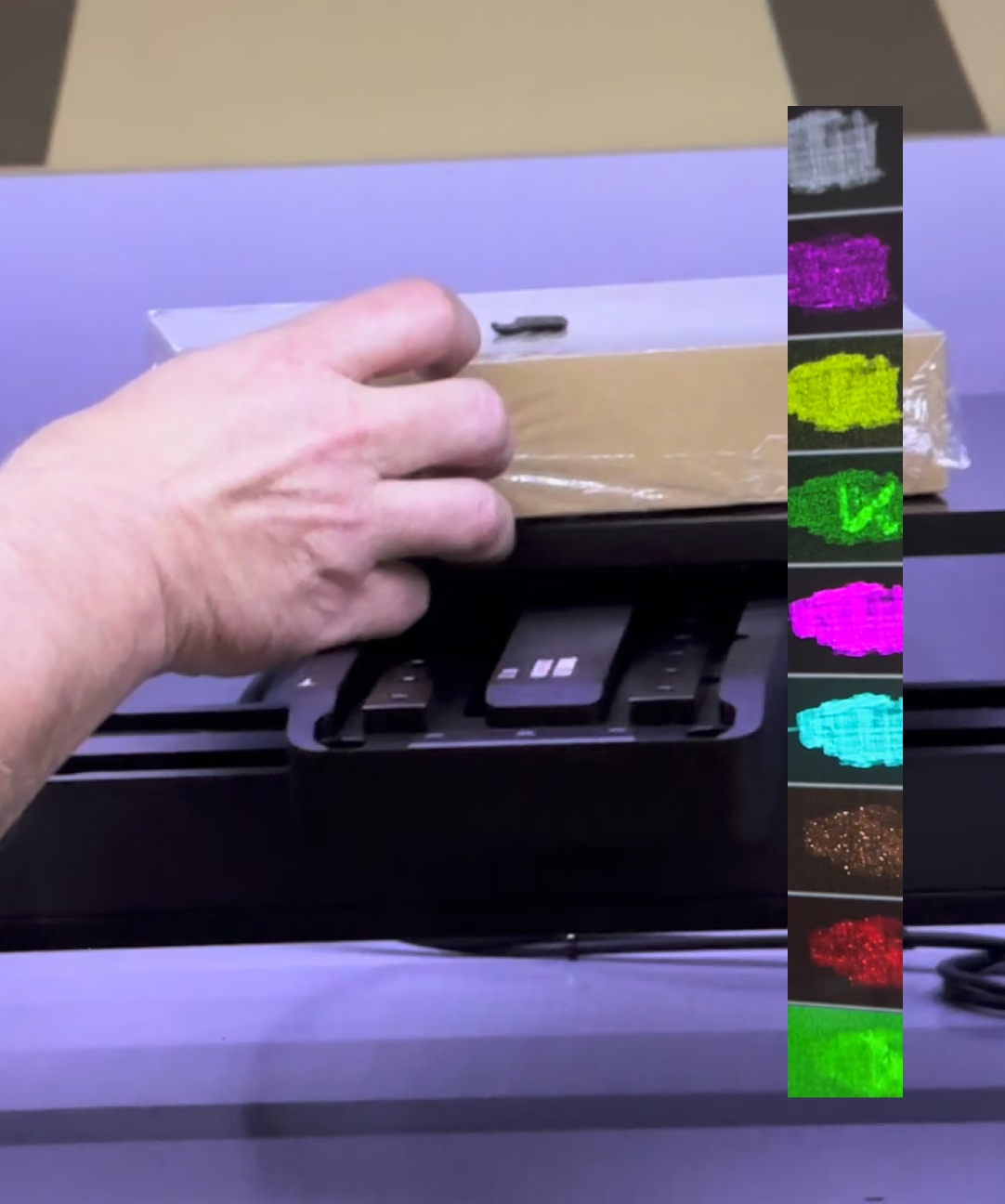
The object is positioned within the instrument and the area of interest is selected using the integrated imaging system. Atlas Apex then scans the object with a focused X-ray beam and records a complete spectrum at every mapped pixel. Most heritage objects can be analyzed in air without conductive coating or destructive preparation. Because the full spectrum is retained at every pixel, researchers can revisit the dataset and generate additional elemental maps without returning the object for another measurement. Iridium Ultra manages acquisition, mapping, spectral processing, and quantitative analysis within one software platform.
- 01.
Position the object and select the area of interest via the integrated imaging system
- 02.
Atlas Apex scans with a focused X-ray beam, recording a full spectrum at every pixel
- 03.
Fine details (5 µm spot) or large surfaces are mapped — from brushstrokes to full panels
- 04.
Revisit the retained dataset anytime to generate new elemental maps — no re-scan needed
MicroXRF Compared with Other Heritage Techniques
vs. Handheld XRF
IXRF designs and builds microXRF, SEM-XRF, and process XRF systems for labs that need to see WHERE elements are located, not just how much is present. Flagship Atlas Apex platform — geoscience, critical minerals, semiconductors, batteries, materials science.
vs. SEM-EDS
SEM-EDS offers finer spatial resolution but usually requires a small sample that fits inside a chamber. MicroXRF accommodates larger objects with generally no conductive coating or material removal — often the more practical first step.
vs. LA-ICP-MS & Sampling Methods
Laser ablation and chemical methods offer highly sensitive data but remove or consume material. MicroXRF leaves the object intact — better suited where sampling is prohibited or undesirable.
with Raman or Infrared Spectroscopy
XRF identifies elements but not binders or organic/molecular compounds. Combining microXRF with Raman or IR produces a more complete picture of pigments, binders, and degradation products.
See What MicroXRF Can Measure on Your Objects
Describe your object type, dimensions, elements of interest, and research question to an IXRF applications scientist. Our team can help assess sample compatibility, recommend a measurement approach, and discuss whether a feasibility study would be useful before instrument selection.
Explore the Atlas Apex microXRF platform or visit our Geology and Mining page for related mineral, stone, sediment, and sourcing applications.
Atlas Apex systems are designed and manufactured in Austin, Texas, with applications and technical support provided directly by IXRF Systems.
Frequently
Asked Questions
Yes. MicroXRF is a non-destructive, non-contact analytical technique that typically requires no cutting, coating, chemical treatment, or material removal. Each object should still be evaluated for its condition, dimensions, stability, and suitability for X-ray analysis.
Yes. MicroXRF can detect and map elements associated with many historic and modern pigments directly on an object. Elemental evidence can strongly support pigment identification, although complementary techniques such as Raman or FTIR may be needed when definitive molecular identification is required.
Often, yes. Elemental maps can reveal compositional differences between original materials and later overpainting, fills, repairs, replacement materials, or conservation treatments. Interpretation should be combined with visual examination, conservation history, and other analytical evidence.
Yes, in some cases. Because X-rays can penetrate beneath the visible surface, elemental mapping may reveal concealed compositions, underdrawings associated with elemental pigments, earlier decorative features, or compositional changes beneath surface layers. Results depend on layer thickness, composition, and the elements present.
MicroXRF can provide important evidence relevant to authenticity by identifying unexpected materials, modern pigments, repairs, or compositional inconsistencies. It cannot establish authenticity by itself; conclusions should also consider provenance, historical documentation, stylistic examination, and complementary analytical techniques.
MicroXRF can analyze a wide range of heritage materials, including paintings, pigments, metals, ceramics, glass, manuscripts, inks, stone, glazes, archaeological artifacts, and mineral-based objects. The information obtained depends on the material and the specific research question.
Yes, when the object dimensions and geometry are compatible with the instrument. Automated scanning can create large-area elemental maps that show how pigments, metals, corrosion products, repairs, or other materials are distributed across an artwork or artifact.
Atlas Apex systems are designed to accommodate relatively large and irregularly shaped objects. The Atlas Apex X provides a chamber approximately 950 × 650 × 365 mm, offering substantial capacity for artworks, archaeological objects, geological specimens, and other samples that may not fit in conventional benchtop microXRF systems.
Handheld XRF typically provides an averaged elemental measurement from a comparatively large spot. MicroXRF uses a focused X-ray beam and automated positioning to analyze much smaller features and create detailed two-dimensional elemental maps across an object.
Usually not. Most artifacts can be analyzed without cutting, polishing, conductive coating, or removing a sample. The surface of interest simply needs to be accessible to the X-ray beam and compatible with the instrument’s geometry and operating conditions.
Yes. Elemental composition and spatial distribution can help researchers compare raw materials, alloys, pigments, glazes, ceramics, glass, inks, and manufacturing features across objects. These data can support provenance and technology studies, but interpretation should be combined with archaeological context and complementary analytical evidence.