MacroXRF for High-Volume Sample Throughput, in Two Chamber Sizes
Atlas Veritas brings real 2D elemental mapping at a scale larger than microXRF typically handles. Choose the compact M for the lab bench, or the large-area X for drill cores, big sections, and production volumes.
- Samples analyzed per day
- 20 → 500+
- Preserves high-value samples
- Non-destructive
- Samples per well tray
- 240
One Platform. Pick the Chamber That Fits Your Lab
Both configurations run the same Veritas analytical capability. The difference is how much sample, and how much floor space, you need to work with.
Atlas Veritas M, Benchtop
The compact configuration of the Veritas line. Built for labs where floor space is limited but the analytical need is real: elemental mapping across samples larger than what a microXRF typically handles, without the footprint of a large-area floor system. A full analytical platform in a format that fits on a lab bench.
Atlas Veritas X, Large Area
The large-area configuration, built around sample size and throughput rather than lab space constraints. Labs that regularly analyze drill cores, large geological sections, industrial components, or high volumes of production samples get the mapping area and detector capacity to handle that work at full resolution.
Two Series, Built for Different Sample Sizes
Both series share the same macroXRF engine. What changes is chamber size and mapping travel, so the choice comes down to what you're loading, not which measurement you're trying to make.
Compact Configuration
Atlas Veritas M
The standard-chamber line, built for polished sections, powders, and small-format samples that need fast setup and repeatable point selection.
- Benchtop footprint, no floor system needed
- Suited to gemstone trays, large artifacts, bulk materials, industrial slabs, and documents
- Same optics, same elemental range, same non-destructive workflow as the X
Large-Area Configuration
Atlas Veritas X
Maximum stage size and detector capacity for high sample volumes.
- Built for drill cores, large geological sections, industrial slabs, and production volumes
- Largest stage and highest detector capacity in the Veritas line
- Same optics, same elemental range, same non-destructive workflow as the M
Atlas Veritas M vs. Atlas Veritas X Full Specifications
- Specification
- Atlas Veritas M
- Atlas Veritas X
- Format
- Benchtop
- Large area
- Built around
- Lab space constraints
- Sample size and throughput
- Best for
- Gemstone trays, large artifacts, bulk materials, industrial slabs, documents
- Drill cores, large geological sections, industrial slabs, production volumes
- Spot size
- 100 µm to 2 mm, collimated optics (both)
- Elemental range
- Carbon through uranium (both)
- Samples per day
- 20 to 500+ (both)
Bulk XRF, With the Spatial Picture Added
Veritas adds 2D chemical mapping to reveal variations and anomalies that traditional bulk methods overlook entirely. Every capability below applies to both the M and the X.
2D Mapping
Visualizes the spatial distribution of elements within a sample, not just an averaged composition.
Carbon Through Uranium
Comprehensive elemental coverage across a broad range of materials.
Large Area Analysis
Analyzes extensive sample areas with speed and precision, for both detailed and preliminary assessments.
High-Z Sensitivity
Exceptional sensitivity for detecting and quantifying heavier elements.
New Collimated Optics
Spot sizes ranging from 100 µm to 2 mm, tailored to the analytical requirement.
Automatic Focusing
State-of-the-art Z sensing with Auto-Z functionality and precision laser distance measurement for fast, accurate sample positioning.
Veritas Across Industrial Materials, Geology, and Conservation
Industrial Materials — Concrete & Steel
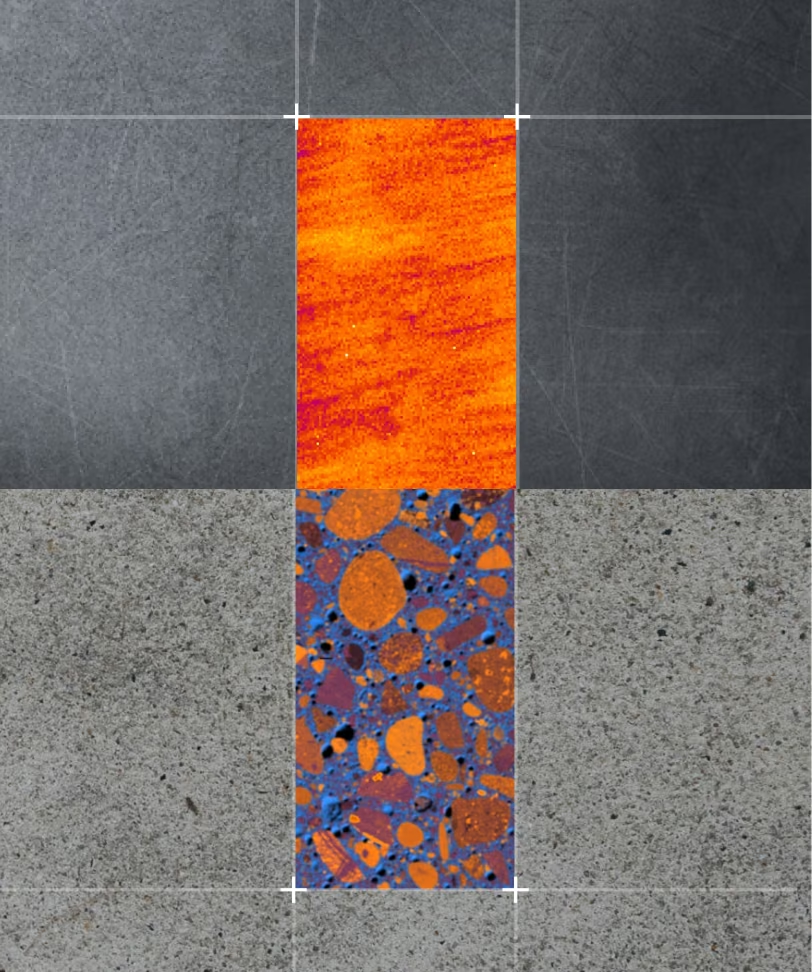
Element overlay maps of a concrete slab reveal chlorine, iron, calcium, and silicon distribution directly relevant to durability and chloride ingress assessment. In steel, Veritas identifies manganese segregation in Advanced High-Strength Steel slabs, mapping Fe, Mn, and V across the section.
Geochemistry — Cinnabar Hand Sample
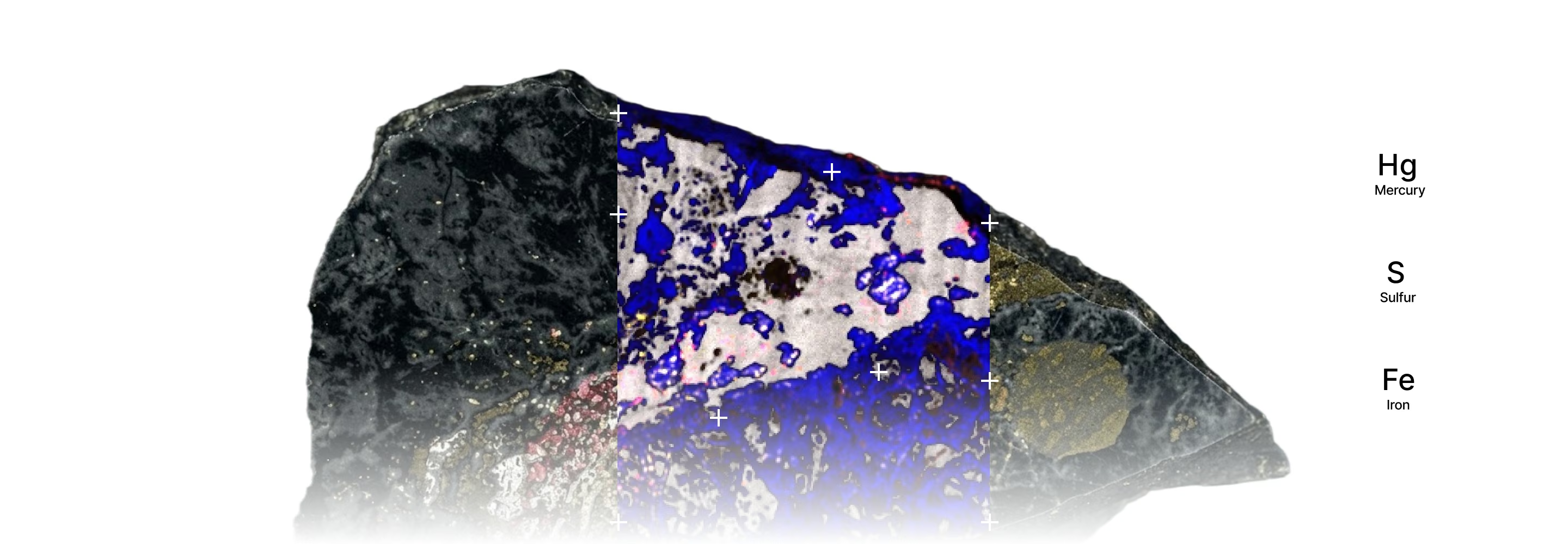
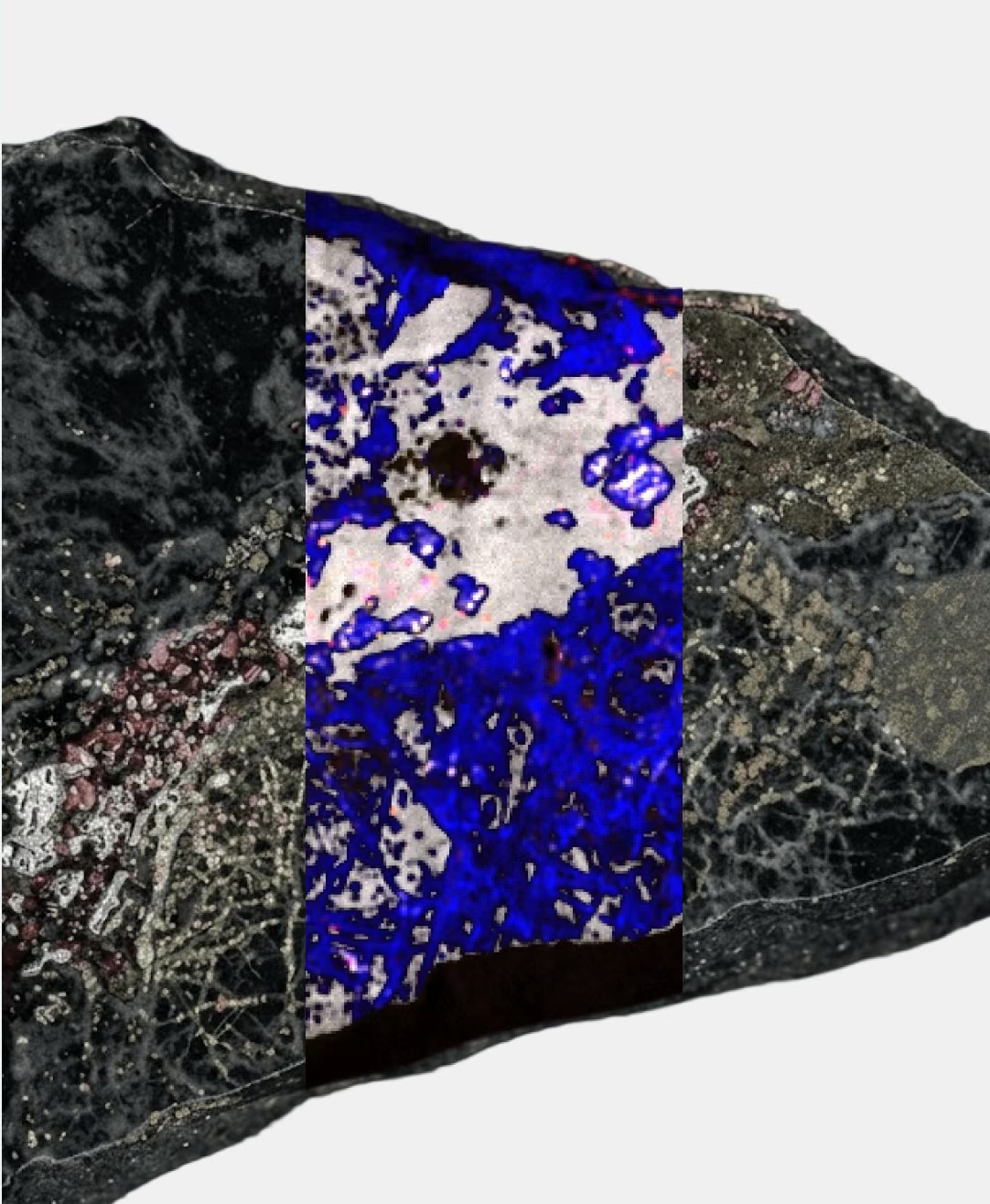
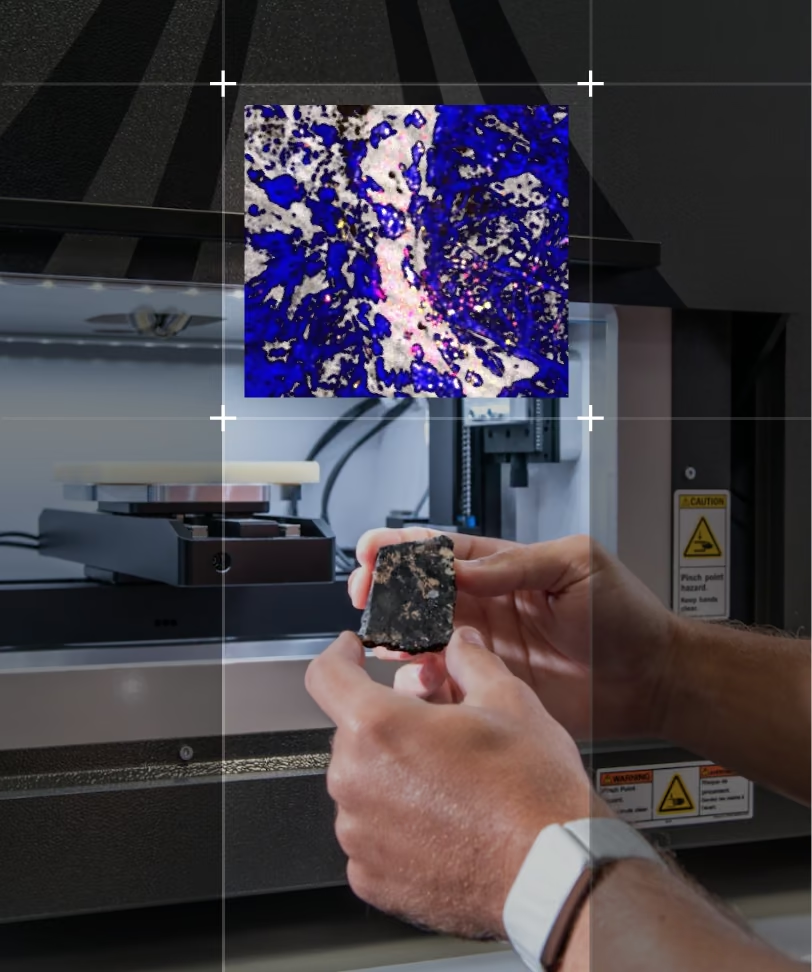
An overlay map of a cinnabar rock hand sample, collected at 500 µm pixel size, showcases mercury, sulfur, iron, and silicon distribution. Geochemical detail typically reserved for micro-focus instruments, captured here at macro scale and speed.
Conservation & Forensics — Currency Analysis
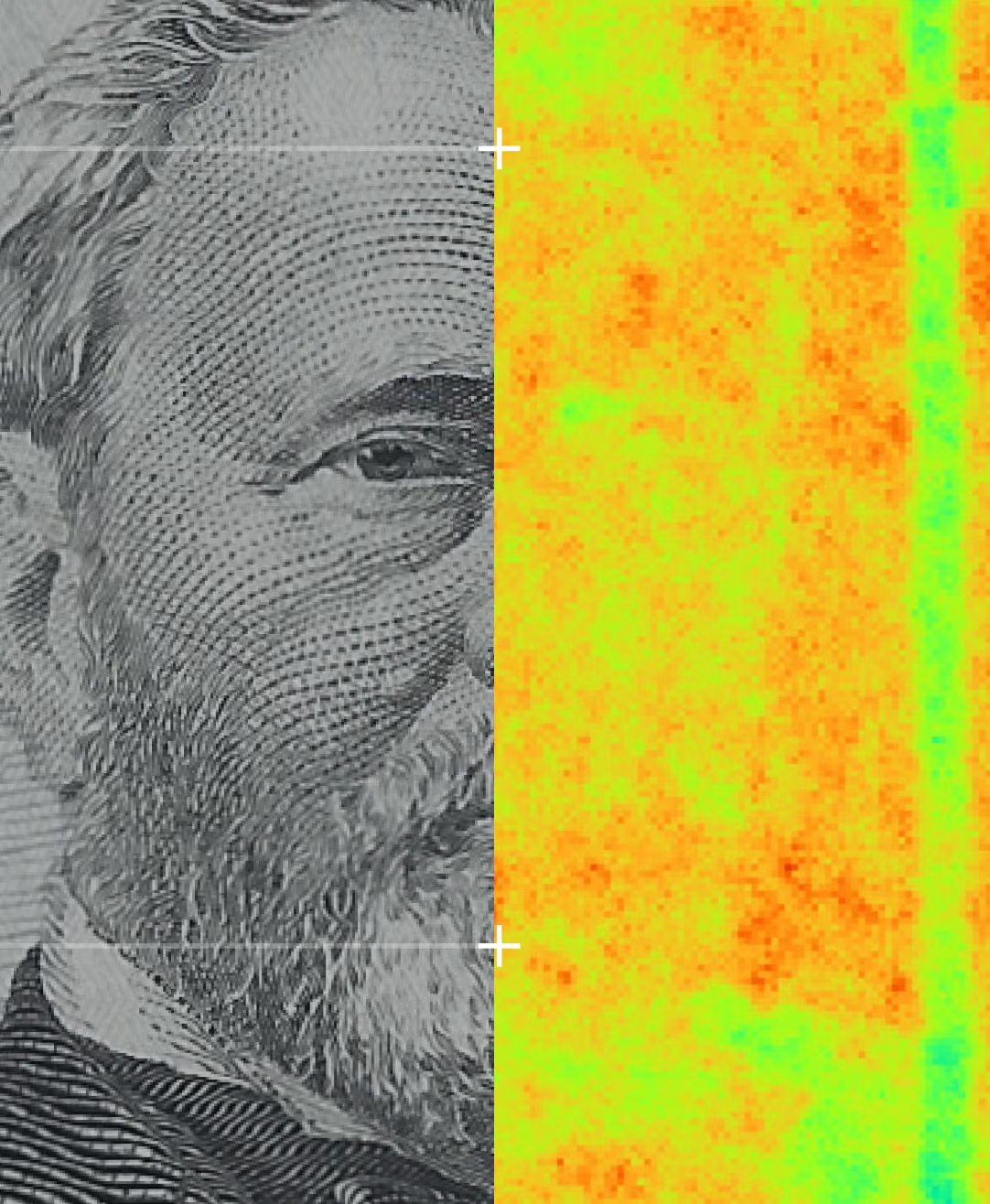
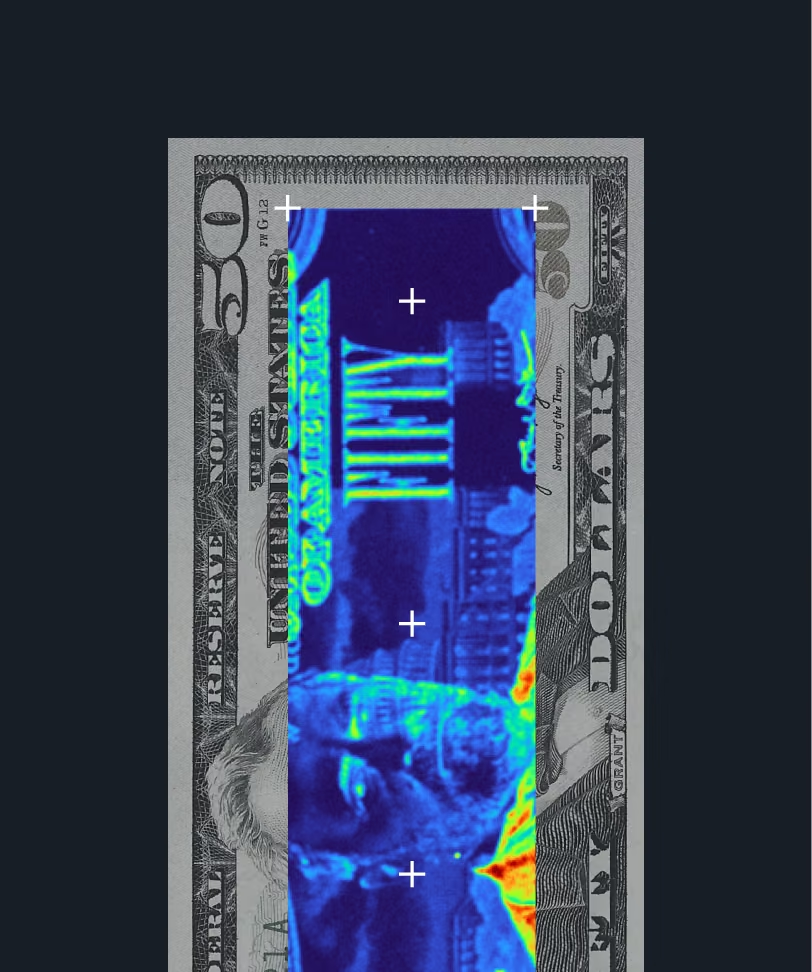
Thermal maps and an elemental overlay of a $50 bill from U.S. currency, mapping Fe, K, Cr, Zn, and Ti, demonstrate Veritas’ fit for document and artifact examination, counterfeit detection, and conservation science on objects too large or too valuable to sample destructively.
Atlas Veritas MacroXRF vs. Atlas Apex MicroXRF
Choose Veritas M When…
Your sample is large, your priority is area coverage and throughput, and 100 µm to 2 mm resolution is sufficient, on a benchtop footprint.
- Bulk materials
- Large artifacts
- Gemstone trays
- Industrial slabs and documents
Choose Veritas X When…
You need maximum stage size and detector capacity, and area coverage matters more than sub-10 µm detail.
- Drill cores
- Large geological sections
- Industrial slabs
- High-volume production samples
Choose Atlas Apex When…
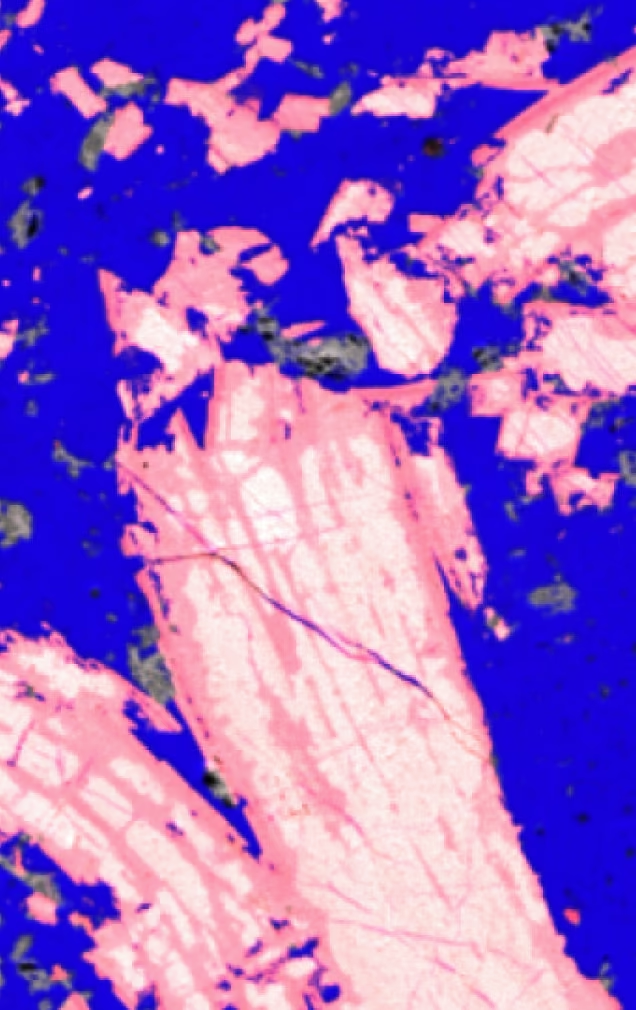
You need fine-feature resolution down to 5 µm, at a scale Veritas optics are not built to resolve.
- Mineral zoning
- Grain boundaries
- Individual particles
- Micro-scale inclusions
See What Veritas Can Map in Your Application
Tell us about your sample size, elements of interest, and throughput requirements. We’ll help determine whether Veritas M, Veritas X, or Atlas Apex is the right fit, and confirm current configuration options directly.
Designed and built in Austin, Texas, IXRF systems are backed by applications, engineering, training, and service support from the people who make them.
Frequently
Asked Questions
MacroXRF uses a larger X-ray spot to prioritize rapid, large-area elemental analysis and higher sample throughput, while microXRF uses a tightly focused beam for micron-scale spatial resolution. Atlas Veritas bridges conventional bulk XRF and microXRF by adding spatially resolved 2D elemental mapping to high-throughput XRF analysis.
Atlas Veritas can analyze elements from carbon (C) through uranium (U), providing broad elemental coverage for research, screening, and industrial materials analysis. Its configuration is particularly effective for applications requiring high sensitivity to heavier elements.
Atlas Veritas is designed for large samples, large analysis areas, and multi-sample arrays that would be inefficient to analyze using conventional point-by-point XRF. Applications include geological specimens, metals, concrete and industrial materials, gemstones, artifacts, documents, and other heterogeneous samples.
There is no fixed number because capacity depends on the size and arrangement of the samples. Atlas Veritas can automate large sample arrays; IXRF has demonstrated a single mapping workflow containing 744 gemstones, illustrating its potential for high-throughput batch analysis.
Yes. XRF analysis is non-destructive, allowing valuable or limited samples to be analyzed without permanently altering them. Many Veritas applications require little or no sample preparation, although a clean and appropriately presented surface can improve analytical consistency.
Atlas Veritas uses collimated X-ray optics with selectable spot sizes ranging from approximately 100 µm to 2 mm. This allows users to balance spatial resolution, X-ray intensity, mapping speed, and throughput according to the application.
Yes. Atlas Veritas performs 2D chemical and elemental mapping, showing where elements are distributed across a sample rather than providing only a single bulk measurement. This makes it possible to identify compositional variations, anomalies, segregation, and spatial relationships that conventional bulk XRF can miss.
Yes. Atlas Veritas supports quantitative elemental analysis in addition to elemental mapping, allowing measured X-ray intensities to be used to determine elemental concentrations. Quantitative performance depends on factors such as sample matrix, calibration, measurement conditions, and the elements being analyzed. IXRF specifically positions Veritas for both detecting and quantifying elemental composition.
Atlas Veritas uses energy-dispersive X-ray fluorescence detection optimized for sensitive, high-throughput elemental analysis. Detector configuration can be matched to the analytical application, elemental range, and throughput requirements.
Atlas Veritas is particularly well suited for applications requiring large-area elemental mapping, rapid screening, or high sample throughput. Applications include geology, metals and steel, industrial materials, concrete, conservation and cultural heritage, gemology, paleontology, quality control, and other workflows where spatial chemistry is important but micron-scale resolution is not required. IXRF has published Veritas applications involving steel segregation, concrete, geological samples, currency, gemstones, and fossils.
Atlas Veritas is designed and manufactured by IXRF Systems in Austin, Texas, USA. IXRF also provides applications expertise, training, technical service, and ongoing instrument support from its Austin headquarters.