
Largest-Chamber MicroXRF for Long Core, Large Parts, and Wafers
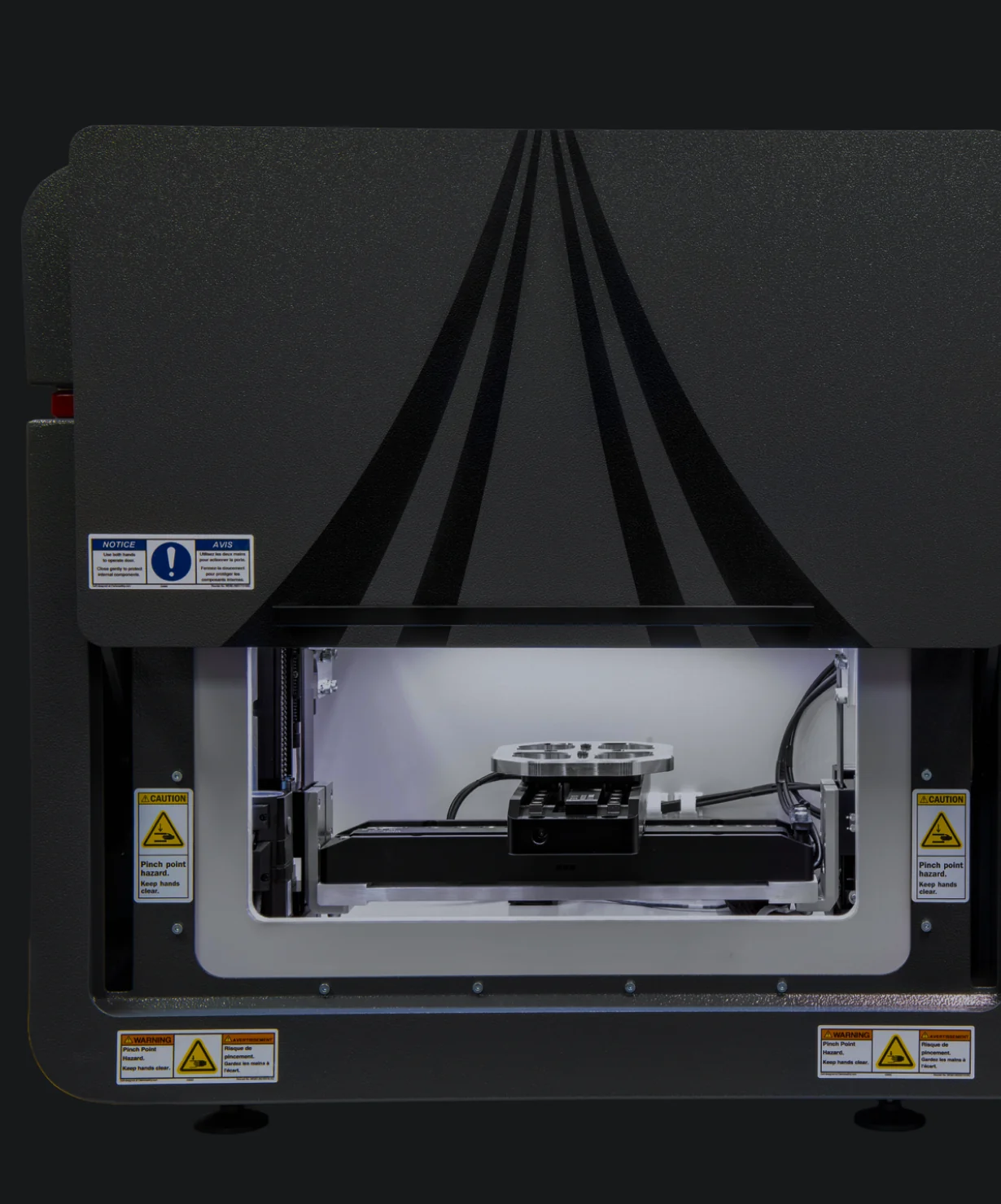
Same 5 µm optical engine as Apex M, in the industry's most voluminous sample chamber, built for automating more samples and wider sample-type variability.
- Edge-to-edge mapping of 300 mm wafers
- Fewer setups for long, intact runs
- Widest sample-type variability
- Sample chamber
- 940 × 660 × 355 mm
- Mapping area
- 400 × 300 mm
- Best fit
- Long core, large parts,
wafers
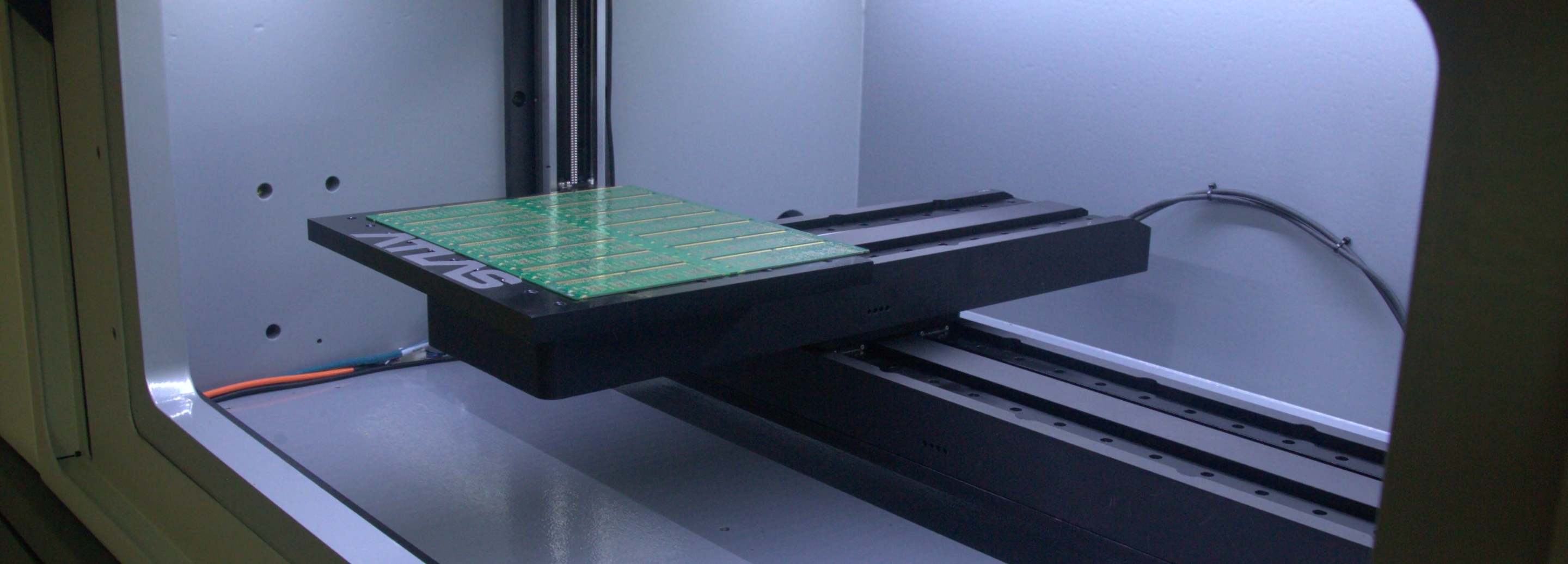
The Industry's Most Voluminous Sample Chamber
The Atlas Apex X is the large-area configuration of the Atlas Apex line. It delivers the same 5 µm spot size as the Apex M, with a significantly larger SDD detector, up to 280 mm², a mapping stage covering 400 × 300 mm, and the throughput to handle both large samples and high sample volumes without sacrificing resolution. For labs where the Apex M's stage size is the limiting factor, the Apex X removes that constraint.
Working with smaller, segmented samples and don't need the extra room?
What Makes Atlas Apex Different From Conventional µXRF
Not marketing claims. The specific geometry, detector, and vacuum choices that set the resolution and sensitivity ceiling, and they apply to Apex X exactly as they do to Apex M.
Perpendicular Geometry
The X-ray source is normal to the sample, producing a true circular spot down to 5 µm with no elliptical distortion. Angled-geometry competitors are limited to a 25 µm minimum spot because of beam ellipsing.
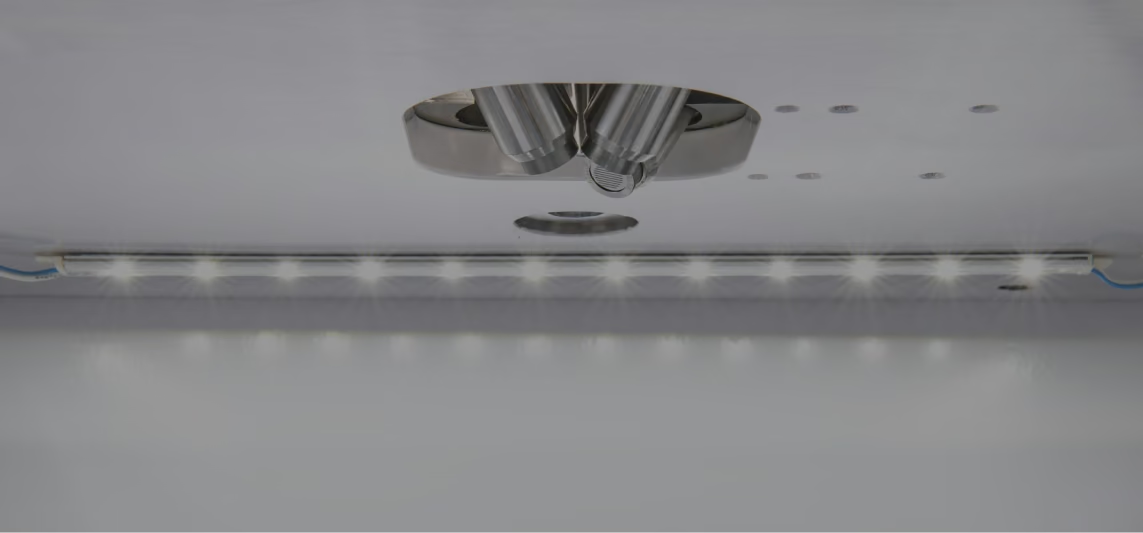
Up to Four SDD Detectors
Bundle up to four Silicon Drift Detectors for a combined active area of 260 mm², boosting throughput, sensitivity, and trace-element detection limits without compromising resolution.
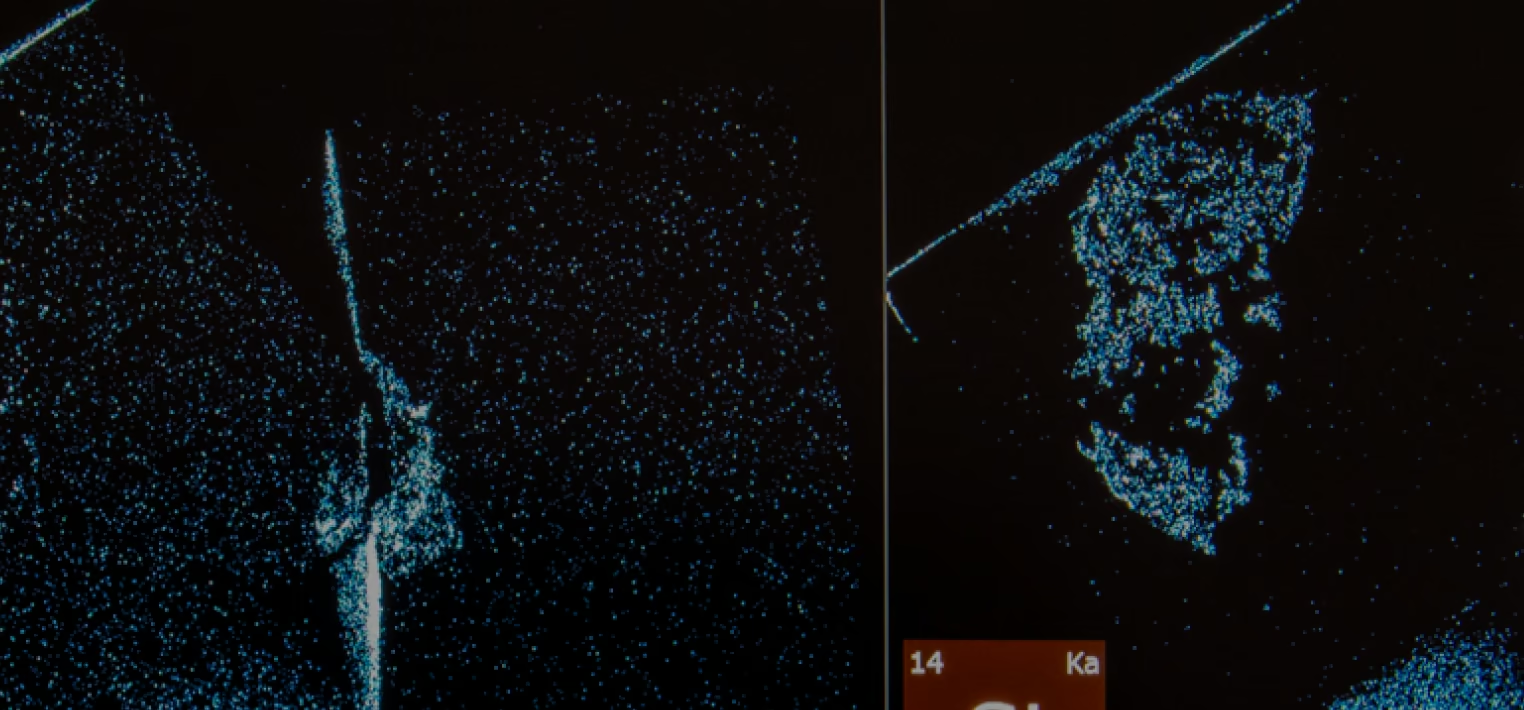
Full Spectrum, Every Pixel
Every mapped pixel stores a complete XRF spectrum. Users can generate new elemental maps, extract spectra, or re-quantify data after acquisition — without rescanning the sample.
Enhanced Vacuum Capability
Sealed chamber with adjustable vacuum pressure (<0.1 kPa) significantly boosts sensitivity for low atomic number elements, extending detection down to sodium — and carbon on the LE configuration.
“Atlas Apex microXRF delivers ~10 µm pixel resolution, revealing fine-grained mineral phases and chemical zoning that remain hidden at coarser resolutions, approaching the detail of synchrotron-based mapping.”
Atlas Apex Across Geology, Life Science, and Industry
From ore deportment to plant metal homeostasis to PCB failure analysis — real Atlas Apex output, not renders. High-throughput, large-format work like this is exactly what the Apex X chamber is built for.
Ore Mineralogy and Deportment
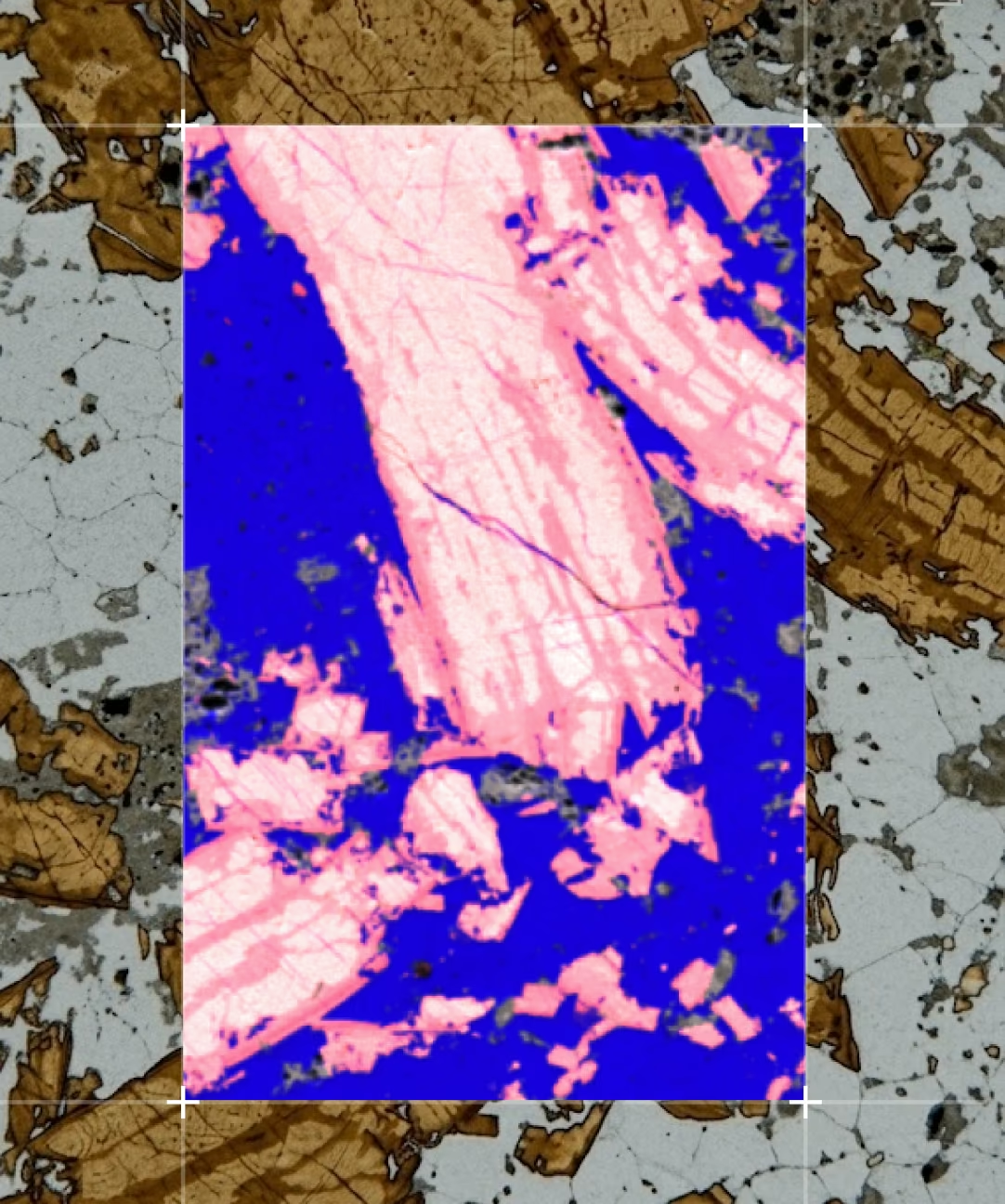
A sphalerite-bearing ore sample from the Philipsburg mining district shows a quartz vein in dolomitic carbonate host rock, with secondary Fe and Cu minerals from weathering. At pixel sizes under 20 microns, the finely intergrown nature of secondary minerals — and the polymetallic association of Cu, Fe, As, and Zn — becomes visible in ways bulk assay alone cannot show.
In gold deportment work specifically, Atlas Apex maps how gold relates to pyrite, arsenopyrite, arsenic, and sulfur — helping metallurgists understand whether gold is likely free, attached to other minerals, or locked within sulfide phases.
Phytomining and Plant Metal Homeostasis
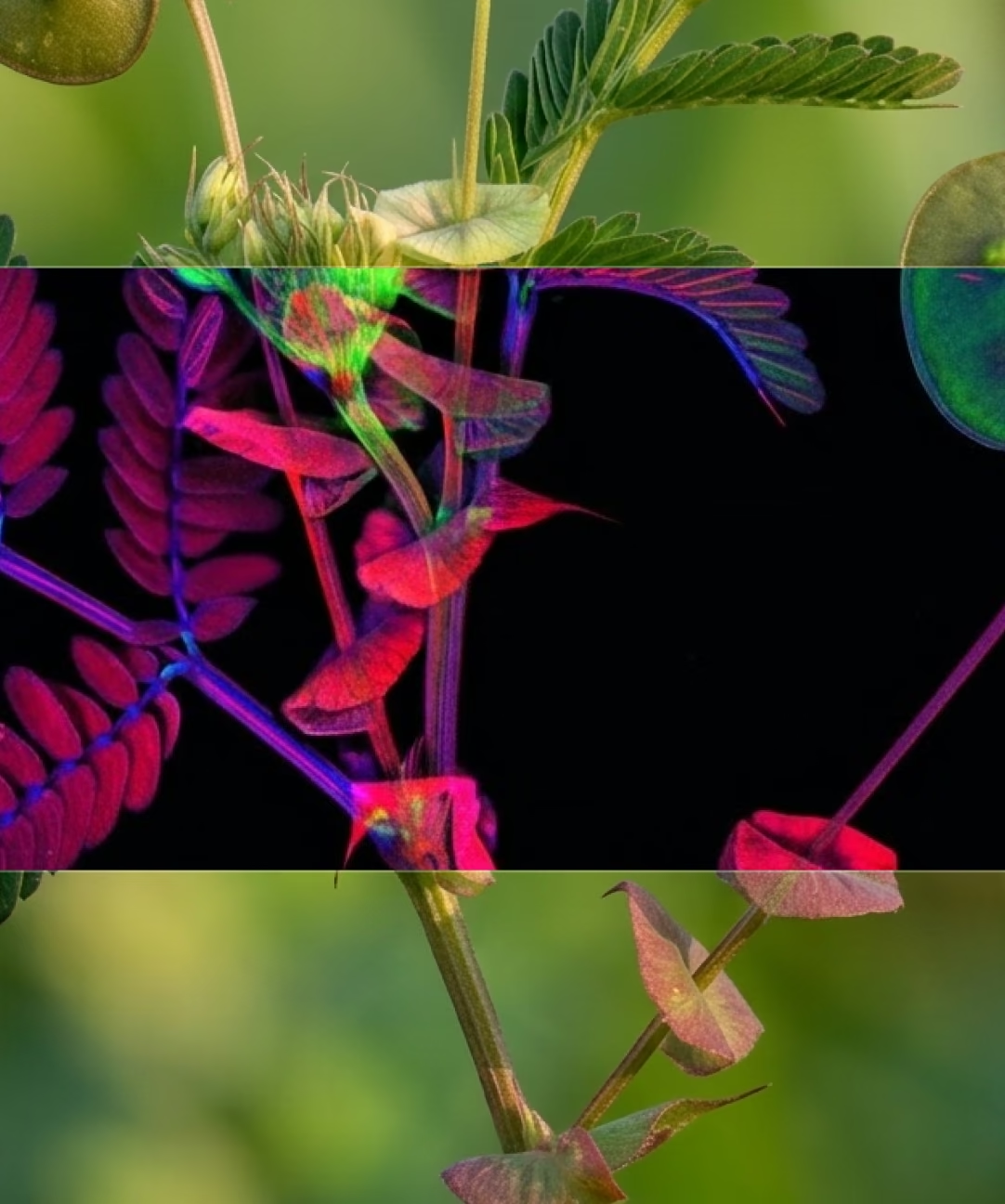
Atlas enabled high-resolution elemental mapping of selenium across whole plant structures of Neptunia amplexicaulis, revealing tissue-specific hyperaccumulation patterns that support hypotheses on phloem-mediated selenium redistribution and taproot storage.
The same technique applies across botany more broadly — from heavy-metal to REE hyperaccumulation studies, entirely non-destructive, with no coating or sample prep required.
Microelectronics: Assembly to Defect
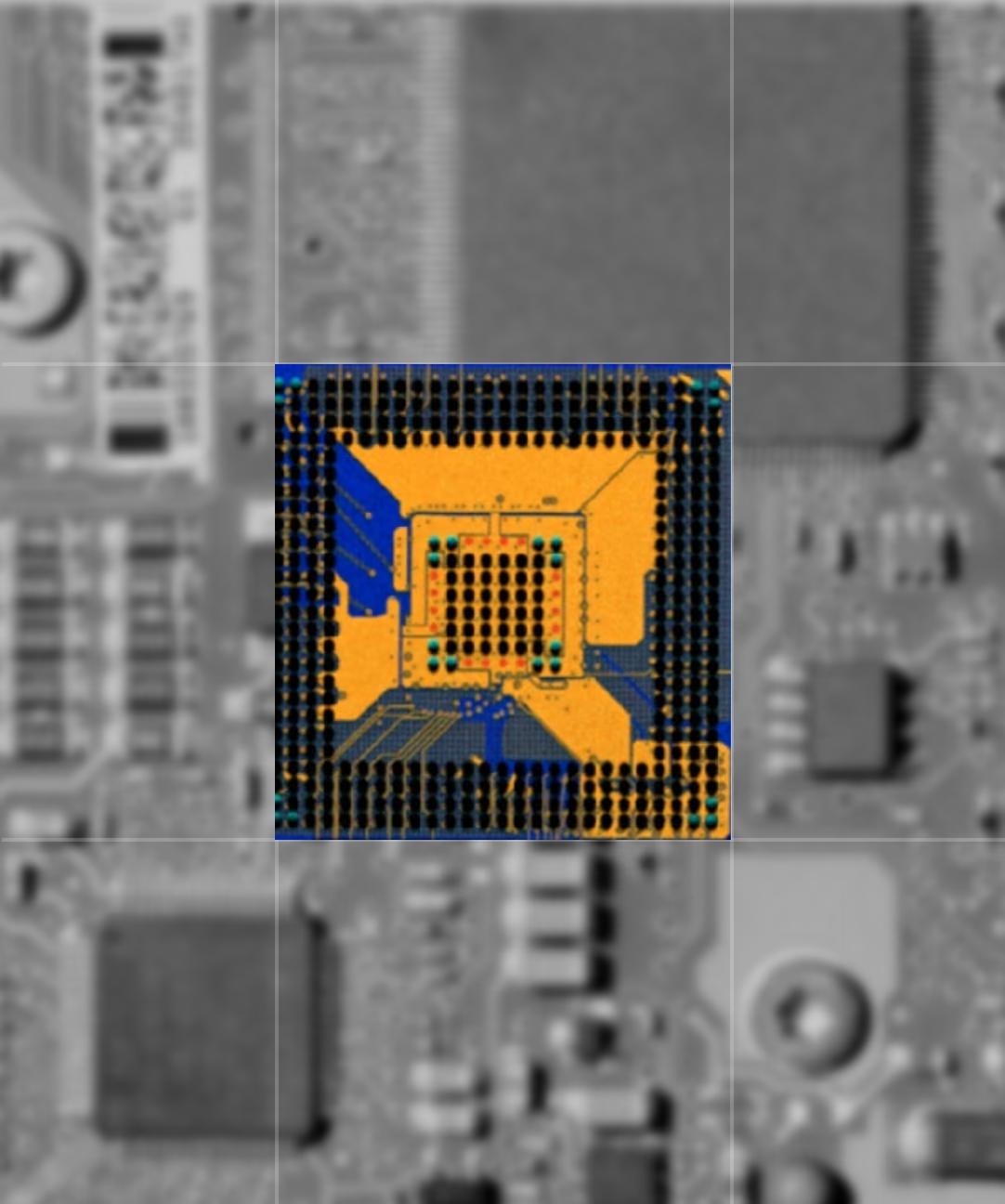
Atlas Apex connects broad-area elemental screening with micron-scale investigation on one platform — mapping material composition across boards, components, traces, and complex assemblies, then targeting anomalous features with high-resolution sub-maps.
5 µm mapping resolves fine interconnects; K/Ca overlays localize packaging residues and particles; Ag/Au overlays spatially resolve wire-bond and frame connections — all without sectioning the device.
Battery Electrodes and Energy Storage
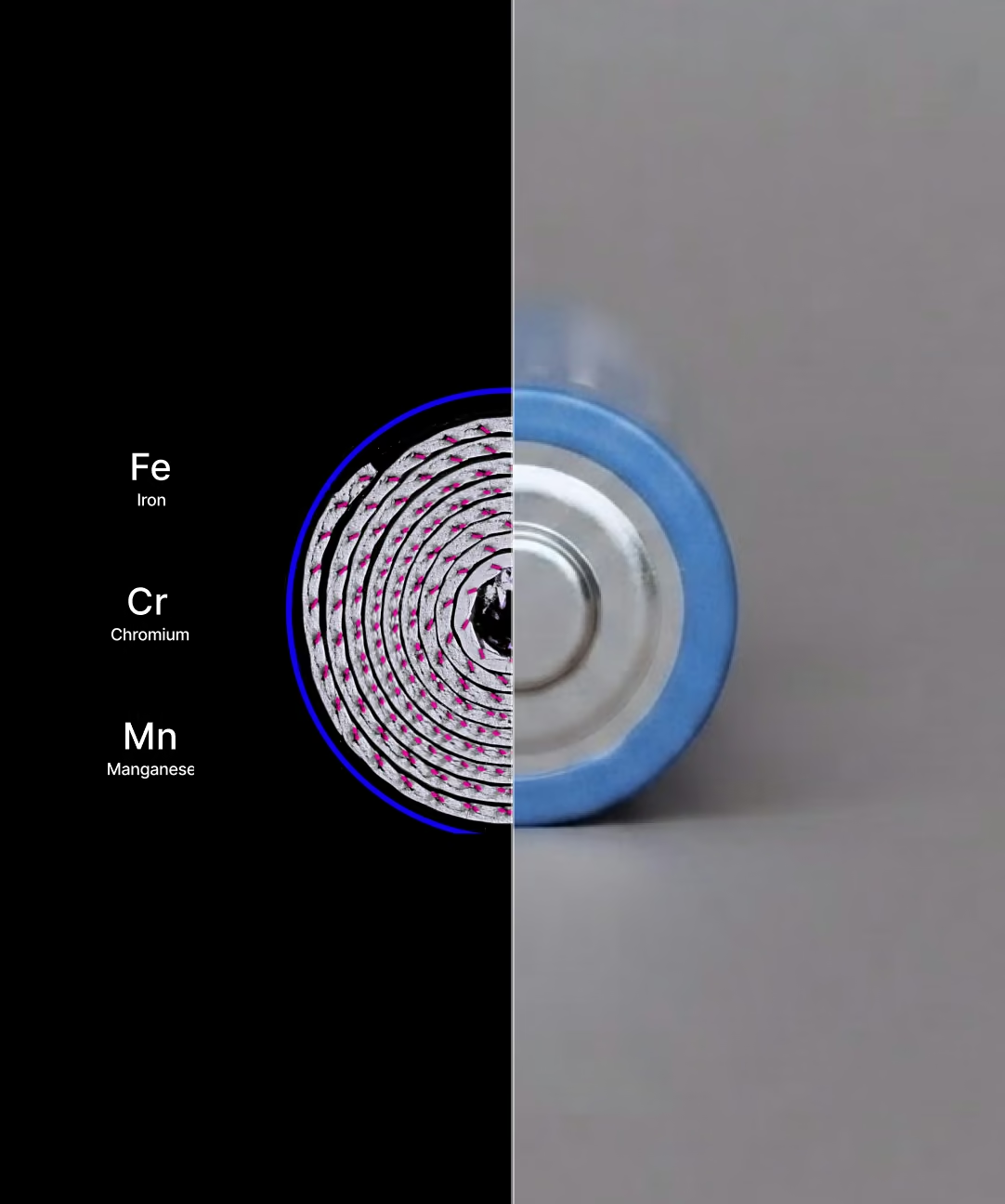
MicroXRF maps can reveal variations in electrode coating, current-collector defects, contamination, and transition-metal crossover between cell components. Depending on chemistry, elements of interest may include nickel, cobalt, manganese, iron, aluminum, phosphorus, sulfur, and copper.
Iridium Ultra™ — Hyperspectral XRF Mapping
Atlas Apex X is powered by Iridium Ultra, IXRF's in-house microXRF software platform for Windows® 11. It integrates acquisition, spectral processing, quantitative analysis, hyperspectral mapping, phase classification, image analysis, and reporting into a single workflow — with every pixel in a map storing a full XRF spectrum.
Quantitative Analysis
- Fundamental Parameters analysis for solids, liquids, powders, particles
- Thin-film FP for up to 8 layers plus infinite substrate
- Automatic peak ID, overlap correction, deconvolution
- Quantitative Match and material classification database
Elemental & Phase Mapping
- Hyperspectral mapping up to 9,998 × 9,998 pixels
- Simultaneous acquisition of up to 35 elements
- Principal Component Analysis for phase mapping
- IU-GEOCHEM mineral ID against a ~4,000-composition library
Mosaic Imaging & ROI
- Optical mosaic imaging up to 100 megapixels
- Full-sample visualization beyond the native camera field of view
- Multi-point automated analysis directly from the image
- Integrated crosshair overlay for XRF/optical correlation
Linescans & Particle Analysis
- Line profile analysis across interfaces, coatings, gradients
- Tiled or stacked chart views for comparison
- Morphology and particle segmentation tools
- Automated counting and measurement by feature type
Atlas Apex X Full Specifications
Same optical engine, same software as Atlas Apex M. The four rows highlighted in red are what actually change between the two chambers; everything else is shared.
- Sample chamber size
- 940 × 660 × 355 mm
- Outside dimensions
- 1690 × 787 × 1630 mm
- Mapping travel
- 400 (X) × 300 (Y) mm
- Stage travel
- 600 × 300 × 210 mm
- Elemental range
- Fluorine (F) through Americium (Am); Carbon (C) through Am on LE version
- Analysis atmosphere
- Air, vacuum, or He(g) purge
- Primary X-ray source
- Rh target, 50 W max, 50 kV @ 1 mA (other anodes available)
- Spot size (primary)
- 5 µm standard (10, 15, 20, 25, 40, 100 µm optional)
- X-ray filters
- Up to 7 plus open position
- Geometry
- Top-down beam, perpendicular to sample stage
- Detectors
- 1 standard, up to 4 (260 mm² total active area)
- Spectral resolution
- ≤125 eV
- Mapping scan speed
- 1–3 ms/pixel
- Stage XY speed
- Up to 300 mm/s
- Sample view
- 3 cameras for positioning and analysis
- Software
- Iridium Ultra on Windows® 11
- Vacuum readiness
- 0.1 kPa in ~120 seconds
- Quality & safety
- CE marked, RoHS, radiation < 0.5 µSv/h
Let's Evaluate Your Samples
Confirm target applications and sample types, define the required spot size and detector configuration, and run proof-of-concept measurements. We'll help determine whether Atlas Apex M or Atlas Apex X is the right fit for your lab.
Designed and built in Austin, Texas, IXRF systems are backed by applications, engineering, training, and service support from the people who make them.
Frequently
Asked Questions
The Atlas Apex M is a benchtop, chamber-based microXRF designed for routine laboratory analysis, while the Atlas Apex X is engineered for larger, heavier, or irregularly shaped samples that may be difficult to accommodate in a conventional benchtop system. Both platforms use Atlas Apex microXRF technology and Iridium Ultra software.
Atlas Apex X is designed to accommodate samples significantly larger than those typically handled by conventional benchtop microXRF systems. The practical sample limit depends on the sample’s dimensions, geometry, and weight, so IXRF can review your specific sample requirements before configuration.
Yes. Atlas Apex X is specifically designed for large, heavy, irregular, or intact samples that may be difficult to section or fit inside a traditional microXRF chamber. This makes it well suited for geological specimens, industrial components, concrete sections, cultural heritage objects, and other oversized materials.
Atlas Apex X can be configured with focused X-ray spot sizes down to approximately 5 µm, with additional spot sizes available to balance spatial resolution, X-ray intensity, sensitivity, and mapping speed. Actual spatial resolution also depends on the element being measured, sample composition, and surface geometry.
Depending on detector configuration, Atlas Apex X can detect elements from carbon through uranium. Different silicon drift detector options allow the system to be optimized for light-element sensitivity, broad elemental coverage, or specific application requirements.
In many applications, little or no sample preparation is required. Large or valuable samples can often be analyzed intact, although clean, flat, and polished surfaces can improve quantitative accuracy and spatial resolution when precise measurements are required.
Yes. Atlas Apex X can collect hyperspectral elemental maps over large areas while retaining a complete X-ray spectrum at every measurement point. Iridium Ultra supports elemental mapping, quantitative analysis, linescans, spectral processing, and quantitative concentration mapping.
Atlas Apex X can support up to four silicon drift detectors (SDDs). Multiple detectors increase X-ray collection efficiency, which can improve sensitivity, reduce acquisition time, and increase throughput during large-area elemental mapping.
Yes. Atlas Apex X uses IXRF’s Quick Disconnect Source (QDS) architecture, allowing compatible X-ray source and optic configurations to be exchanged without lengthy realignment procedures. This makes it possible to optimize the instrument for spatial resolution, sensitivity, or analytical throughput.
Yes. Atlas Apex X combines hyperspectral microXRF mapping with elemental segmentation, clustering, and mineral-classification workflows within Iridium Ultra. These tools can distinguish chemically different mineral phases and support advanced mineralogical interpretation, with complementary techniques used when definitive crystallographic phase identification is required.
Atlas Apex X requires more laboratory space than a conventional benchtop microXRF because it is designed to accommodate larger samples and provide greater sample access. IXRF can provide current installation drawings, footprint requirements, and recommended service clearances during laboratory planning.
Atlas Apex X is designed, manufactured, integrated, and supported by IXRF Systems in Austin, Texas, USA. IXRF also provides applications support, training, technical service, and ongoing instrument support.