ProSA Steel Analyzer
An energy-dispersive XRF (EDXRF) steel analyzer built for the production floor: composition and centerline segregation measurement in an enclosure engineered for a steel plant, not a lab bench.
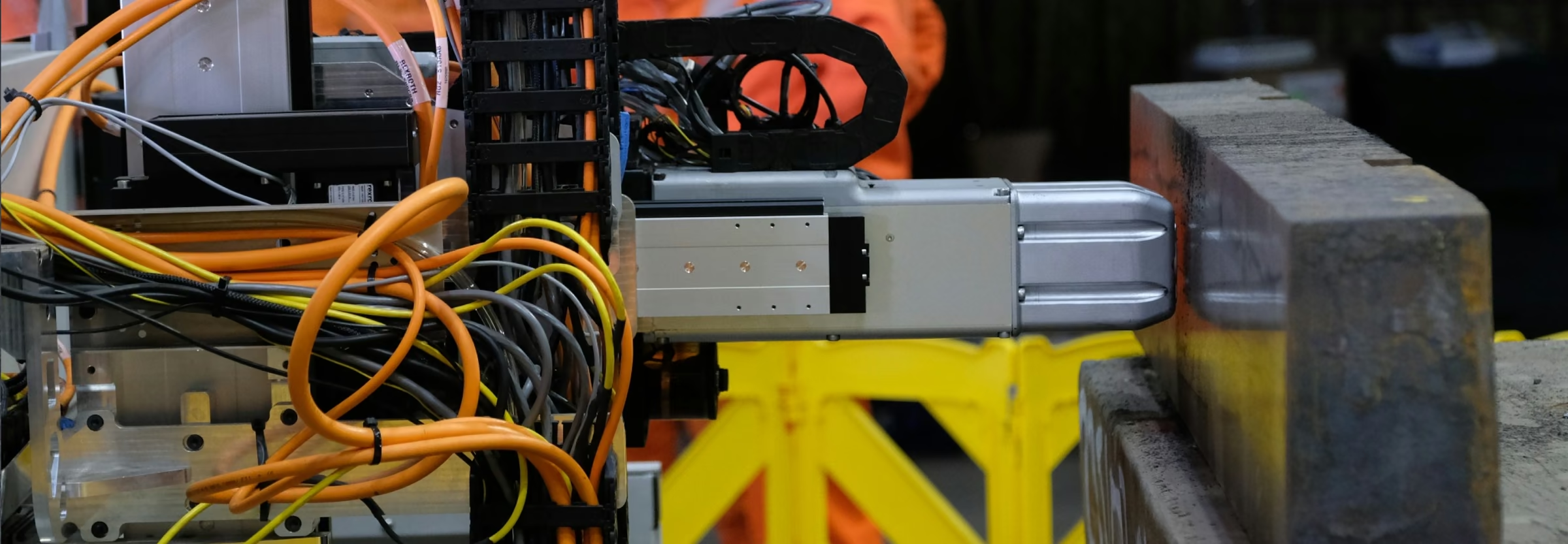
What ProSA Is
The system is designed for routine use by production personnel with minimal operator involvement.

ProSA is IXRF's mesoXRF (mesoEDXRF) analyzer for steel.
A dedicated at-line instrument, not a lab XRF repurposed for the floor.
- Detector: energy-dispersive XRF (EDXRF)
- Location: at-line, near the production process
- Operated by: plant personnel, not a dedicated spectroscopist
- Built and supported by IXRF in Austin, Texas
The ProSA Steel Analyzer
ProSA is a mesoXRF analyzer developed for industrial steel analysis rather than general laboratory research. It combines automated XRF measurement with an operator-focused interface and a system architecture suited to at-line operation, as a dedicated steel-production elemental analyzer rather than a repurposed lab instrument.
Steel Composition Analysis
ProSA measures elements relevant to steel production, alloy control, and segregation analysis. The exact element list, analytical ranges, and required measurement conditions are matched to the steel grades and production requirements of each facility.
IXRF works with plant teams to define:
- Elements of interest
- Expected concentration ranges
- Sample form and geometry
- Required measurement frequency
- Calibration requirements
- Reporting and data-integration needs
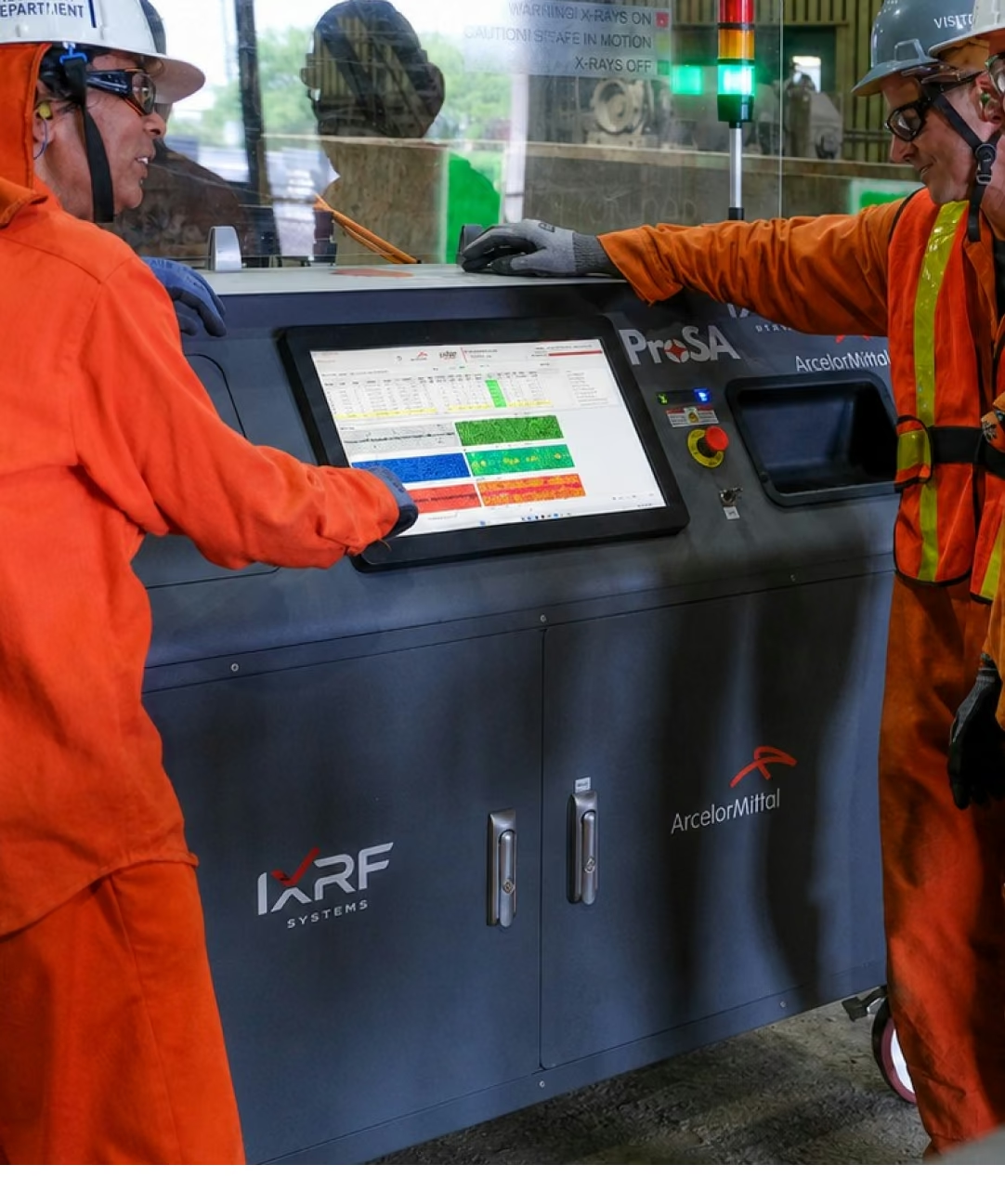
Centerline Segregation Analysis
During solidification, alloying and residual elements can become concentrated near the centerline of a continuously cast slab, billet, or bloom. This segregation may affect downstream processing, consistency, and final material properties.
ProSA is designed to measure elemental variation across the steel section, allowing plant teams to evaluate the location and severity of centerline segregation.
This supports:
- Casting-process evaluation
- Grade consistency monitoring
- Segregation trend analysis
- Comparison between heats or production runs
- Earlier identification of process drift
- Quality documentation
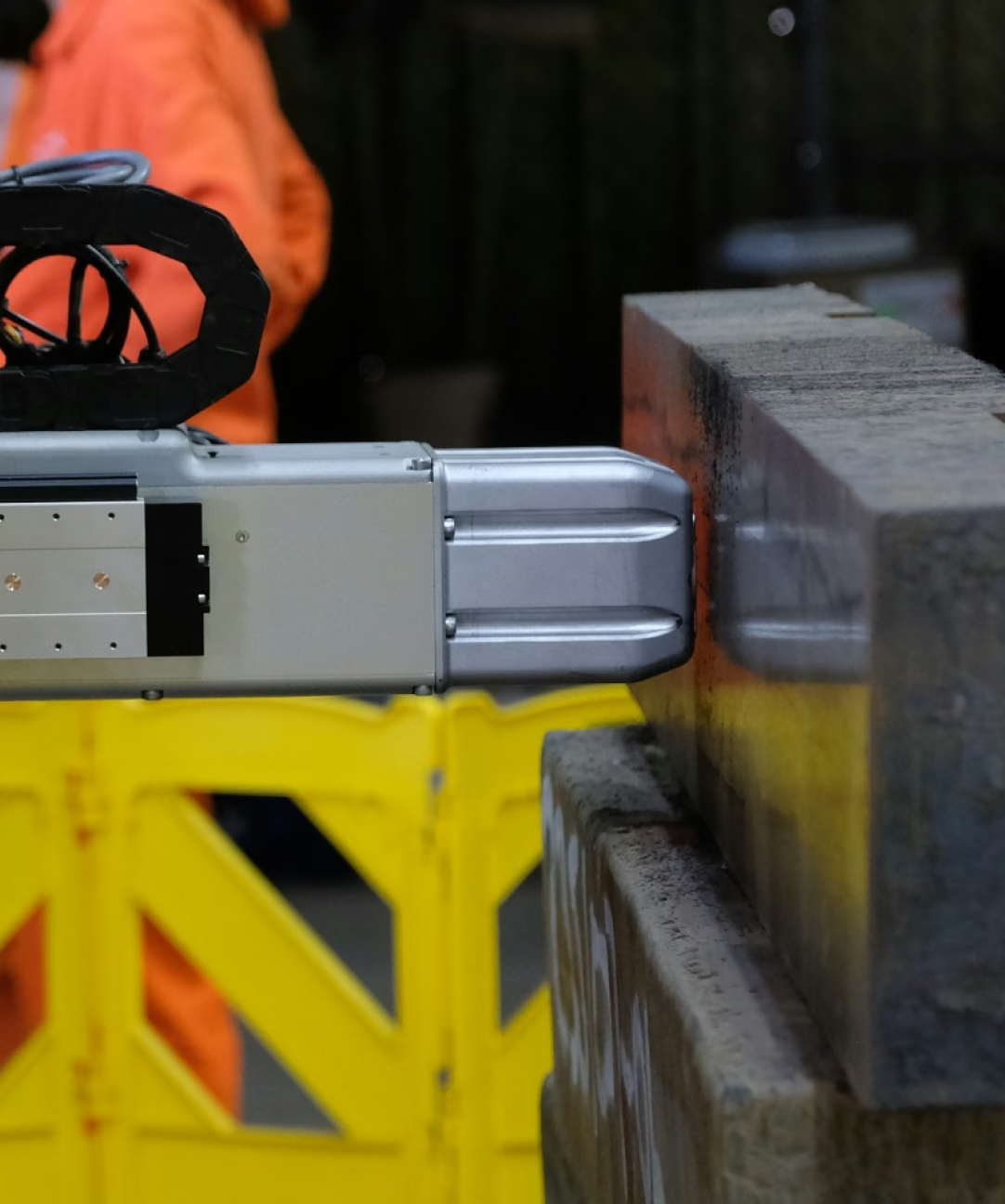
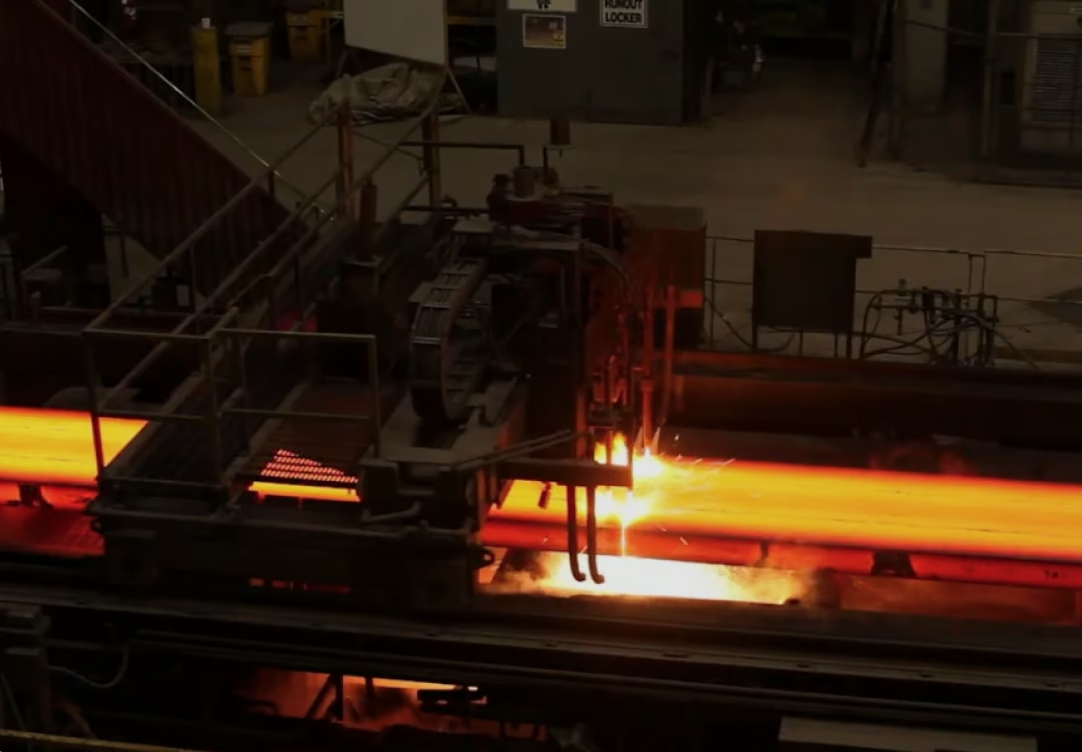

ArcelorMittal describes how ProSA fits into their centerline segregation workflow.
Built for an Industrial Environment
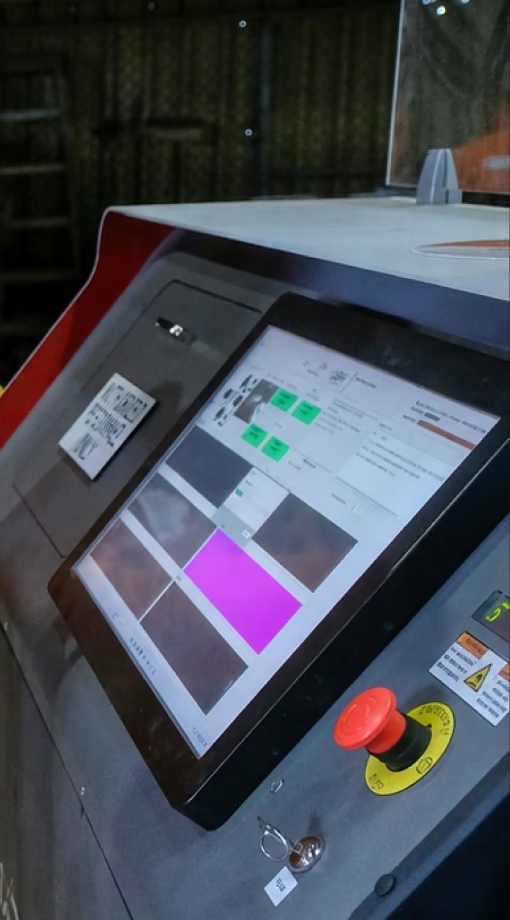
ProSA is designed as production equipment, not as a benchtop laboratory instrument placed near the line. Its operation, enclosure, controls, and service approach are intended for use in a steel-production environment.
Operator-Focused Operation
Routine measurements are designed to be performed by plant personnel rather than a dedicated spectroscopist. The workflow can be configured to simplify:
- Sample positioning
- Method selection
- Measurement initiation
- Result review
- Pass/fail decisions
- Data reporting
Industrial X-Ray Safety
ProSA is engineered for operation in staffed industrial areas with safety interlocks and an enclosed X-ray measurement design. Final safety requirements, site responsibilities, registration, and jurisdiction-specific compliance depend on the installation location and facility conditions. IXRF works with the customer to review the proposed installation and applicable radiation-safety requirements before commissioning.
Maintenance and Support
Industrial XRF equipment must fit within a plant's maintenance structure. The ProSA service plan can be coordinated around production schedules, system usage, facility conditions, and preventive-maintenance requirements. IXRF provides direct engineering, applications, and service support from the team responsible for the system.
Bring Composition Analysis to Your Production Floor
Tell us about your steel grades, elements of interest, sample format, production workflow, and required decision time. An IXRF engineer can help determine whether ProSA fits the application and define the appropriate analytical, installation, and support requirements.
ProSA systems are designed and built in Austin, Texas, with engineering, applications, and technical support provided directly by IXRF.
Frequently
Asked Questions
ProSA is an automated at-line mesoXRF analyzer designed to map and quantify elemental segregation in continuously cast steel. It scans the steel surface with a sub-millimeter X-ray beam to create quantitative elemental maps showing how alloying elements are distributed across the sample.
ProSA can measure key alloying and segregating elements including manganese (Mn), chromium (Cr), nickel (Ni), molybdenum (Mo), sulfur (S), phosphorus (P), aluminum (Al), and silicon (Si). Multiple elements can be evaluated from the same hyperspectral XRF dataset.
ProSA is designed primarily for cross-sections of continuously cast steel slabs and billets and can accommodate large, heavy samples. The analyzed surface should be relatively flat, clean, and appropriately prepared for quantitative measurement.
ProSA is designed for rapid at-line analysis, allowing steel producers to evaluate segregation without sending every sample through a lengthy laboratory workflow. Actual analysis time depends on the scan area, measurement spacing, and analytical conditions selected.
Yes, but sample preparation is straightforward. ProSA typically requires a clean, milled, and relatively flat steel surface to provide reproducible quantitative measurements.
Centerline segregation occurs when alloying and impurity elements become concentrated near the final solidification region of continuously cast steel. Excessive segregation can contribute to nonuniform properties, banding, cracking, and other downstream quality problems.
ProSA scans across the slab or billet centerline and produces spatially resolved elemental maps showing changes in composition. Quantitative concentration data can then be used to characterize the magnitude and distribution of elemental segregation.
Yes. Because ProSA produces spatially resolved elemental data, it can reveal compositional inhomogeneity beyond the centerline, including localized enrichment, inclusions, impurities, and other chemically distinct regions within the analyzed area.
ProSA is optimized for spatially resolved elemental analysis, showing where compositional variations occur across a steel section rather than providing only isolated measurement points or a bulk average. Its automated mesoXRF mapping combines elemental imaging with quantitative analysis for process-control applications.
ProSA can be calibrated using reference steel standards with known elemental concentrations. Calibration relationships are used to convert measured XRF intensities into quantitative concentration data for the elements being monitored.
Yes. ProSA incorporates multiple active and passive safety systems, including X-ray shielding, status indicators, proximity sensing, motion interlocks, and laser-defined safety zones. The system was engineered for industrial operation and has been approved under Ontario Regulation 861 for X-ray safety.
No. ProSA uses automated alignment, acquisition, data processing, and safety controls through a Windows-based touchscreen interface, allowing trained production or quality personnel to perform routine measurements without being XRF spectroscopy specialists.
ProSA is designed for routine industrial operation with automated instrumentation and solid-state X-ray detection. Preventive maintenance primarily focuses on maintaining system performance, calibration, motion components, safety systems, and the cleanliness of the analytical environment.
ProSA is designed for at-line quality and process control, particularly after continuous casting and before downstream rolling or forming. Identifying excessive segregation at this stage can help manufacturers adjust casting processes and avoid additional processing of material that does not meet internal quality requirements.