Table of contents
Analysis of Orbicular Jasper Using MicroXRF with High Spatial Resolution: An Insight from IXRF Systems
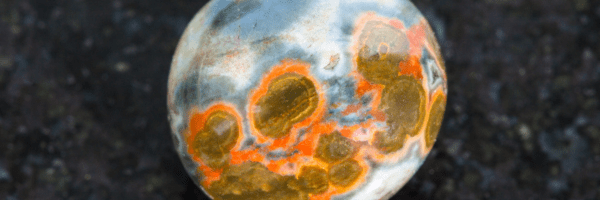
Orbicular jasper, celebrated for its unique orb-like inclusions and visual charm, is a subject of interest for gem enthusiasts and geologists. Its rarity makes decoding the elemental composition and phase distribution of orbicular jasper an appealing quest. Employing advanced analytical techniques, IXRF Systems comprehensively explores orbicular jasper’s elemental composition using micro X-ray fluorescence (µXRF).
Significance of MicroXRF
µXRF is a state-of-the-art non-destructive analytical technique utilizing X-rays to determine the elemental composition of samples. Its impressive spatial resolution (down to 5μm pixel size) makes it an invaluable tool for in-depth analysis of intricate minerals like orbicular jasper, where the tiniest compositional variation can offer insight into its formation.
Methodology
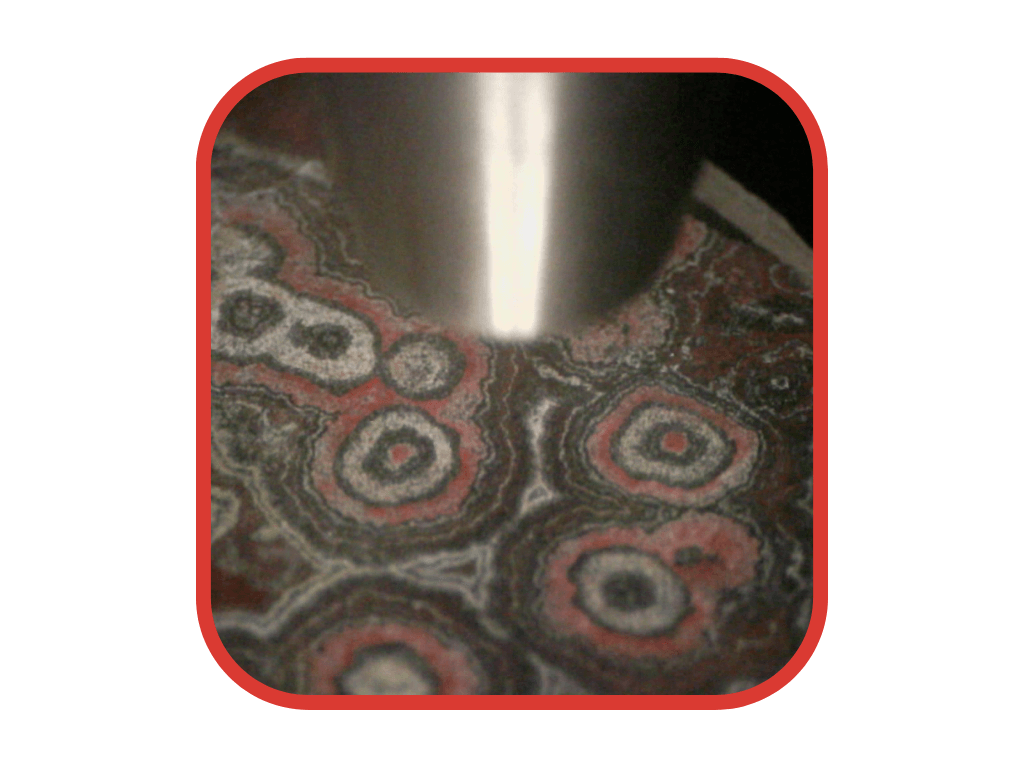
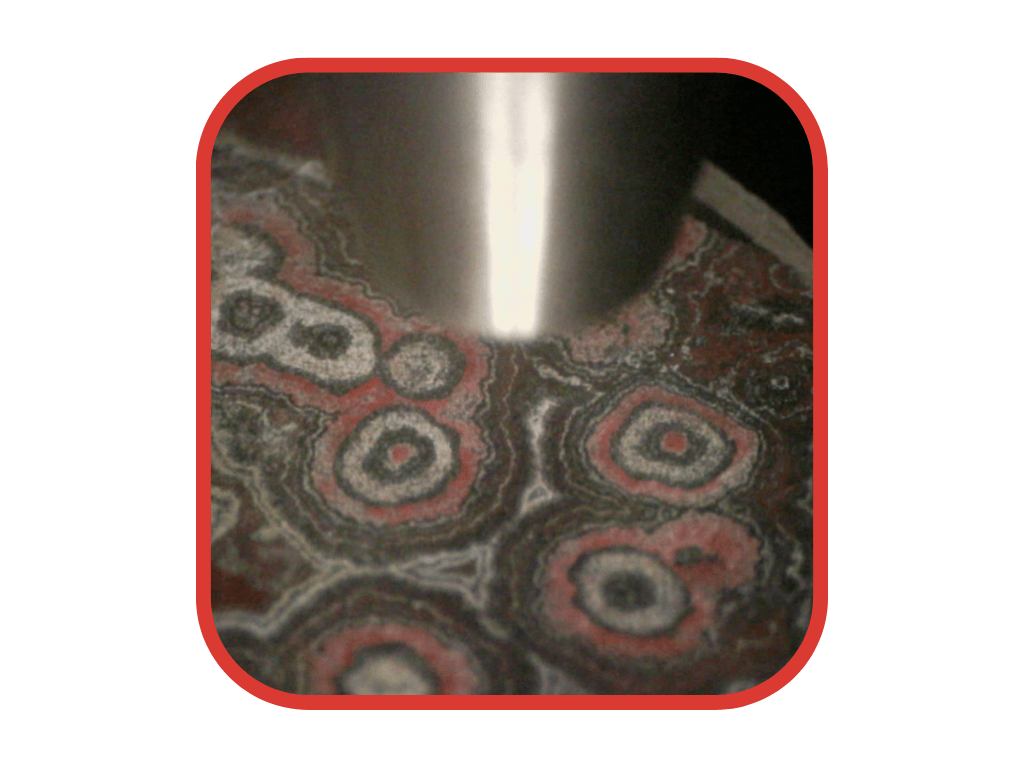
Sample preparation: Sourced primarily from Madagascar and Australia, orbicular jasper samples were prepared in thin sections to ensure optimal X-ray penetration.
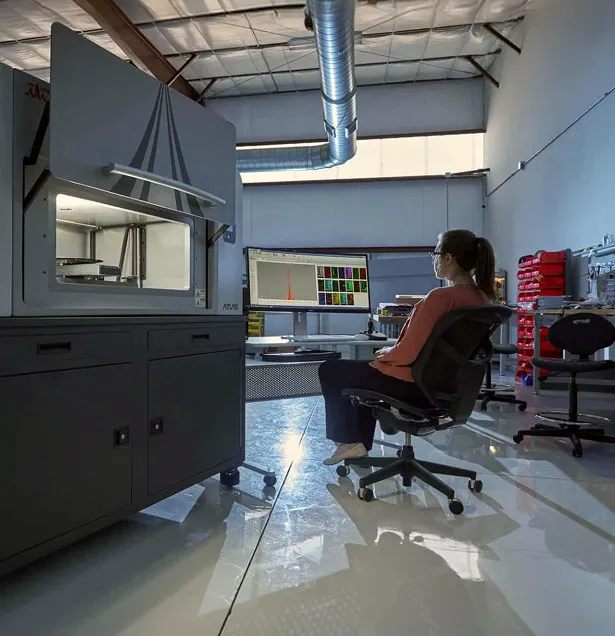
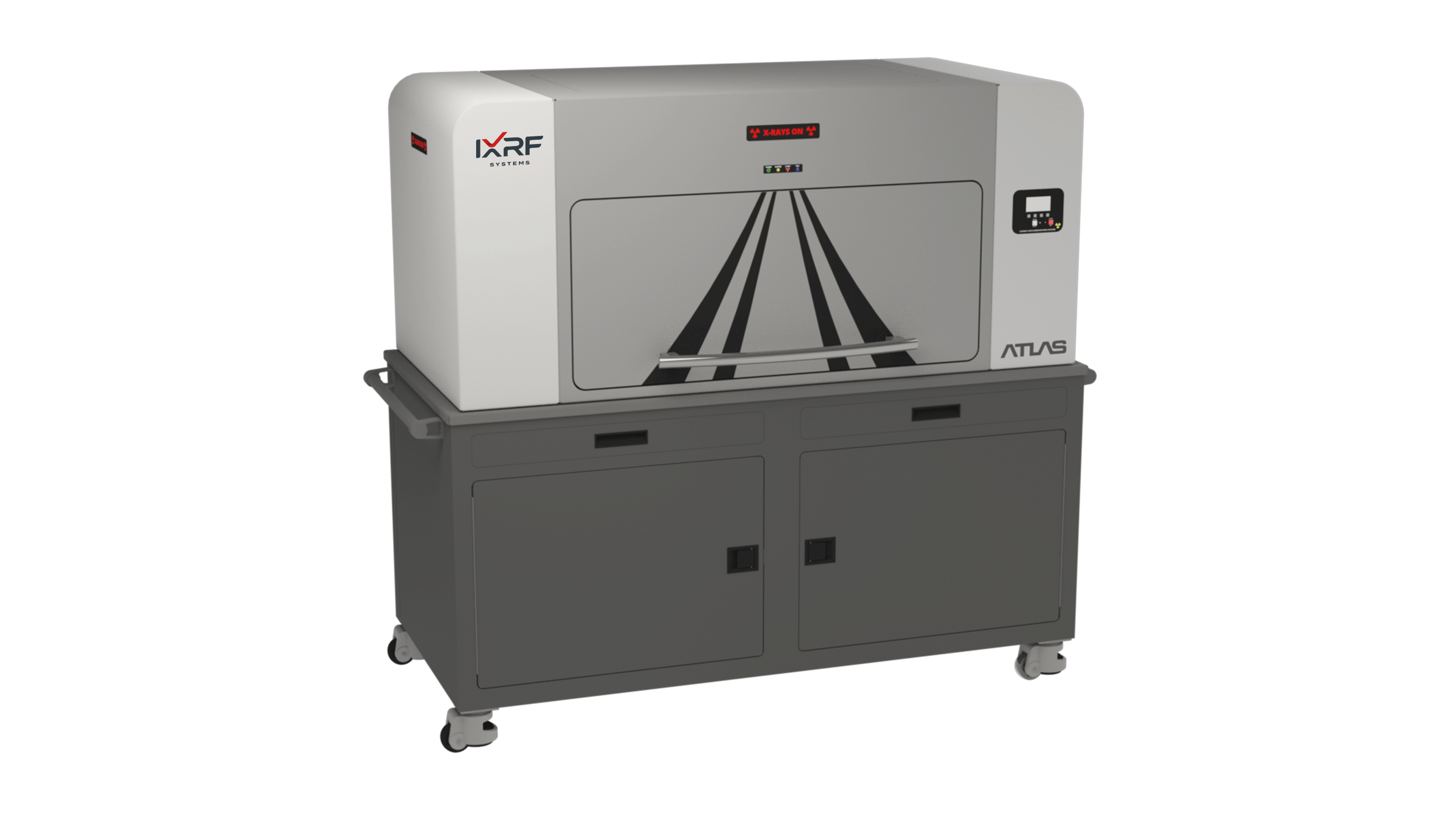
Data acquisition: The orbicular jasper sampleswereelementally mappedusing IXRF Systems’ Atlas X microXRF instrument, producing a detailed dataset with remarkable spatial resolution of 5µm.
Data refinement: Background subtraction, normalization, andnoise reduction allowed the transforming of raw intensity counts into concentration or relative intensity values.
Principal component analysis (PCA): PCA simplified the data by focusing on its inherent variance, converting the dataset into orthogonal variables or principal components. This reduction technique paves the way to phase identification.
K-means clustering: As a follow-up to PCA, K-means clustering grouped similar data points into distinct clusters based on their principal component values. This iterative method categorizes each data point with the nearest cluster centroid until convergence.
Creating the phase map: The culmination of K-means clustering manifests as a detailed phase map where each cluster, distinguished by colors and shades, depicts the elemental composition and phase distribution within the orbicular jasper.

Findings
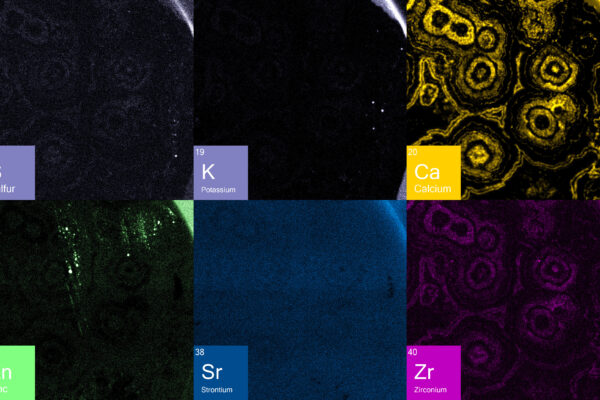
Elemental distribution: The analysis revealed rich concentrations of Si, Ca, Fe, and other trace elements in the orbicular patterns, with variations between the orb’s core and outer rings (Figure 1).
Spatial resolution: High spatial resolution microXRFprovided detailed insight into the distribution of elements within minute structures of the orbicular jasper. This allowed for a more refined understanding of the mineral’s internal architecture and possible nucleation points.
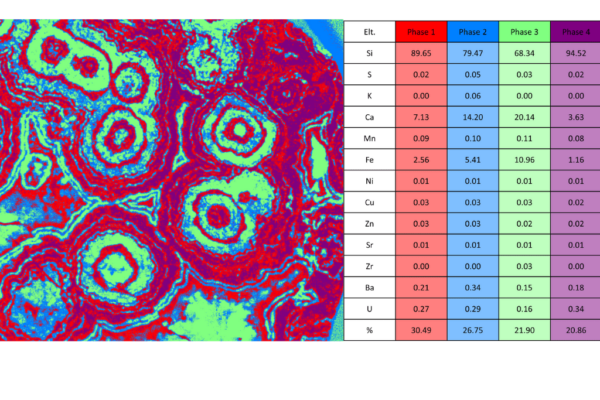
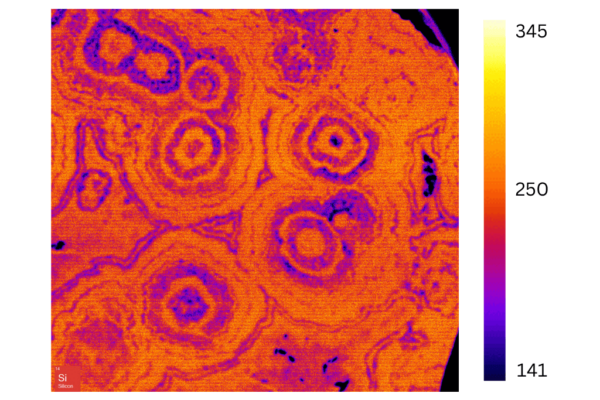
Phase map interpretation: The phase map (Figure 4) offers a visual representation of different regional compositions by element identification and quantification, shedding light on their distribution, size, shape, and the relation between thesevarious phases.
Conclusions
The detailed elemental analysis of orbicular jasper through µXRF has several implications.
Formation theories: The varying elemental concentrations across different sections of the orbicular patterns suggest multiple stages of formation, likely related to changes in the geochemical environment at the time of formation.
Gemological insights: For the gem industry, understanding the composition can be invaluable for distinguishing genuine orbicular jasper from imitations or modified stones.
Conservation efforts: A deeper understanding of the mineral’s composition can aid in its conservation, especially when considering treatments to enhance its appearance or durability.
In summation, the merger of high spatial resolution µXRF with PCA and K-means clustering, as facilitated by IXRF Systems, provides a comprehensivetool set aiding the understandingof orbicular jasper. The journey from raw sample to a detailed phase map reflects the potential of modern analytical methods,unveilingmesmerizing intricacies hidden within nature’s gems.
Our exploration doesn’t stop here. We invite researchers, gem enthusiasts, and curious minds to join us,together uncoveringhidden stories within nature’s treasures and paving the way for innovative discoveries.
IXRF Systems is a leading provider of X-ray fluorescence instrumentation. With our advanced analytical solutions, we are committed to supporting research, quality control, and educational endeavors across various industries.