Table of contents
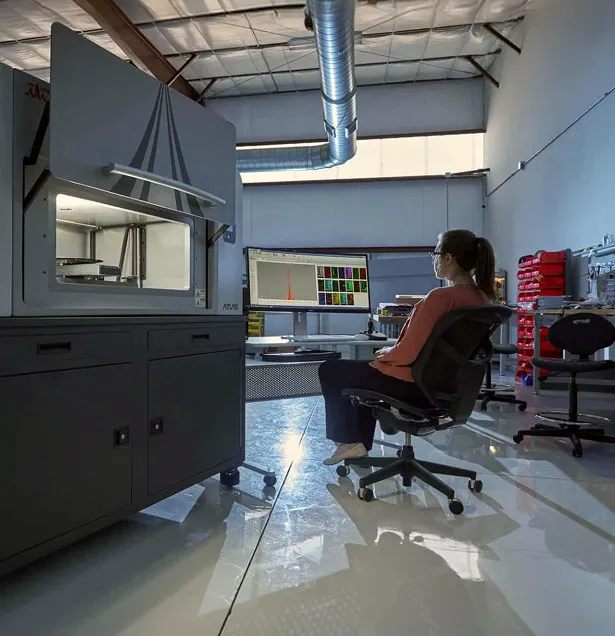
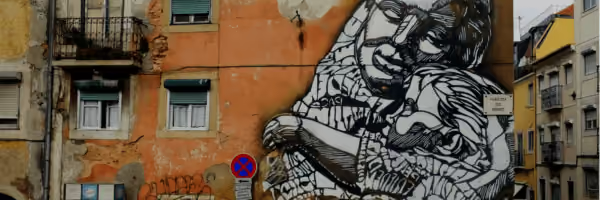
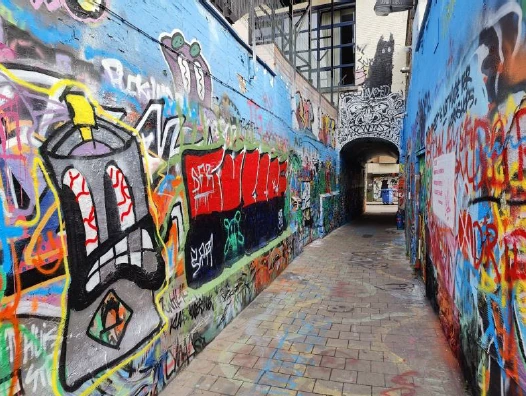
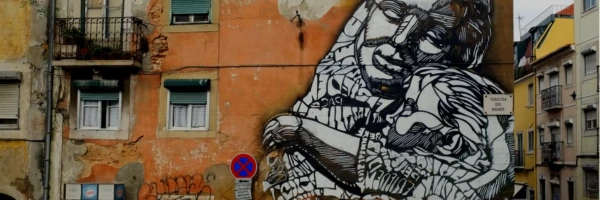
With its vibrant murals and intricate compositions, urban street art serves as a canvas for evolving social and cultural narratives. These artworks layer stories and materials over time and are found in locations like Graffiti Alley in Ghent and the Galeria de Arte Urbana in Lisbon. At IXRF Systems, we empower researchers with the Atlas microXRF system, offering high-resolution, non-destructive analysis to uncover these hidden histories.


Precision with High Spatial Resolution
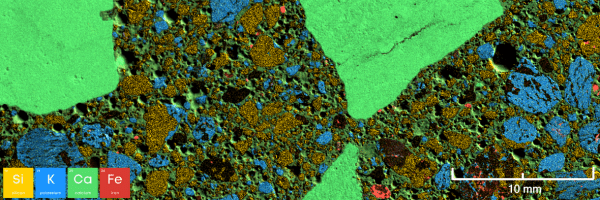
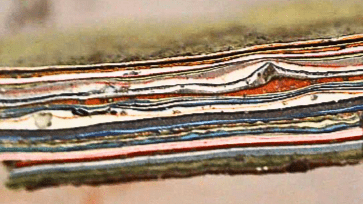
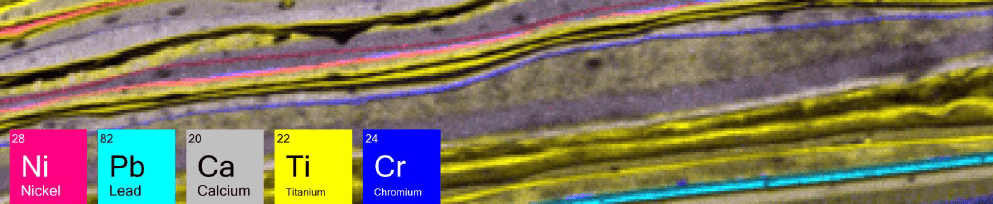
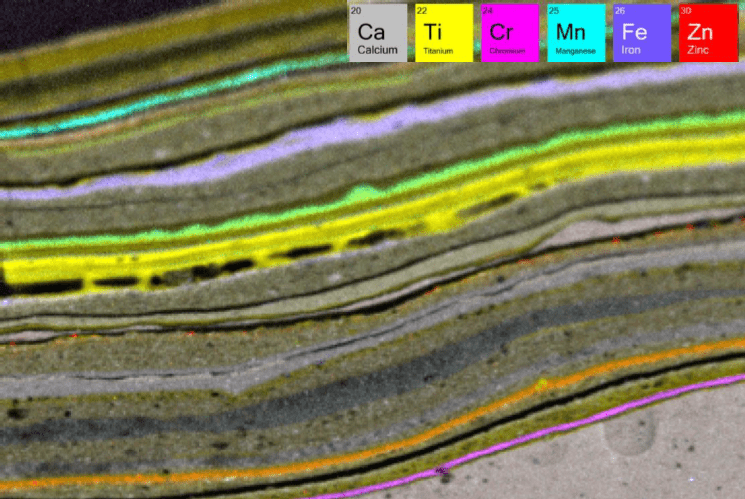
The Atlas microXRF stands out for its remarkable spatial resolution, achieving a spot size as small as 5 microns. This capability allows for detailed mapping and analysis of even the thinnest paint layers, capturing the evolution of artistic techniques, pigment choices, and material formulations. By offering high-resolution data, the Atlas enables researchers to study each layer’s elemental composition, providing valuable insights into changes in materials used over the years.
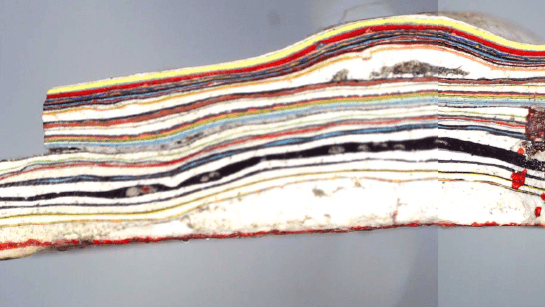


Advantages of X-ray Photon Excitation
Unlike electron beams utilized in traditional SEM/EDS systems, the Atlas microXRF employs X-ray photon excitation. This approach allows for deeper penetration into sample layers, making it particularly effective for analyzing complex, stratified artworks. The non-destructive nature of X-ray excitation also preserves the integrity of the piece while providing a thorough analysis of thicker and hidden layers.
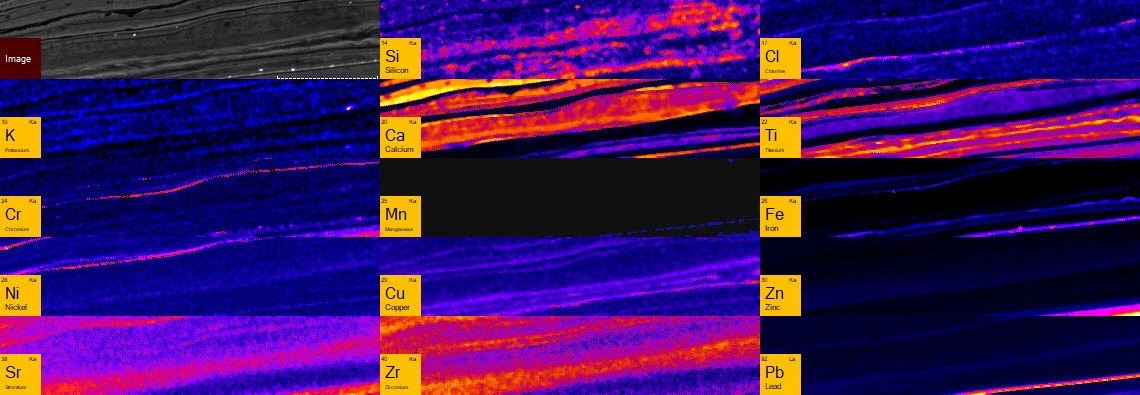
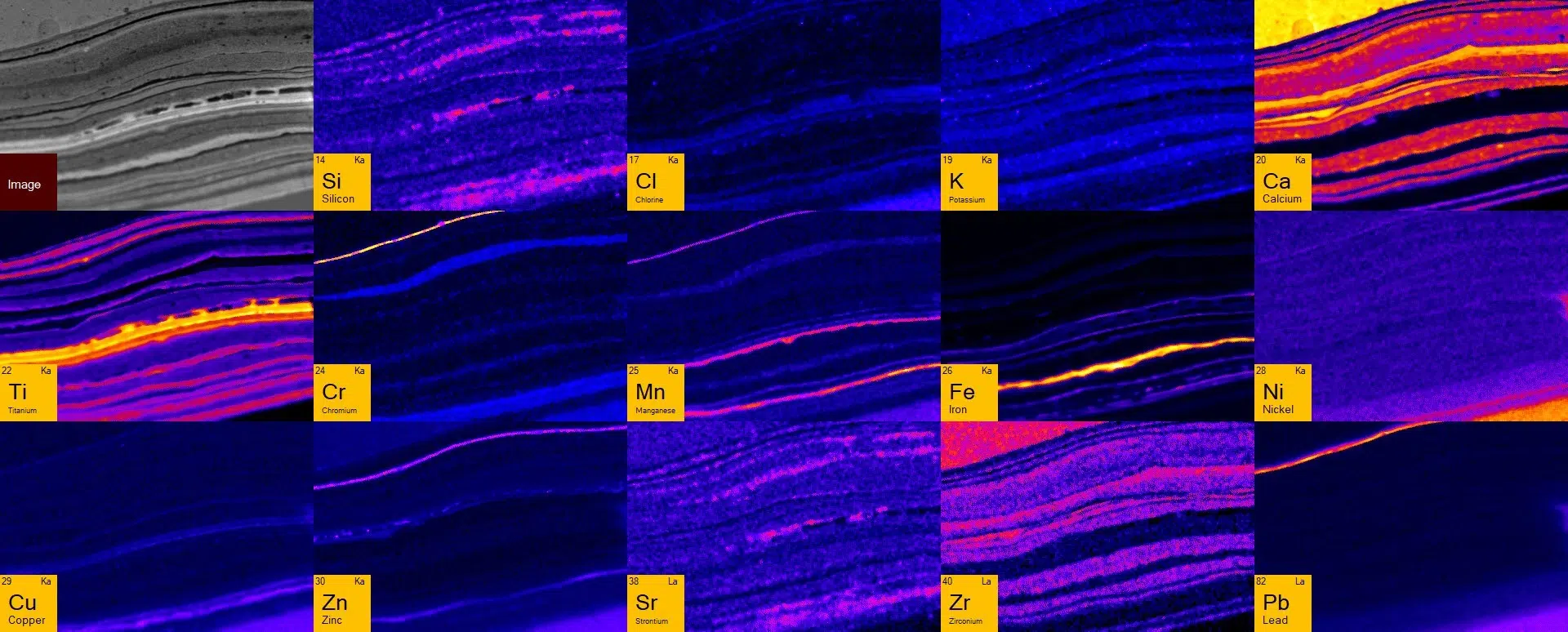
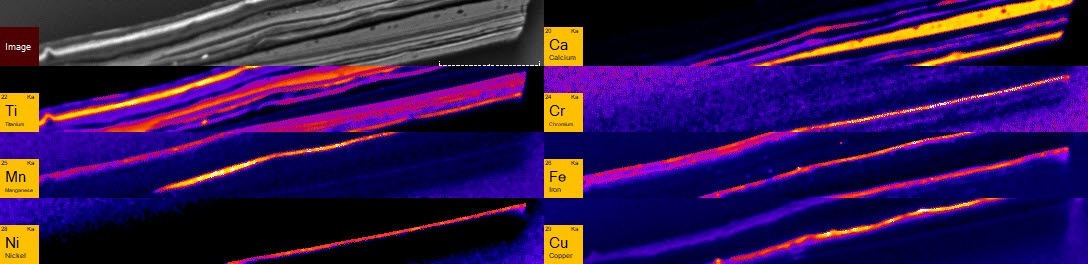
X-ray photon excitation offers lower detection limits, enhancing sensitivity for detecting trace elements and subtle changes in composition across paint layers. This means researchers can differentiate between pigments, binders, and additives, gaining a more comprehensive understanding of the materials used by artists.

Supporting Cultural Heritage Preservation Efforts
By combining high spatial resolution and advanced X-ray photon capabilities, the Atlas microXRF plays a crucial role in analyzing and preserving cultural heritage. Through detailed elemental mapping and material characterization, we can better understand the evolution and preservation needs of urban street art.
We extend our gratitude to Jacopo La Nasa, Silvia Pizzimenti, Chloë Coustet, Mathieu Thoury, Ilaria Degano, and Francesca Modugno for their impactful research and presentation, presented at the International Congress Chemistry for Cultural Heritage 2024, which highlight the importance of uncovering and preserving the stories embedded in urban art.
If you are working on a cultural heritage project that could benefit from the capabilities of the Atlas microXRF, we encourage you to contact us. Let’s explore how this technology can support your work and help preserve the stories layered within these remarkable artworks.