Introducing Atlas in Action: Customer Application Spotlights from IXRF Systems
Today, we are launching Atlas in Action, a recurring series that highlights how researchers are using Atlas microXRF to turn elemental chemistry into spatial insights.
From geological processes and advanced materials to plant biology, archaeology, and paleontology, each spotlight will feature published research in which elemental mapping helped reveal something that conventional imaging or bulk analysis could not.
Mapping the Chemistry of a 90-Million-Year-Old Fossil
Our first spotlight takes us more than 90 million years into the past.
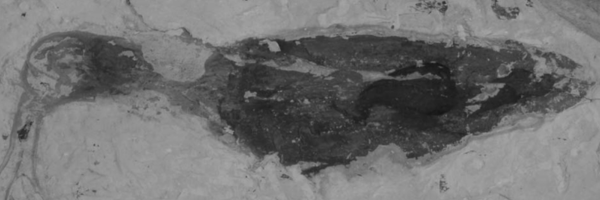
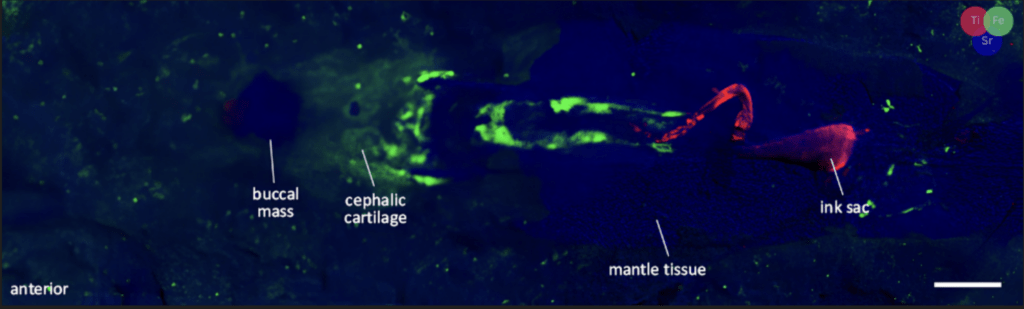 Figure 1. Spatially resolved elemental analysis helped researchers distinguish anatomical structures by their chemical patterns.
Looking Beyond the Visible Surface
Researchers used multimodal imaging to investigate the Late Cretaceous coleoid Dorateuthis syriaca from the exceptionally preserved fossil deposits of Lebanon.
High-resolution elemental mapping with an Atlas X microXRF helped reveal chemical patterns associated with anatomical structures that were difficult to recognize using conventional photography alone.
The study documented previously undescribed features, including suckers, axial nerves, and possible retractor muscles, while supporting the interpretation of D. syriaca as an eight-armed, active visual predator.
Researchers and Participating Institutions
Researchers: Alison J. Rowe, Isabelle Kruta, Loïc Villier, Pierre Gueriau, Marie Radepont, Oulfa Belhadj, Katharina Müller, Romain Jattiot, Dirk Fuchs, Thomas Clements, Sylvain Charbonnier, and Isabelle Rouget.
Institutions: Centre de Recherche en Paléontologie – Paris, Muséum national d’Histoire naturelle, Sorbonne Université, CNRS, University of Lausanne, IPANEMA, Centre de Recherche sur la Conservation, SOLEIL Synchrotron, and Friedrich-Alexander-Universität Erlangen-Nürnberg.
Read the Published Research
https://doi.org/10.4202/app.01160.2024
When chemistry becomes an image, the past comes into sharper focus.