MicroXRF vs ICP-MS and ICP-OES
Spatial Elemental Maps or Sensitive Bulk Quantification?
MicroXRF, ICP-MS, and ICP-OES are all powerful elemental-analysis techniques, but they produce fundamentally different types of information.
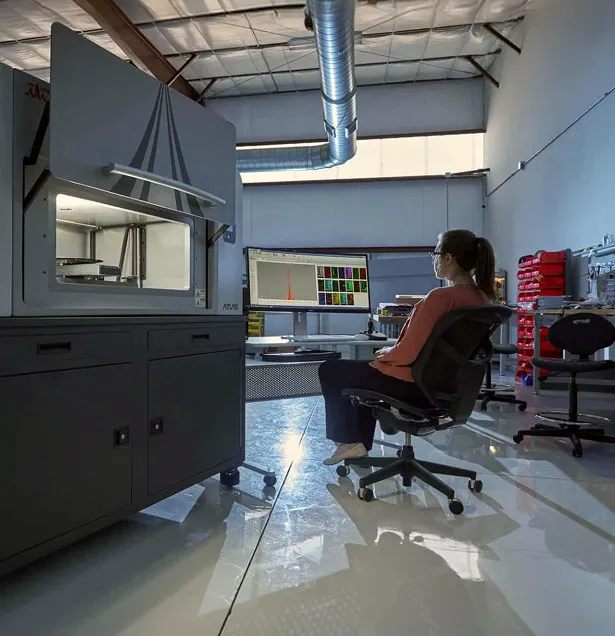
MicroXRF analyzes specific locations on an intact sample and creates spatially resolved elemental maps.
ICP-MS and ICP-OES most commonly analyze a liquid produced by dissolving, digesting, extracting, or otherwise preparing part of the sample. The resulting measurement provides an elemental concentration for the prepared aliquot but generally removes the original spatial context.
MicroXRF answers:
Which elements are present, and where are they located?
ICP-MS and ICP-OES answer:
What is the average elemental concentration in the prepared sample?
Comparing the Techniques
When Is MicroXRF the Better Choice?
MicroXRF should be considered when the sample’s internal distribution matters.
Examples include:
- A contaminant concentrated within a small region
- Trace elements hosted by a particular mineral
- Chemical zoning within a grain
- Segregation across a metal or alloy
- Variation through a coating or interface
- Elemental gradients across biological tissue
- Particles requiring individual characterization
- Valuable specimens that cannot be dissolved
- Materials that must be reanalyzed later
- Failure-analysis samples in which location provides insight into the cause
Digesting such a sample may produce an accurate average concentration while destroying the evidence showing where the element was located.
Do Not Lose the Information Contained in Location
Choose microXRF when elemental distribution, sample preservation, and local chemistry matter. Choose ICP-MS or ICP-OES when sensitive bulk quantification is the primary objective.
When Is ICP-MS the Better Choice?
ICP-MS is generally preferred when the analytical objective requires:
- Ultra-trace bulk concentrations
- Isotopic ratios
- Direct lithium measurement
- Regulatory limits at very low concentration
- Quantification of dissolved elements
- High-sensitivity analysis of environmental waters
- Semiconductor-grade contamination measurements
- Geochemical isotope studies
- Speciation when coupled with chromatography
- High-sensitivity multi-element analysis of digested samples
ICP-MS is particularly valuable when the lowest possible concentration limits or isotopic information are more important than spatial distribution.
When Is ICP-OES the Better Choice?
ICP-OES is often the more practical choice when laboratories require:
- Routine multi-element quantification
- Major and minor element analysis
- High sample throughput
- Analysis of higher-concentration elements
- Analysis of high-matrix solutions
- Quality-control testing
- Analysis of digested geological, metallurgical, food, environmental, or industrial samples
ICP-OES measures characteristic optical emission from atoms excited in an inductively coupled plasma. Solid samples normally require digestion, dissolution, or another method of introducing the material into the plasma.
The Consequences of Sample Digestion
Digestion can be analytically appropriate, but it changes the nature of the information.
After digestion:
- Individual grains are no longer distinguishable
- Inclusions are combined with the surrounding matrix
- Coating and substrate contributions may be mixed
- Elemental gradients disappear
- Localized contamination becomes a bulk average
- The original specimen may no longer be available for reanalysis
- Incomplete digestion or contamination can influence the result
The reported concentration is representative only when the selected material and preparation procedure adequately represent the original sample.
Bulk Accuracy vs Spatial Representativeness
A bulk result can be highly precise but still fail to explain a heterogeneous material.
For example, an ICP result may accurately report 50 ppm of a particular element. It may not determine whether that element is:
- Uniformly dispersed
- Concentrated in one inclusion
- Associated with a valuable mineral
- Present only at the surface
- Confined to a failed region
- Located within a coating rather than the substrate
MicroXRF provides this spatial context.
A Complementary Workflow
The techniques are often strongest when used together:
- Use microXRF to map the intact specimen.
- Identify chemically distinct regions and determine how representative the sample is.
- Select targeted regions or representative material for digestion.
- Use ICP-MS or ICP-OES for sensitive bulk quantification.
- Interpret the bulk concentration using the microXRF distribution map.
MicroXRF can also help explain unexpected variation between replicate ICP analyses by revealing sample heterogeneity.
Why Atlas Apex for Spatial Elemental Analysis?
Atlas Apex provides:
- X-ray spot sizes down to approximately 5 µm
- Large-area automated mapping
- Full-spectrum information at each pixel
- Quantitative elemental mapping
- Multiple excitation conditions
- Air, helium, and vacuum operation
- Large sample accommodation
- Multiple silicon drift detector configurations
- Statistical tools for identifying chemically distinct regions
- Non-destructive analysis of intact specimens