MicroXRF vs LA-ICP-MS
Non-Destructive Mapping or Ultra-Trace Analysis?
MicroXRF and laser ablation inductively coupled plasma mass spectrometry (LA-ICP-MS) both reveal how elements are distributed across a solid sample, but they provide fundamentally different analytical information.
MicroXRF uses a focused X-ray beam to excite the sample without intentionally removing material. LA-ICP-MS uses a laser to ablate microscopic amounts of the sample and transports the resulting particles into a plasma mass spectrometer.
MicroXRF is often the better choice for non-destructive, large-area elemental imaging. LA-ICP-MS is generally preferred when the analysis requires ultra-trace sensitivity, lithium detection, isotopic information, or laser-based depth profiling.
MicroXRF and LA-ICP-MS at a Glance
When Is MicroXRF the Better Choice?
MicroXRF is particularly valuable when the original sample must remain intact or available for additional analysis.
Common examples include:
- Rare geological and planetary specimens
- Archived drill core and thin sections
- Cultural heritage and archaeological materials
- Biological tissue sections
- Forensic evidence
- Electronics and manufactured components
- Large specimens requiring extensive elemental maps
- Samples that must be measured before and after treatment or exposure
- Studies requiring repeat measurements at the same location
Because microXRF does not intentionally ablate the sample, researchers can revisit selected regions, change acquisition conditions, or transfer the specimen to SEM, Raman, XRD, or another analytical technique.
MicroXRF is also advantageous when a large map is needed to understand the complete sample before selecting smaller areas for more sensitive destructive analysis.
Preserve the Sample Before Consuming the Target
Choose microXRF for non-destructive, large-area elemental imaging. Choose LA-ICP-MS when isotopes, lithium, geochronology, or ultra-trace sensitivity are essential.
When Is LA-ICP-MS the Better Choice?
LA-ICP-MS should be considered when the analytical question depends on:
- Ultra-trace elemental concentrations
- Direct measurement of lithium
- Isotopic ratios
- Geochronology
- Small inclusions or localized trace-element reservoirs
- Laser-based depth profiling
- Trace-metal imaging in biological tissues
- Measurement of elements that are difficult to analyze by XRF
LA-ICP-MS provides exceptional sensitivity and access to information that conventional XRF cannot provide, particularly when isotopic or ultra-trace measurements are central to the research question.
Sample Preservation Matters
LA-ICP-MS is often described as minimally destructive because each measurement removes only a small amount of material. However, the laser creates an ablation mark and consumes part of the region being analyzed.
That distinction matters for:
- Irreplaceable specimens
- Museum and cultural heritage materials
- Evidence requiring preservation
- Small samples with limited available material
- Samples requiring additional surface analysis
- Experiments involving repeated measurement of an unchanged region
MicroXRF can provide a comprehensive elemental map before any material is removed.
Large-Area Context vs Targeted Trace Analysis
LA-ICP-MS can produce detailed elemental images, but mapping large specimens may require substantial acquisition time and creates laser-ablation tracks across the analyzed region.
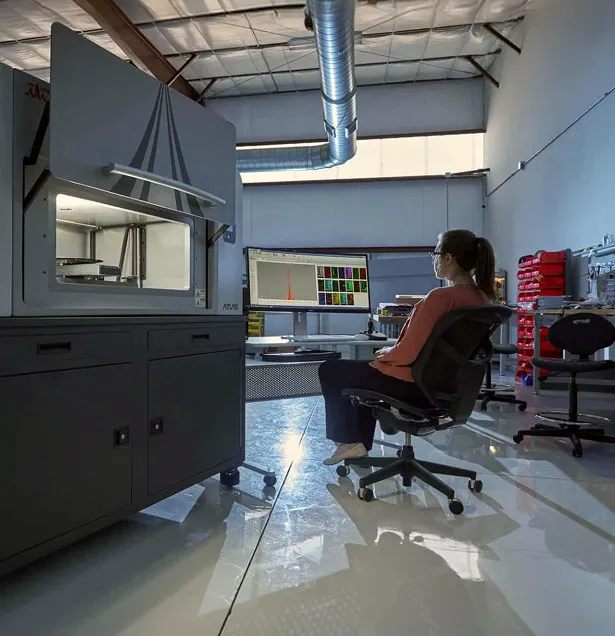
Atlas Apex is designed to map comparatively large areas while retaining full spectral data at every pixel. This allows researchers to identify zoning, inclusions, interfaces, particles, alteration fronts, and chemically unusual regions before performing destructive analysis.
A Complementary Workflow
MicroXRF and LA-ICP-MS can be highly complementary:
- Map the intact specimen using microXRF.
- Identify chemically distinct regions and trace-element enrichments.
- Select a limited number of high-value targets.
- Use LA-ICP-MS for isotopic, lithium, geochronological, or ultra-trace measurements.
- Correlate the targeted results with the complete microXRF map.
This approach preserves spatial context while reducing unnecessary laser ablation.
Why Atlas Apex for Elemental Mapping?
Atlas Apex provides:
- X-ray spot sizes down to approximately 5 µm
- Automated large-area elemental mapping
- Full-spectrum hyperspectral data at every pixel
- Configurations supporting multiple silicon drift detectors
- Air, helium, and vacuum analytical environments
- Quantitative spot analysis and elemental mapping
- Multiple excitation conditions
- Optical imaging and automated return to selected regions