Table of contents
High-Resolution, Non-Destructive Elemental Mapping for Aerospace Materials Verification
Aerospace components are increasingly built from advanced alloys, coatings, additive-manufactured materials, and other engineered systems designed to perform under extreme mechanical and thermal conditions.
For engineers and materials scientists, confirming that these materials have the intended chemistry is only part of the challenge. They also need to understand where elements occur, whether composition remains uniform across a component, and whether localized defects, inclusions, contamination, segregation, or coating variations are present.
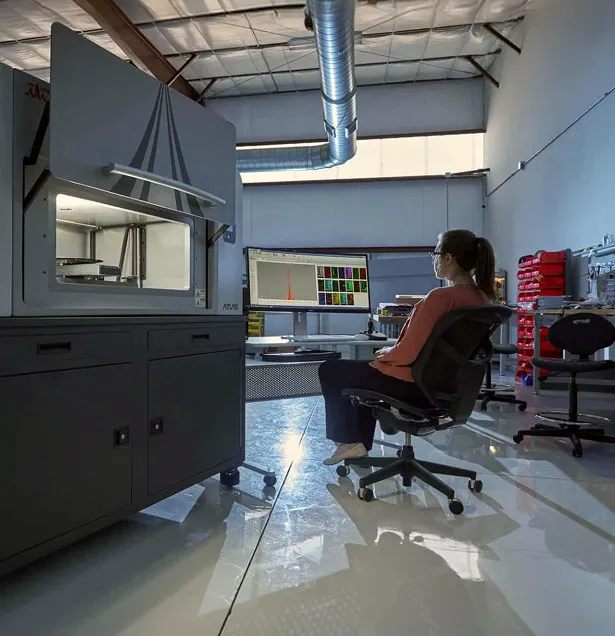
The Atlas Apex microXRF provides a non-destructive approach for examining these questions through spatially resolved elemental analysis. By combining focused X-ray excitation with elemental mapping, the system can help aerospace laboratories investigate material chemistry from larger component areas down to micron-scale features.
The Challenge
Increasing Material Complexity Creates New Verification Demands
Modern aerospace materials are becoming more sophisticated.
Titanium alloys, nickel-based superalloys, thermal barrier coatings, ceramic-containing systems, and additively manufactured components can contain chemical variations at scales that bulk analytical techniques may not reveal.
At the same time, aerospace organizations face additional pressures from increasingly complex supplier networks, new manufacturing processes, recycled feedstocks, and lightweight material systems.
These conditions create several analytical challenges:
- Confirming alloy and material chemistry
- Identifying localized elemental variation
- Evaluating coating uniformity
- Detecting inclusions and contamination
- Investigating diffusion and reaction zones
- Examining additive-manufacturing inconsistencies
- Comparing incoming materials from multiple suppliers
- Preserving high-value components during analysis
A bulk compositional measurement may indicate that the average chemistry is acceptable while overlooking a localized feature that could be important to material performance.
The analytical requirement therefore shifts from simply asking “What elements are present?” to also asking “Where are they located?”
The Analytical Approach
Moving from Bulk Chemistry to Spatially Resolved Elemental Analysis
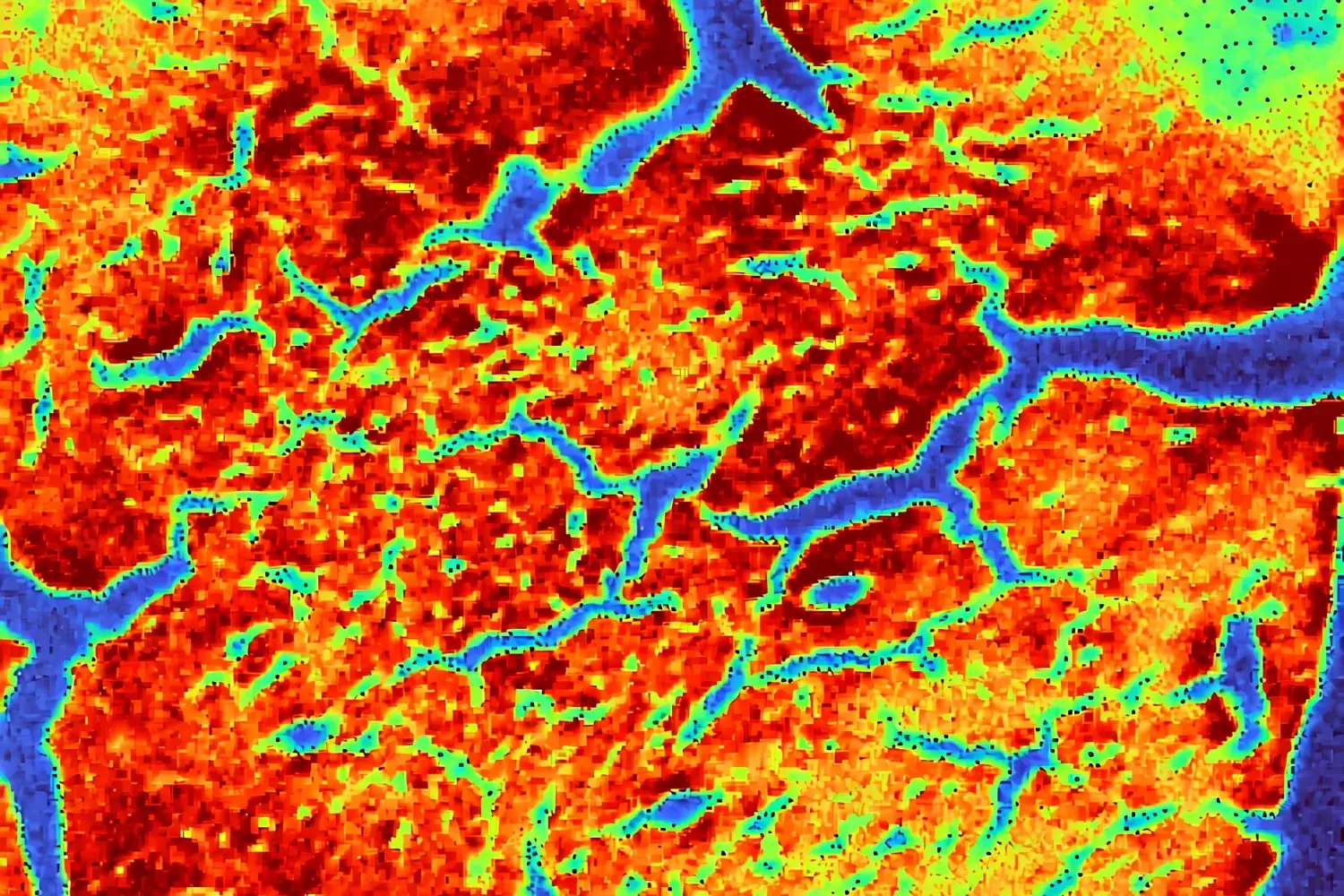
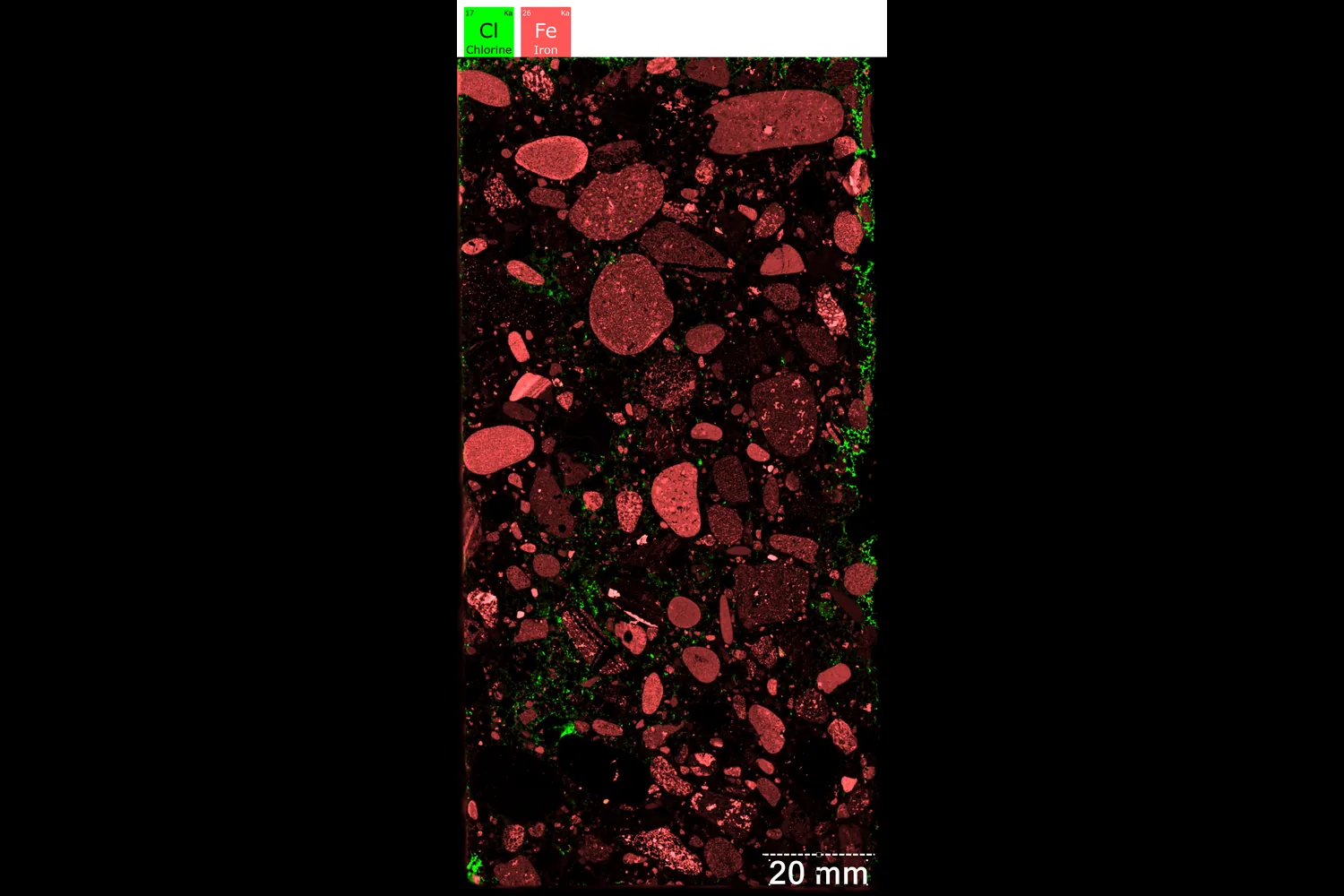
MicroXRF uses a focused X-ray beam to excite characteristic X-ray fluorescence from the sample. By moving the sample relative to the beam and collecting spectra across a defined area, the system creates elemental maps showing how individual elements are distributed.
For aerospace materials, this makes it possible to investigate chemical variation while retaining the spatial context of the component.
The Atlas Apex can support analysis of features such as:
- Alloy segregation
- Coating uniformity
- Diffusion zones
- Inclusions
- Contamination
- Localized compositional anomalies
- Additive-manufacturing features
- Interfaces between dissimilar materials
Focused X-ray spot sizes in the micron range enable investigation of relatively small features while large-area mapping allows those features to be evaluated in the context of the surrounding material.
Why Non-Destructive Analysis Matters
Many aerospace samples are expensive, difficult to reproduce, or already incorporated into finished components.
Traditional analytical workflows may require cutting, sectioning, polishing, or otherwise altering a sample before useful chemical information can be obtained.
MicroXRF can often analyze materials with minimal sample preparation and without consuming the analyzed region.
This can be particularly valuable when examining:
- Prototype components
- Finished parts
- Supplier samples
- Additively manufactured structures
- Coating systems
- Failure-analysis specimens
- Limited or irreplaceable materials
Preserving the specimen also allows the same region to remain available for complementary analytical techniques if additional investigation is required.
Application 1: Alloy and Material Verification
Aerospace alloys often contain multiple major, minor, and trace elements that contribute to mechanical performance, oxidation resistance, thermal behavior, and manufacturability.
MicroXRF can provide a rapid elemental survey while also showing whether those elements are distributed uniformly across the analyzed region.
This allows researchers and quality teams to investigate questions such as:
- Does the observed chemistry agree with the expected material?
- Are alloying elements distributed uniformly?
- Are unexpected elements present?
- Are localized inclusions or anomalous regions visible?
- Do different regions or supplier materials show compositional differences?
Rather than reducing the specimen to a single averaged measurement, elemental mapping preserves information about chemical location and distribution.
Application 2: Coating and Interface Evaluation
Coatings are critical to many aerospace components, particularly where resistance to heat, oxidation, corrosion, or wear is required.
The original aerospace application described for Atlas Apex highlights the ability of microXRF mapping to investigate coating uniformity, interfaces, and diffusion zones.
Elemental maps can help visualize:
- Coating coverage
- Localized compositional variation
- Interfaces between coating and substrate
- Diffusion across material boundaries
- Areas of contamination
- Regions that differ from the surrounding coating
This spatial information can support coating development, process optimization, comparative testing, and failure investigation.
Application 3: Additive Manufacturing
Additive manufacturing allows aerospace engineers to produce geometries and material structures that would be difficult or impossible to manufacture conventionally.
However, the process also creates new material-verification challenges.
Localized chemistry can be influenced by feedstock characteristics, process parameters, contamination, segregation, and subsequent processing.
MicroXRF provides a way to examine elemental distributions across additively manufactured material and identify regions that warrant closer investigation.
A typical workflow can include:
- Mapping a relatively large region of the component.
- Identifying compositional variations or unexpected features.
- Examining spectra from selected regions.
- Collecting higher-resolution maps where required.
- Comparing those results with processing conditions or complementary microscopy.
This survey-to-detail approach can help laboratories concentrate higher-resolution analytical resources on the areas that matter most.
Application 4: Supplier and Incoming-Material Verification
Complex aerospace supply chains make material verification increasingly important.
MicroXRF can provide a complementary tool for examining incoming alloys, coatings, and engineered materials before they progress further into development or production.
Elemental mapping can help identify:
- Unexpected compositional differences
- Localized contamination
- Material heterogeneity
- Coating inconsistencies
- Differences between supplier lots or components
The ability to rapidly screen materials without destructive preparation can help organizations decide when additional testing is warranted.
The Results
Greater Visibility Into Material Heterogeneity
The principal value of microXRF in this aerospace workflow is not simply elemental identification. It is the ability to connect chemistry with location.
Instead of relying solely on an averaged result, engineers can visualize compositional differences across the sample and identify localized features that merit further investigation.
The approach can support:
Earlier identification of material variation
Elemental mapping can reveal segregation, inclusions, contamination, coating variation, and other localized differences before they are obscured by an averaged measurement.
More targeted follow-up analysis
Large-area microXRF maps can identify regions of interest that can subsequently be examined using higher-resolution or complementary techniques.
Reduced sample preparation
Materials can often be investigated without the extensive preparation required by some microscopy-based workflows.
Preservation of valuable samples
Non-destructive analysis allows prototypes, finished components, and other valuable specimens to remain intact for further testing.
Improved materials confidence
Combining elemental composition with spatial distribution provides additional evidence for R&D, supplier verification, QA/QC, and failure-analysis decisions.
From R&D to Quality Assurance
The same analytical capability can support multiple stages of the aerospace materials lifecycle.
Research and Development
Investigate new alloys, coatings, additive-manufacturing processes, and material systems while preserving spatial chemical information.
Process Development
Compare elemental distributions as manufacturing parameters, coating processes, or material formulations are changed.
Supplier Verification
Evaluate incoming materials for expected composition and investigate localized anomalies before materials move further into production.
Quality Assurance
Use elemental mapping to support investigations of material uniformity, contamination, coatings, and compositional consistency.
Failure Analysis
Survey damaged or suspect components to identify chemically unusual regions and guide subsequent detailed analysis.
This versatility allows microXRF to serve as both a research tool and a practical materials-verification platform.
Why Atlas Apex?
The Atlas Apex microXRF combines several capabilities relevant to aerospace materials analysis:
- Micron-scale focused X-ray analysis
- Large-area elemental mapping
- Broad elemental analysis
- Multi-detector configurations
- High-count-rate acquisition
- Quantitative analysis capabilities
- Automated mapping workflows
- Non-destructive analysis with minimal sample preparation
Together, these capabilities allow laboratories to move from broad compositional surveys to targeted investigation of specific features using the same analytical platform.
The Takeaway
Aerospace materials increasingly require more than a bulk chemistry measurement.
Engineers need to understand whether composition changes across a component, where unexpected elements occur, whether coatings remain uniform, and which localized features deserve further investigation.
MicroXRF bridges the gap between bulk elemental analysis and highly localized microscopy by providing spatially resolved elemental information across comparatively large sample areas.
For aerospace R&D, supplier verification, additive manufacturing, coatings, QA/QC, and failure analysis, the Atlas Apex provides a way to see not only what elements are present, but where they are located.
Build Greater Confidence in Aerospace Materials
See how Atlas Apex microXRF can help your team investigate alloys, coatings, additive-manufactured components, and other advanced aerospace materials.