Table of contents
Large-Area Elemental Mapping Preserves the Spatial Context Needed to Evaluate Chloride Ingress Around Aggregate
When engineers remove a concrete core from a bridge, parking structure, marine structure, or other reinforced-concrete asset, the critical question is rarely whether chloride is present.
The more important questions are:
How far has chloride penetrated into the concrete?
How close is the chloride front to the reinforcing steel?
And does the measured profile accurately represent the cementitious material through which chloride is actually moving?
Concrete makes those questions difficult because it is inherently heterogeneous. Cement paste, coarse aggregate, fine aggregate, cracks, voids, interfaces, and repair materials can all occur within the same core.
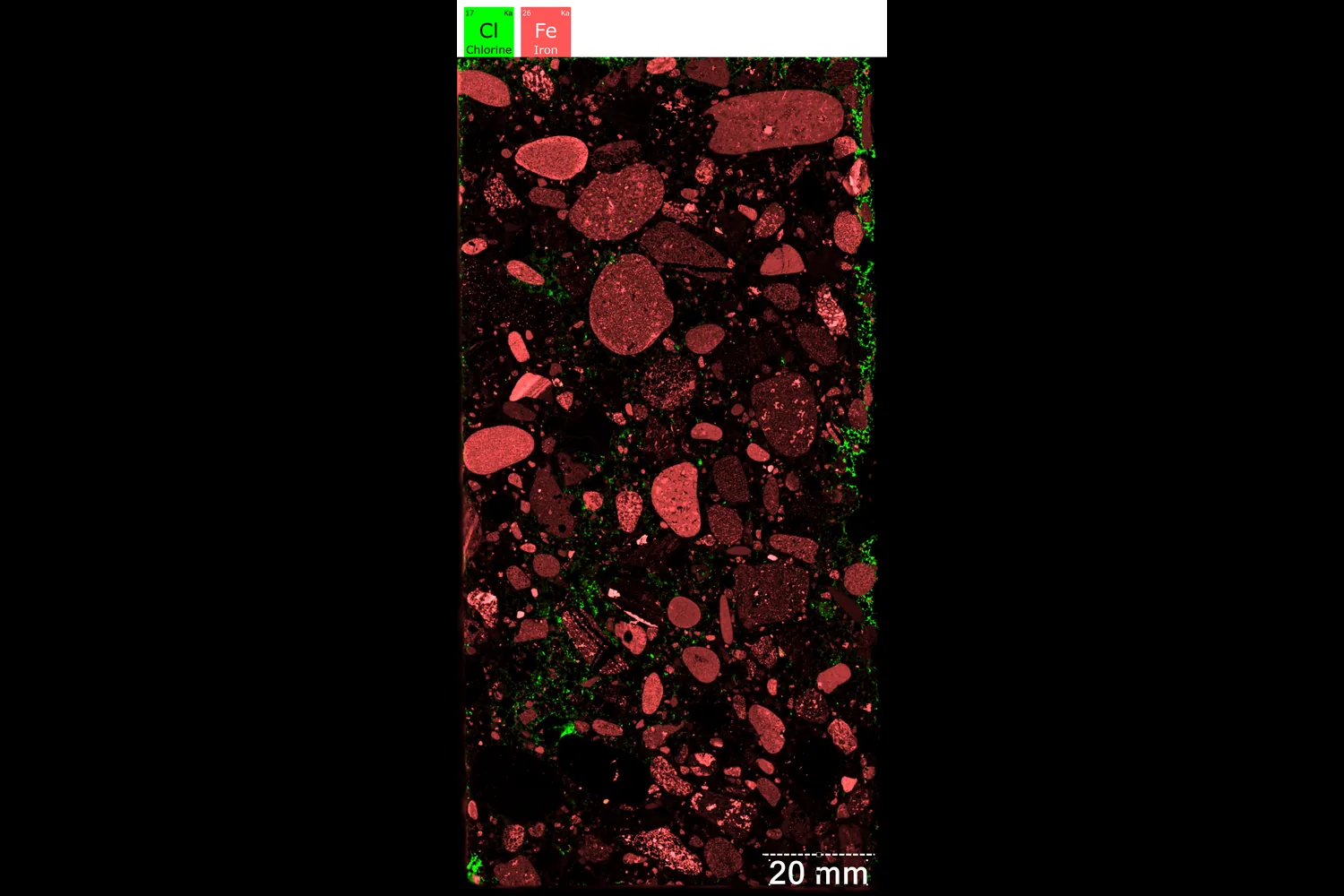
In this application study, large-area microXRF was used to map elemental chlorine across a concrete-core cross-section while simultaneously mapping elements that help differentiate the surrounding microstructure.
The result was a spatial view of chloride ingress that allowed the analyst to follow the cementitious matrix around coarse aggregate, rather than averaging aggregate and paste together into a single bulk measurement.
The Challenge
Concrete Is Not Chemically Uniform
Chloride exposure is a major durability concern for reinforced-concrete infrastructure.
Deicing salts, seawater, marine aerosols, and other chloride sources can progressively penetrate concrete from exposed surfaces.
When sufficient chloride reaches embedded reinforcing steel, it can contribute to breakdown of the passive environment protecting the steel. If moisture and oxygen conditions are favorable, corrosion can initiate and eventually contribute to cracking, delamination, and spalling.
For this reason, chloride-versus-depth profiles are commonly used as one input into concrete condition assessments and service-life evaluations.
But obtaining a representative profile is not straightforward.
Concrete is a composite material.
Any depth interval through a core may contain different proportions of:
- Cement paste
- Fine aggregate
- Coarse aggregate
- Voids
- Cracks
- Interfaces
- Repair materials
That heterogeneity matters when the analytical objective is to understand chloride transport through the cementitious matrix.
The Limitation of a Bulk Depth Profile
What Was Sampled Can Influence the Result
Traditional chloride profiling commonly removes material from a concrete core at successive depths. The collected material is pulverized and chemically analyzed.
This provides valuable concentration-versus-depth data, but the powdered material can contain both chloride-bearing cementitious matrix and aggregate.
Consider two regions at the same depth.
One passes primarily through cement paste.
The other intersects a large aggregate particle.
Even if the surrounding cementitious matrix contains similar chloride levels, the bulk composition of the two samples can be significantly different simply because one contains much more aggregate.
When those materials are homogenized, the spatial relationship between chloride and the concrete microstructure disappears.
For heterogeneous concrete, the analytical question therefore becomes:
Can chloride penetration be measured while retaining information about where the measurement came from?
The Analytical Approach
Turn the Concrete Core Into an Elemental Map
MicroXRF changes the measurement from a series of bulk depth intervals into a spatially resolved chemical image.
A focused X-ray beam is scanned across the exposed cross-section of the concrete.
At each measurement position, an XRF spectrum is collected. Combining those spectra across the scan area creates elemental maps showing where selected elements occur.
For chloride-ingress analysis, the chlorine signal can be mapped together with elements associated with the surrounding concrete microstructure.
In this case, elemental information included:
- Cl — Chlorine
- Fe — Iron
- K — Potassium
- Ca — Calcium
- Si — Silicon
The additional elemental maps provide compositional contrast that helps distinguish aggregate-rich regions from the cementitious matrix.
Instead of treating every point at a particular depth as equivalent, the analyst can evaluate chloride distribution in the context of the material through which it is moving.
The Concrete-Core Measurement
Large-Area Mapping Across a Full Cross-Section
The concrete-core cross-section was mapped across an area measuring:
77.70 × 151.5 mm
The acquisition conditions were:
- Pixel spacing: 100 µm
- Dwell time: 5 ms per pixel
- Total mapping time: approximately 2 hours
The resulting dataset produced several complementary views of the same specimen:
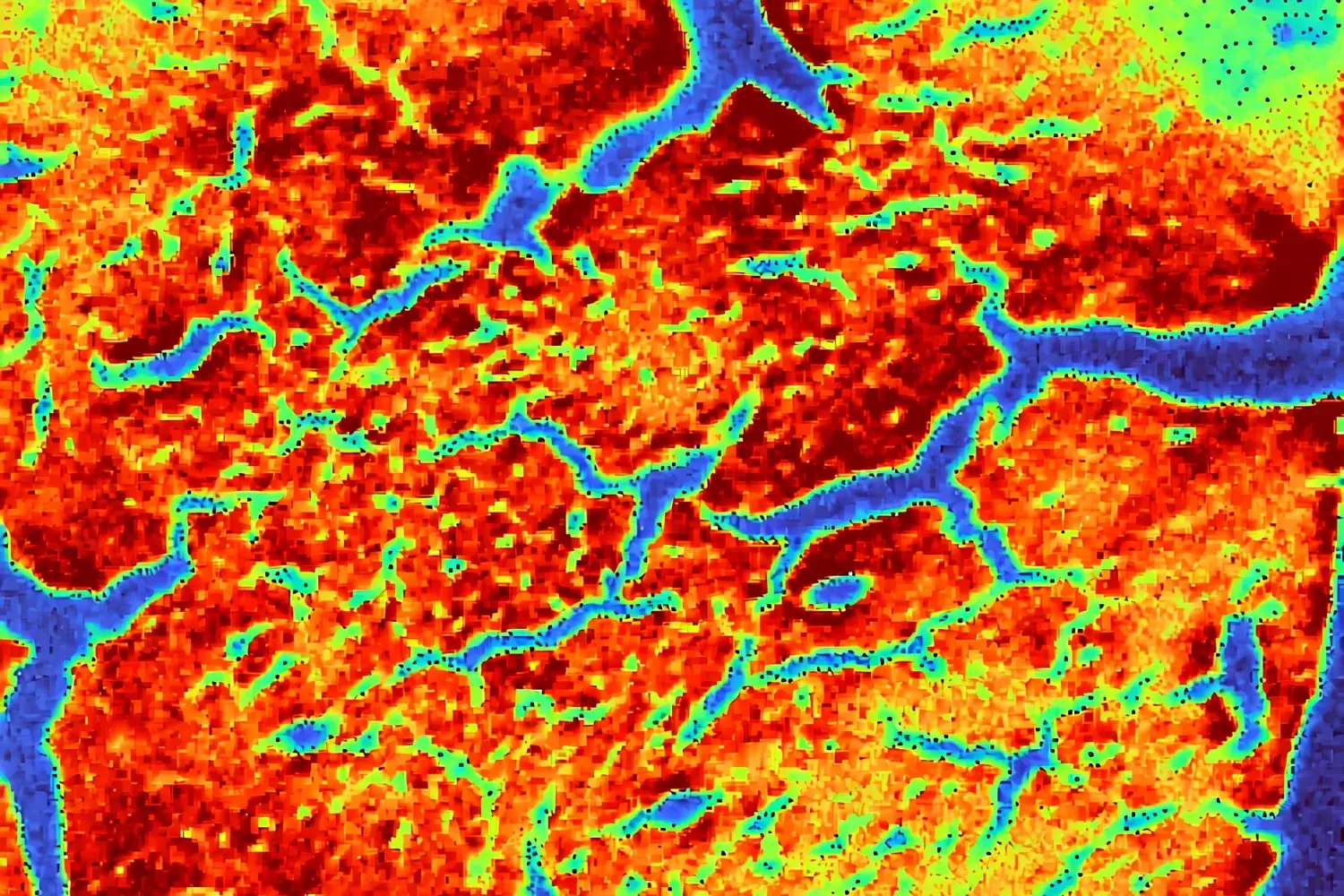
Chlorine Map
Displayed the spatial distribution of elemental chlorine throughout the mapped cross-section.
Chlorine + Optical Overlay
Placed the chlorine distribution directly over the visual structure of the concrete.
Fe–Cl Elemental Overlay
Compared the chlorine signal with iron-related compositional features.
Fe–K–Ca–Si Elemental Overlay
Provided additional chemical contrast for distinguishing different regions within the concrete microstructure.
Together, these maps transformed the concrete core from a series of hypothetical depth intervals into a chemically resolved cross-section.
The Results
1. The Chloride Front Became Visible
The chlorine map directly showed how the Cl signal changed with increasing depth from the exposed surface.
Instead of inferring a penetration front solely from homogenized samples collected at successive depths, the analyst could visualize the distribution across the specimen.
This made it possible to examine not only how deep chlorine had penetrated, but also how that penetration varied laterally across the concrete.
That distinction is important because chloride ingress does not necessarily advance as a perfectly uniform front.
2. Aggregate Could Be Distinguished From the Cementitious Matrix
One of the most important advantages of the elemental mapping workflow was the ability to recognize aggregate-rich regions.
The multi-element maps provided compositional contrast that helped differentiate portions of the specimen dominated by aggregate from those representing the cementitious matrix.
This allows an analyst to construct a chloride profile that follows the material of interest rather than forcing the measurement through every aggregate particle encountered along a straight line.
In practical terms, the analyst can:
- Identify cementitious regions
- Exclude aggregate-rich pixels where appropriate
- Evaluate aggregate separately
- Compare multiple paths through the specimen
- Investigate unusual regions individually
This preserves information that is inherently lost when the core is homogenized for bulk chemical analysis.
3. The Chloride Path Could Navigate Around Aggregate
The elemental map makes it possible to define regions of interest through the cementitious matrix.
That means the chloride profile does not need to follow an artificial straight line through alternating zones of:
paste → aggregate → paste → aggregate
Instead, the analysis can follow a representative cementitious pathway around coarse aggregate.
This is particularly valuable when the objective is to understand transport through the matrix rather than the average composition of the entire concrete composite.
4. Localized Features Remain Visible
Concrete contains more than paste and aggregate.
Chloride transport can also be influenced by:
- Cracks
- Voids
- Interfaces
- Repair boundaries
- Joints
- Localized deterioration
A bulk grinding method necessarily homogenizes these features with the surrounding material.
MicroXRF retains their spatial position.
If a crack exhibits deeper localized chloride penetration, for example, that feature can be examined independently rather than disappearing into the average value of an entire depth interval.
Published research has demonstrated that microXRF can resolve the effect of cracks greater than approximately 100 µm on localized chloride penetration.
From the Map to a Chloride Profile
Spatial Data Can Be Converted Into Depth Information
The value of microXRF is not limited to producing a visually compelling elemental map.
The map can also be used to construct a chloride-versus-depth relationship.
Instead of averaging every pixel at a particular depth, an analyst can define regions representing the cementitious matrix and extract the chlorine response from those regions.
Different analytical strategies can then be applied.
Follow a Representative Matrix Path
Trace the chloride profile through cementitious regions while avoiding major aggregate particles.
Compare Multiple Paths
Evaluate several paths through the specimen to determine how much local penetration varies.
Isolate Cracks
Compare chloride ingress adjacent to a crack with unaffected surrounding concrete.
Separate Repair Materials
Evaluate repaired regions independently from original concrete.
Investigate Interfaces
Determine whether boundaries between materials correspond with localized changes in chloride penetration.
The result is not simply more data.
It is data with location and material context attached to it.
How Does MicroXRF Compare With Conventional Profile Grinding?
Published research provides useful context for interpreting this workflow.
A study in Cement and Concrete Research compared microXRF chloride profiles with conventional profile grinding across multiple concrete specimens.
The researchers reported good agreement in average chloride concentrations at comparable depths while also demonstrating that microXRF preserved spatial information unavailable from the conventional method.
The study also reported differences in calculated apparent diffusion coefficients between the two approaches, emphasizing that microXRF and conventional grinding should not simply be assumed to produce numerically interchangeable datasets.
MicroXRF provides a different kind of measurement:
chemical concentration plus spatial location.
Why Aggregate Matters
Chloride Transport Occurs Through a Composite Material
Aggregate affects a chloride profile in more than one way.
First, aggregate occupies volume that otherwise would contain cementitious material.
If a bulk sample contains a large proportion of aggregate, the chloride-bearing paste fraction can effectively be diluted within the total analyzed mass.
Second, aggregate changes the geometry of the transport pathway.
Chloride moving through the cementitious matrix must navigate around aggregate particles.
Third, interfaces between aggregate and paste may behave differently from the surrounding bulk matrix.
A spatially resolved map allows those effects to remain visible.
That is fundamentally different from reducing the same region to one powdered sample.
Connecting Chloride Penetration With Reinforcement Depth
The Engineering Question Is Whether the Chloride Front Is Approaching the Steel
For infrastructure assessment, chloride concentration is rarely an isolated endpoint.
Engineers ultimately need to understand what the chloride profile means for the reinforced-concrete structure.
A spatially resolved chloride map can be evaluated alongside information such as:
- Concrete cover depth
- Reinforcement position
- Exposure environment
- Moisture conditions
- Cracking
- Concrete properties
- Corrosion measurements
- Repair history
- Service-life models
If the reinforcing-steel depth is known, the chloride front can be considered in relation to that location.
This provides additional context for determining whether chloride ingress is primarily near the exposed surface or has progressed toward the reinforcement.
MicroXRF does not independently determine the remaining service life of the structure.
Instead, it can provide a more spatially informed chloride dataset for use alongside the other evidence required for an engineering assessment.
An Important Analytical Distinction
MicroXRF Maps Elemental Chlorine
XRF detects elemental chlorine (Cl).
It does not independently distinguish chloride species or determine whether every detected chlorine atom exists in the same chemical form or contributes equally to reinforcement-corrosion risk.
For chloride-ingress studies, the Cl signal must therefore be interpreted within the context of:
- The exposure environment
- Concrete composition
- Calibration strategy
- Analytical standards
- Sample preparation
- Matrix effects
- The engineering objective
Quantitative chloride analysis requires appropriate calibration and validation.
The strength of microXRF is the addition of spatial chemical information to that analytical framework.
MicroXRF Complements Standardized Chloride Testing
Spatial Mapping Does Not Make Conventional Methods Obsolete
Standardized chemical methods remain important whenever required by:
- Specifications
- Regulations
- Contracts
- Established engineering procedures
- Historical comparison datasets
MicroXRF addresses a different analytical need.
Traditional grinding intentionally homogenizes material to obtain a bulk value.
MicroXRF intentionally preserves heterogeneity.
For many investigations, the most useful strategy may therefore be complementary:
Conventional Analysis
Provides standardized concentration data required by established test methods.
MicroXRF
Shows where chlorine occurs and how aggregate, cracks, interfaces, and other features influence the measured profile.
Used together, the methods can provide both standardized chemistry and spatial context.
Why This Matters for Service-Life Assessment
Better Context for a Critical Infrastructure Decision
Infrastructure owners do not remove concrete cores because they want elemental maps.
They remove them because decisions must eventually be made.
Questions may include:
- How far has chloride penetrated?
- Is chloride approaching the reinforcing steel?
- Is deterioration localized or widespread?
- Has cracking accelerated chloride ingress?
- How should a repair boundary be evaluated?
- Is additional rehabilitation required?
- What information should be incorporated into a remaining-service-life model?
A chloride profile is one piece of the evidence used to answer those questions.
For a heterogeneous material such as concrete, understanding where that chloride measurement originated can improve the technical context surrounding the result.
The Value
From a Bulk Chloride Number to a Spatially Informed Profile
The concrete-core mapping study demonstrates several practical advantages of microXRF.
Large-Area Chemical Imaging
A 77.70 × 151.5 mm cross-section was mapped in approximately two hours, demonstrating the ability to examine a substantial concrete area while preserving spatial chemistry.
Matrix-Specific Analysis
Elemental maps can help distinguish cementitious regions from coarse aggregate.
Localized Chloride Detection
Cracks, interfaces, and other preferential pathways can be investigated independently.
Multi-Element Context
Cl can be interpreted alongside Ca, Si, K, Fe, and other elements that provide information about the surrounding material.
Flexible Profile Extraction
Analysts can define multiple regions or pathways instead of accepting one fixed bulk profile.
Minimal Sample Destruction
Once the concrete cross-section is prepared, elemental imaging does not require grinding away successive layers of the mapped surface.
The Takeaway
Chloride Penetration Is a Spatial Problem
Concrete is not uniform, and chloride does not move through it as though it were.
When a concrete core is pulverized into successive depth intervals, valuable information about aggregate, cracks, interfaces, and localized transport pathways is inevitably lost.
MicroXRF preserves that information.
In this case, a 77.70 × 151.5 mm concrete-core cross-section was mapped in approximately two hours using 100 µm pixel spacing and a 5 ms dwell time per pixel.
The resulting chlorine and multi-element maps allowed the chloride front to be evaluated through the cementitious matrix while navigating around aggregate-rich regions.
For concrete durability and service-life investigations, the advantage is straightforward:
MicroXRF shows not only how much elemental chlorine is detected, but where it is located within the concrete microstructure.
That additional spatial context can provide a stronger analytical foundation for understanding chloride ingress and determining which features deserve closer investigation.
Explore MicroXRF for Concrete and Cementitious Materials
Evaluating chloride penetration, concrete cores, repair interfaces, cracks, corrosion, or another durability problem?
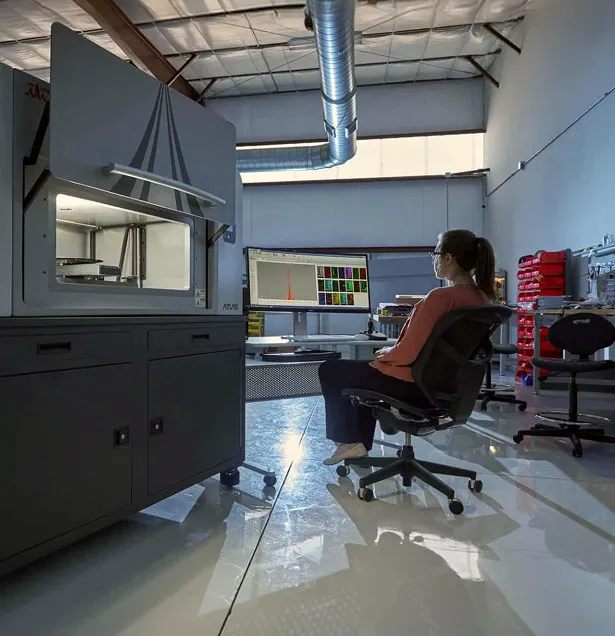
See how Atlas Apex microXRF can provide large-area elemental maps while preserving the spatial relationships within heterogeneous cementitious materials.