Table of contents
5 µm Elemental Mapping Reveals Internal Battery Structure, Interfaces, and Compositional Variation
Developing better batteries requires more than knowing which elements are present.
Researchers also need to understand where those elements occur within the cell, how they are distributed across electrodes and interfaces, and whether localized compositional differences could provide clues about manufacturing, material behavior, degradation, or failure.
In this application study, lithium-ion battery samples were prepared in both transverse and longitudinal cross-sections and analyzed using high-resolution microXRF.
Elemental maps were collected using a 5 µm X-ray spot and 5 µm pixel size, revealing spatial distributions of elements including chromium, manganese, iron, copper, and sulfur throughout the internal battery structure.
The results demonstrate how microXRF can move battery characterization beyond bulk chemistry by preserving the spatial relationships between composition and cell architecture.
The Challenge
Battery Performance Depends on Chemistry at Interfaces
Lithium-ion batteries contain multiple materials assembled into a highly engineered layered structure.
Electrodes, current collectors, electrolytes, separators, active materials, conductive additives, and other components must function together across repeated charge and discharge cycles.
The interfaces between these materials are particularly important.
Chemical migration, compositional variation, contamination, or degradation at an interface can potentially influence:
- Electrochemical performance
- Internal resistance
- Cycle life
- Material stability
- Failure behavior
- Battery safety
Traditional bulk elemental techniques can determine the average composition of a sample, but they remove much of the spatial information needed to investigate these localized features.
For battery researchers, the analytical question therefore becomes:
Where are the elements located within the cell, and how does their distribution change from one component or region to another?
The Samples
Looking Inside the Battery From Two Directions
Lithium-ion battery samples were prepared in two orientations:
Transverse Cross-Section
The battery was sectioned across its internal layered structure.
This orientation allows researchers to examine elemental distributions through neighboring battery components and interfaces.
Longitudinal Cross-Section
A second sample was prepared along the length of the battery structure.
This orientation provides a different perspective on compositional distribution and allows elemental variation to be examined over a larger internal pathway.
Analyzing both orientations provides a more complete understanding of the battery architecture than a single measurement geometry alone.
The Analytical Approach
Mapping the Battery at 5 µm Spatial Sampling
High-spatial-resolution microXRF was used to scan selected regions of the prepared battery samples.
For the demonstrated maps:
- X-ray spot size: 5 µm
- Pixel size: 5 µm
At each pixel, the system collected an XRF spectrum.
Those spectra were then reconstructed into elemental maps showing how selected elements were distributed throughout the battery cross-section.
This approach combines two forms of information:
Spectroscopy identifies the elements.
Mapping shows where they are located.
That spatial dimension is particularly valuable when investigating complex layered materials such as batteries.
The Results
1. Transverse Mapping Revealed Distinct Elemental Distributions
The transverse battery section was mapped for:
- Cr — Chromium
- Mn — Manganese
- Fe — Iron
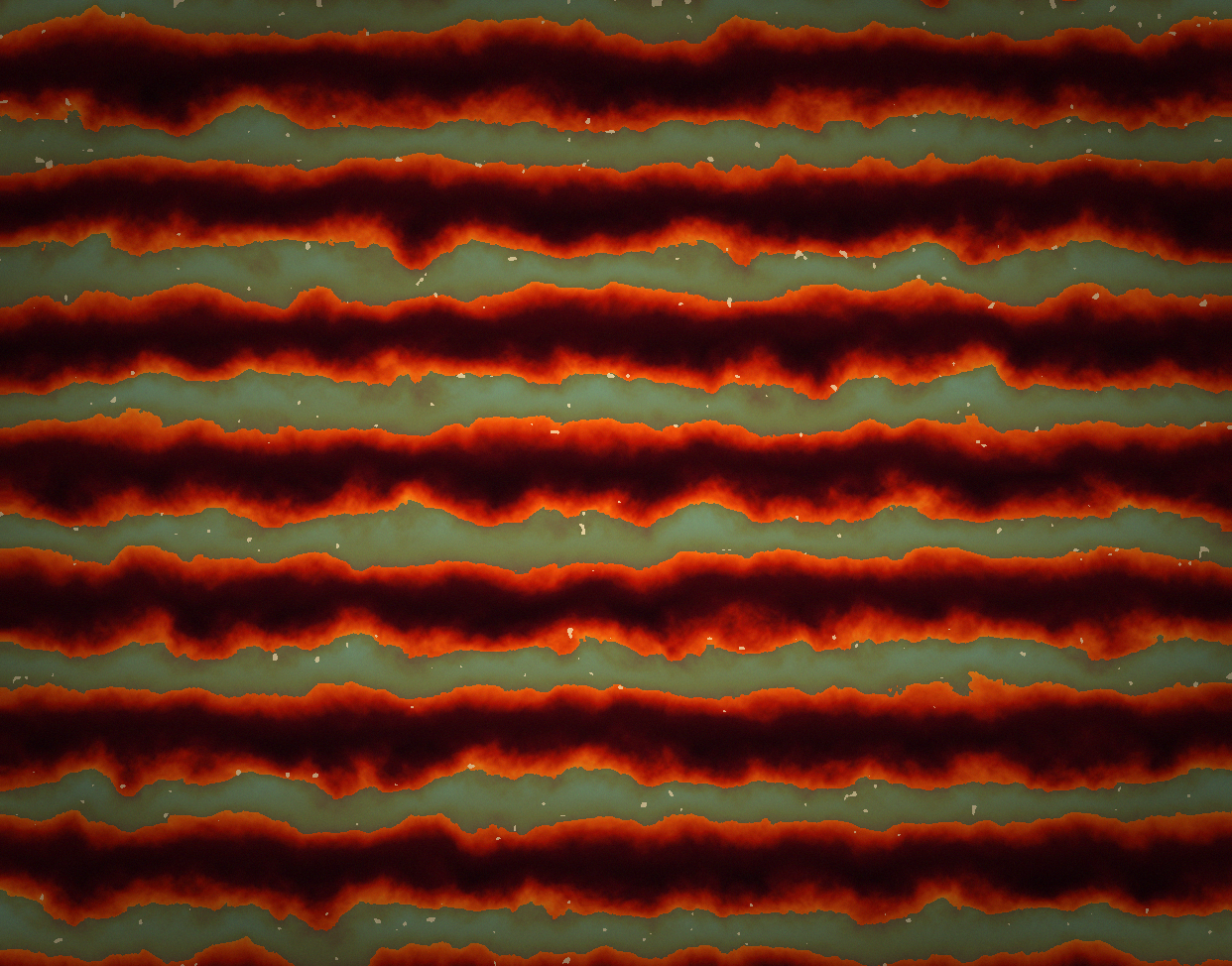
A combined elemental overlay clearly differentiated regions based on their chemical composition.
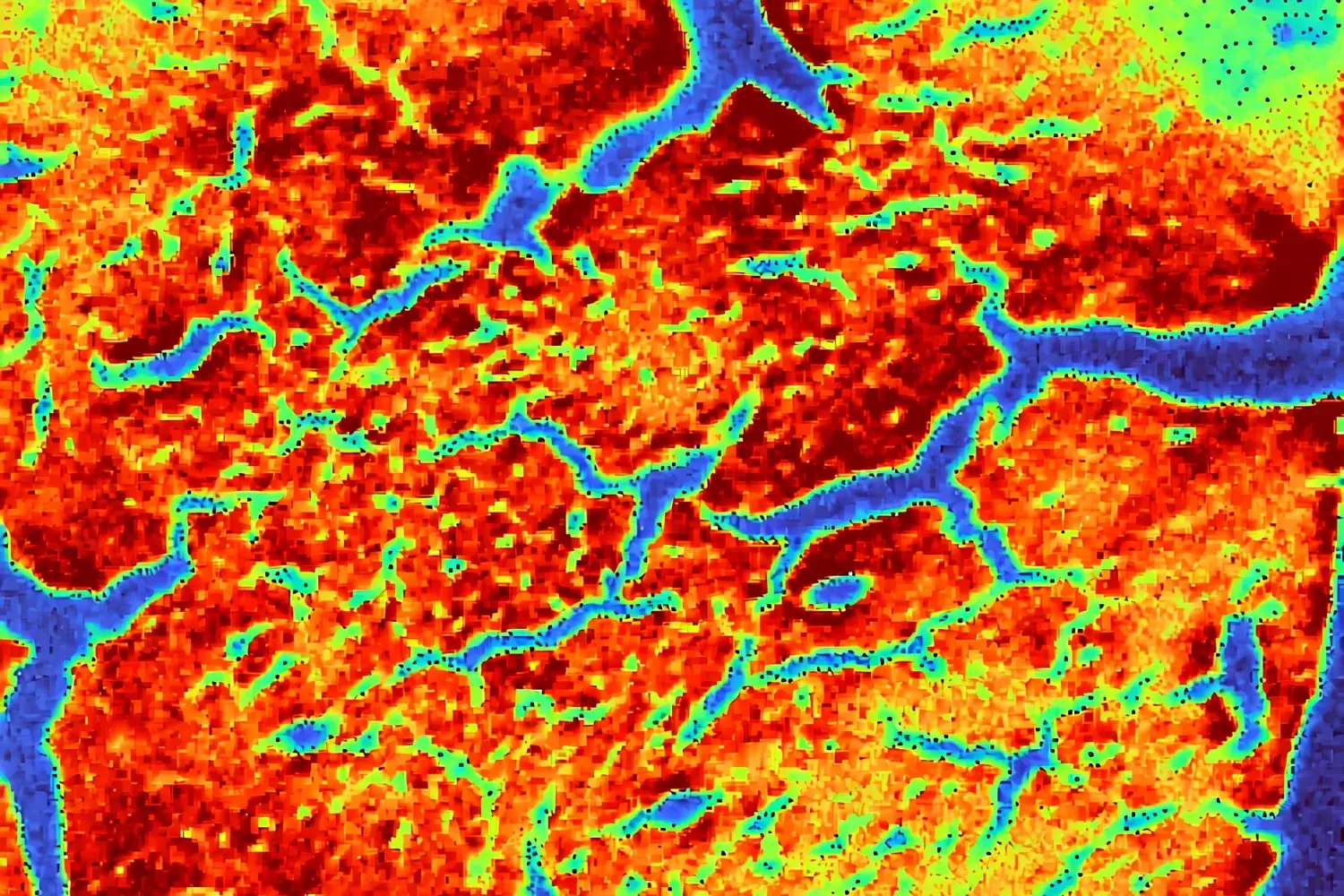
Individual intensity maps were also displayed using a thermal color scale, making relative differences in elemental signal easier to visualize.
The 5 µm spot and pixel dimensions allowed researchers to examine relatively fine structures while retaining the broader context of the battery cross-section.
2. Manganese Distribution Could Be Examined Spatially
Manganese is an important constituent of several battery material systems.
Rather than measuring only an averaged Mn concentration, the microXRF map showed where manganese-rich regions occurred within the battery structure.
This type of spatial information can help researchers evaluate:
- Material distribution
- Electrode homogeneity
- Localized compositional differences
- Interfaces between materials
- Potential redistribution following cycling or aging
The demonstrated experiment establishes the mapping capability. Comparative studies of fresh, cycled, or failed batteries could extend the same workflow to investigate how these distributions evolve.
3. Chromium and Iron Added Structural and Chemical Context
Chromium and iron maps provided additional contrast within the transverse battery sample.
Overlaying these elements with manganese made it possible to distinguish chemically different regions and relate those differences to the physical battery architecture.
This illustrates an important advantage of multi-element microXRF mapping.
The analyst does not need to evaluate one element in isolation.
Multiple elemental distributions can be compared simultaneously to understand how materials relate spatially.
4. Longitudinal Mapping Revealed Additional Elemental Relationships
The longitudinally sectioned battery was mapped for:
- Cu — Copper
- Mn — Manganese
- Cr — Chromium
A second version of the map incorporated:
- S — Sulfur
- Fe — Iron
Adding sulfur and iron provided additional chemical information and made more internal features visible.
The resulting overlays demonstrated how the elemental composition changed across the longitudinal section and showed the value of selecting different elemental combinations when interpreting complex battery structures.
Why Copper Mapping Matters
Copper is commonly associated with current-collector structures in lithium-ion battery architectures.
Mapping the Cu signal can therefore provide a useful spatial reference for interpreting surrounding battery materials.
By comparing copper with manganese, chromium, sulfur, iron, and other detectable elements, researchers can relate compositional information to different internal regions and interfaces.
This makes elemental overlays particularly useful for understanding a complex multi-material structure.
Seeing Interfaces Instead of Averaging Them Away
Spatial Context Is the Key Difference
Consider a conventional bulk measurement taken from a battery cross-section.
That measurement might contain signals from:
- Electrode material
- Current collector
- Separator-related material
- Adjacent layers
- Contaminants
The result is an average of everything within the analyzed volume.
MicroXRF takes a different approach.
By scanning the sample spatially, those materials remain distinguishable within the resulting map.
Instead of receiving only:
“These elements are present.”
Researchers can investigate:
“These elements are present here, while different elements dominate this neighboring region.”
That distinction is central to understanding interfaces and heterogeneous battery materials.
A Survey-to-Detail Battery Workflow
High-resolution mapping does not mean every battery sample must be mapped entirely at the smallest possible pixel size.
A practical workflow can use multiple spatial scales.
1. Prepare the Battery Cross-Section
Select an orientation that exposes the structures relevant to the research question.
2. Survey the Sample
Collect a larger-area elemental map to establish the major compositional regions.
3. Identify Regions of Interest
Look for:
- Interfaces
- Unexpected elemental signals
- Composition gradients
- Localized anomalies
- Potential contaminants
4. Map Selected Regions at Higher Resolution
Use a smaller beam and pixel size where finer details are important.
5. Examine Individual Spectra
Review spectra from selected pixels or regions to confirm elemental assignments.
6. Compare Samples or Conditions
Apply the same workflow to fresh, cycled, aged, damaged, or otherwise modified battery samples.
This hierarchical approach concentrates analytical time where the most useful information is likely to be found.
Beyond the Demonstrated Maps
Extending the Workflow to Battery Degradation Research
The demonstrated samples establish microXRF's ability to map internal battery materials at high spatial resolution.
The same analytical approach can be extended to comparative research focused on battery aging and degradation.
Potential studies include examining changes associated with:
- Metal dissolution
- Elemental migration
- Localized deposition
- Electrode degradation
- Contaminant accumulation
- Interface modification
To establish that a specific redistribution resulted from cycling or degradation, researchers would need appropriate controls and comparative samples.
MicroXRF provides the spatial elemental data needed to support those investigations.
Contamination Analysis
Finding Small Chemical Anomalies
Even relatively small amounts of unwanted material can be important in battery research and manufacturing.
MicroXRF can help locate elemental signals that differ from the surrounding battery material.
Once an anomalous region is identified, researchers can:
- Examine its spectrum.
- Determine which elements distinguish it.
- Map the surrounding area at higher resolution.
- Compare it with unaffected regions.
- Select it for complementary analysis if necessary.
This can make microXRF useful as a screening tool for contamination or unexpected compositional features.
Failure and Safety Investigations
The same spatial approach can also support post-event battery investigations.
Following aging, abnormal cycling, thermal events, or other failures, researchers may need to determine whether elemental distributions differ from those observed in reference cells.
MicroXRF can potentially help identify:
- Elemental redistribution
- Localized deposits
- Metal migration
- Composition changes near damaged regions
- Differences between affected and unaffected components
The original study did not involve a documented battery failure or thermal-runaway event, so these should be considered applications of the demonstrated analytical capability, rather than results of this specific experiment.
Why MicroXRF for Battery Research?
Large-Area Context With Micron-Scale Chemical Information
Battery characterization techniques frequently involve trade-offs between analytical area, spatial resolution, sample preparation, and elemental sensitivity.
MicroXRF occupies a useful position within that characterization toolkit.
It can provide:
Non-Destructive X-Ray Analysis
Once a suitable cross-section is prepared, elemental information can be collected without consuming the mapped region.
Micron-Scale Mapping
Focused X-ray excitation can investigate relatively fine features within battery materials.
Large-Area Elemental Imaging
Researchers can examine areas much larger than those typically practical for highly localized microscopic techniques.
Multi-Element Detection
Multiple elemental signals are collected from the same dataset.
Minimal Additional Preparation
MicroXRF does not require conductive coating of the analyzed surface.
Region-of-Interest Selection
Large-area maps can identify important features for subsequent higher-resolution or complementary analysis.
MicroXRF as Part of a Multi-Technique Workflow
MicroXRF does not replace every battery characterization technique.
Instead, it can help connect different analytical scales.
For example:
MicroXRF
Locate compositional variation across relatively large battery regions.
SEM-EDS
Investigate selected regions at higher spatial resolution.
XRD
Identify crystalline phases.
Electrochemical Testing
Measure cell performance.
Other Spectroscopic or Microscopic Methods
Investigate chemistry, structure, or morphology requiring different analytical information.
The elemental map provides a chemical roadmap that can help determine where those other techniques should be applied.
The Value
From Battery Composition to Battery Architecture
The demonstrated lithium-ion battery analysis highlights several advantages of high-resolution microXRF.
5 µm Spatial Sampling
Elemental maps were collected using a 5 µm X-ray spot and 5 µm pixel size.
Multiple Cross-Section Orientations
Transverse and longitudinal samples provided complementary views of internal battery structure.
Multi-Element Mapping
Cr, Mn, Fe, Cu, and S were spatially resolved within the demonstrated samples.
Elemental Overlays
Combining multiple maps made chemically different regions easier to recognize.
Preserved Spatial Context
Elemental information remained connected to the physical battery architecture instead of being reduced to an average composition.
Together, these capabilities allow researchers to examine battery materials not simply as chemical formulations, but as spatially complex engineered systems.
The Takeaway
Battery Chemistry Is Spatial
Knowing which elements are present in a battery is important.
Knowing where they are located can provide an entirely different level of information.
In this study, lithium-ion battery samples were prepared in transverse and longitudinal orientations and examined using high-resolution microXRF.
Maps acquired with a 5 µm spot and 5 µm pixel size revealed spatial distributions of chromium, manganese, iron, copper, and sulfur across internal battery structures.
The resulting elemental overlays preserved the relationship between chemistry and physical structure, enabling researchers to examine interfaces, material distributions, and localized compositional differences that would be obscured by bulk elemental analysis.
For battery R&D, process development, comparative aging studies, contamination investigations, and failure analysis, that spatial information provides a valuable starting point for understanding how complex battery materials are assembled and how they change.
Explore High-Resolution MicroXRF for Battery Materials
Need to investigate electrodes, interfaces, elemental migration, contaminants, or internal battery structures?
See how Atlas Apex microXRF can add spatially resolved elemental information to your battery research.