Table of contents
Bringing High-Resolution Operando Battery Analysis from the Synchrotron to the Laboratory
Understanding what happens inside a lithium-ion battery while it is actively charging and discharging is critical to improving power capability, cycle life, fast-charging performance, and long-term durability.
Yet some of the most important electrochemical processes occur inside porous electrodes and buried interfaces that are difficult to study without disrupting the cell.
Researchers from the Université du Québec à Montréal, McGill University, and IXRF Systems demonstrated that high-spatial-resolution benchtop microXRF can monitor electrolyte salt concentration gradients inside a working lithium-ion battery during charge and discharge.
Using a focused 5 µm X-ray beam and a specially designed operando cell, the researchers tracked evolving electrolyte concentration profiles at multiple current densities. The study showed that laboratory microXRF can provide spatial information comparable to previous synchrotron-based experiments while enabling longer-duration measurements with reduced risk of beam-induced damage.
The Challenge
Seeing Electrolyte Concentration Gradients Inside a Working Battery
During battery operation, lithium ions move through the electrolyte between the electrodes.
At higher charge and discharge rates, this transport can produce electrolyte salt concentration gradients across the cell. Instead of remaining uniformly distributed, the electrolyte becomes depleted in some regions and concentrated in others.
These gradients can contribute to:
- Reduced power capability
- Increased polarization
- Accelerated degradation
- Limitations during fast charging
- Reduced battery lifetime
Understanding when and where these gradients develop is therefore important for designing batteries capable of operating at increasingly demanding charge and discharge rates.
The challenge is measuring those changes inside the battery while the electrochemical process is actually occurring.
Traditional post-mortem analysis can show what a battery looks like after cycling, but it cannot fully reconstruct how chemical distributions evolved during operation.
Why Existing Methods Are Challenging
Several analytical techniques can provide valuable information about battery chemistry, but operando electrolyte measurements present particular difficulties.
Methods such as Raman spectroscopy and nuclear magnetic resonance can provide important chemical information, but probing through porous electrode structures can be challenging.
Synchrotron X-ray fluorescence provides the penetration and spatial resolution required for these measurements, but synchrotron experiments introduce practical limitations:
- Beam time is highly competitive.
- Experiments require specialized facilities.
- Samples and equipment may need to be transported.
- Experimental schedules are constrained by facility availability.
- High photon flux can create concerns about beam-induced changes during extended measurements.
For laboratories trying to iterate quickly on battery materials, cell architectures, or charging conditions, these barriers can significantly limit the number of experiments that can be performed.
The research team therefore investigated whether a laboratory microXRF system could provide the spatially resolved operando information required to study electrolyte transport.
The Approach
A Battery Designed for Operando MicroXRF
The researchers used a custom-modified Swagelok-type electrochemical cell designed to allow X-rays to interrogate the active battery while it was being cycled.
The cell was positioned inside the microXRF instrument with electrical connections maintained for simultaneous electrochemical cycling.
This configuration allowed the researchers to collect spatially resolved fluorescence data without disassembling the battery or interrupting its operation.
The experiment combined:
- A high-spatial-resolution microXRF system
- A focused 5 µm X-ray beam
- Dual X-ray detectors
- A custom operando battery cell
- Simultaneous electrochemical cycling
- Repeated spatial measurements at different states of charge and rest
The result was a direct view of how electrolyte-related elemental signals changed across the cell during operation.
Using an XRF-Detectable Proxy to Track Electrolyte Behavior
Direct XRF measurement of lithium is inherently difficult.
To overcome this limitation, the experiment used an arsenic signal as a proxy for electrolyte salt distribution.
By measuring the spatial distribution of the arsenic-containing electrolyte species, the researchers could follow changes associated with lithium-ion transport and electrolyte concentration across the cell.
This transformed an otherwise difficult lithium-transport measurement into one accessible to X-ray fluorescence.
The microXRF system repeatedly scanned the battery to produce spatial concentration profiles during different stages of cycling.
The Results
1. Electrolyte Gradients Were Observed During Battery Operation
The operando measurements revealed changing electrolyte concentration profiles as the battery charged and discharged.
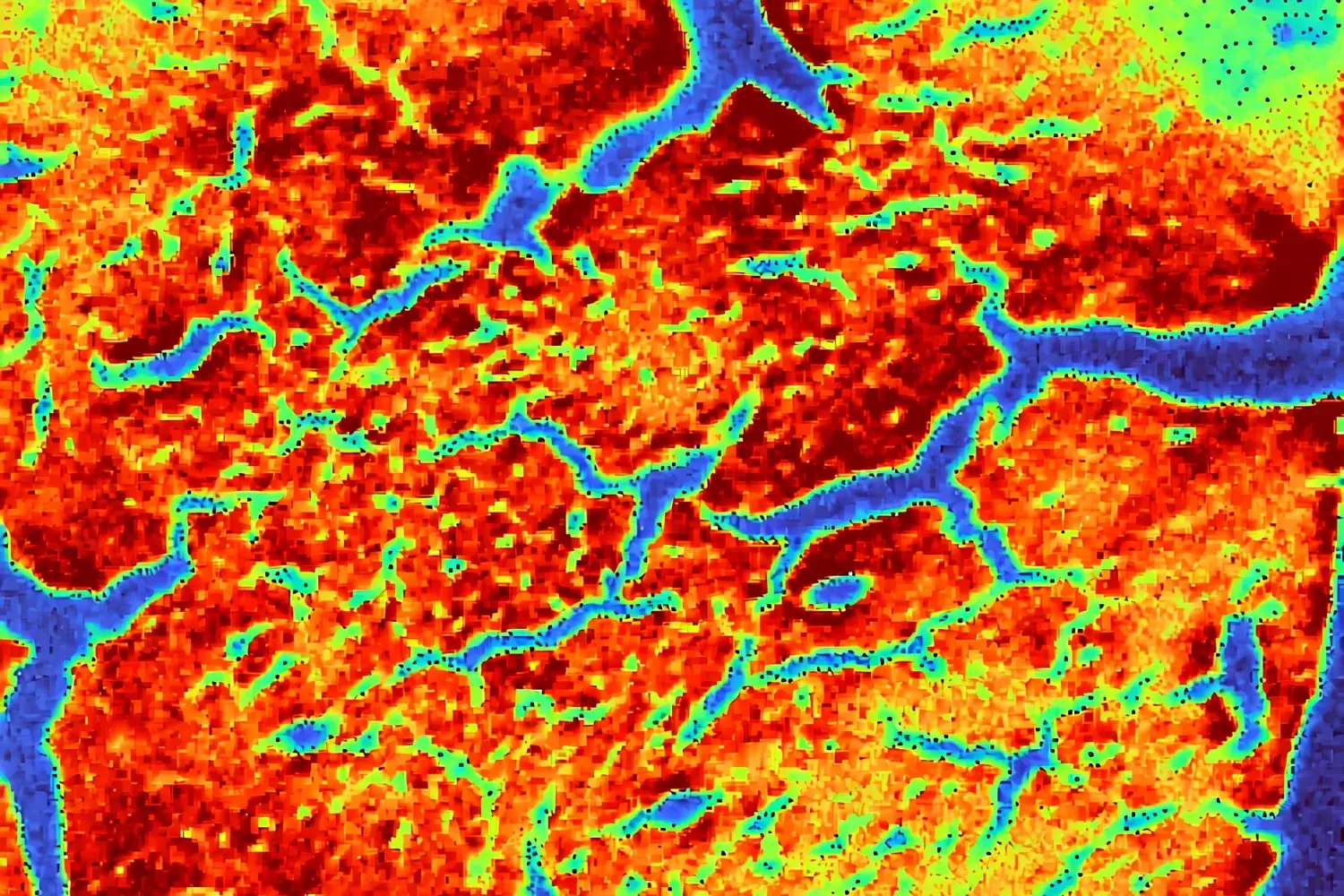
Heatmaps captured the evolution of these gradients at different states of charge and during subsequent rest periods.
Rather than providing only a measurement before and after cycling, the experiment showed how the concentration profile evolved with time and electrochemical state.
This provides a much more direct view of ion-transport limitations inside the cell.
2. A 5 µm Beam Provided High Spatial Resolution
The benchtop microXRF system used a 5 µm focused X-ray beam.
According to the study, the resulting spatial resolution was comparable to that used in earlier synchrotron experiments investigating similar electrolyte concentration phenomena.
This is significant because it demonstrates that high-resolution operando XRF measurements do not necessarily require access to a national synchrotron facility.
3. Long-Duration Measurements Became Practical
A laboratory X-ray source produces considerably lower photon flux than a synchrotron beam.
Although extremely high flux can be advantageous for rapid measurements, battery materials can also be sensitive to prolonged X-ray exposure.
The lower photon flux of the laboratory system reduced the potential for beam-induced effects and enabled extended measurements across battery cycling conditions.
For operando research, the ability to repeatedly observe the same system over time can be as important as maximizing instantaneous measurement speed.
4. The Results Were Consistent With Previous Synchrotron Studies
The spatial behavior and data quality observed using the benchtop system were consistent with earlier synchrotron-based investigations referenced by the study.
This provides an important validation of laboratory microXRF as an operando battery-research tool.
It does not eliminate the need for synchrotron facilities. Instead, it creates a more accessible analytical tier that laboratories can use for routine experimentation, method development, screening, and long-duration studies.
Why the Results Matter
From Scarce Beam Time to In-House Experimentation
Synchrotrons remain indispensable for many advanced materials-science experiments.
But not every experiment needs to begin at a synchrotron.
Bringing high-spatial-resolution operando XRF into the laboratory changes how battery researchers can structure their work.
Instead of designing a small number of experiments around limited beam-time allocations, researchers can perform repeated measurements in their own laboratory.
That enables:
- More experimental iterations
- Longer cycling studies
- Faster comparison of materials
- Optimization before synchrotron experiments
- Investigation of multiple charge rates
- Repeated measurements of evolving interfaces
- Rapid testing of new cell configurations
Synchrotron experiments can then be reserved for questions that genuinely require the specialized capabilities of those facilities.
Beyond Electrolyte Concentration
The demonstrated workflow has implications beyond the electrolyte-gradient experiment itself.
The ability to perform spatially resolved XRF measurements while a battery is operating could support investigations into several important battery phenomena.
Lithium Redistribution
Appropriate elemental proxies can help researchers investigate changes associated with lithium transport and redistribution during cycling.
Transition Metal Dissolution and Migration
Elements such as nickel, manganese, cobalt, iron, or other transition metals can migrate from electrode materials during degradation.
MicroXRF can potentially map where those elements accumulate within the cell.
Electrode and Electrolyte Interfaces
Changes occurring at interfaces often determine long-term battery performance.
Spatial elemental analysis can help researchers investigate where reaction products or compositional changes develop.
Binder and Conductive Additive Distribution
Elemental markers associated with binders, additives, or other cell components can be mapped to evaluate material distribution and changes during processing or cycling.
Post-Mortem Failure Analysis
The same instrument used for operando experiments can also examine cells or components after cycling, allowing researchers to correlate observed degradation with the processes monitored during operation.
A Survey-to-Mechanism Research Workflow
One of the broader advantages of laboratory microXRF is the ability to integrate operando analysis into a repeatable battery-development workflow.
A research program could use microXRF to:
1. Establish the Baseline
Map the cell or material before cycling to establish its initial elemental distribution.
2. Monitor Operation
Collect repeated measurements during charge and discharge to observe evolving elemental or electrolyte gradients.
3. Compare Operating Conditions
Evaluate how changes in current density, state of charge, temperature, materials, or cell architecture affect those distributions.
4. Identify Critical Regions
Locate areas where unusual concentration gradients, migration, or elemental accumulation occur.
5. Perform Targeted Follow-Up Analysis
Investigate those regions with complementary analytical techniques when additional structural, chemical, or microscopic information is required.
This approach allows microXRF to serve as both a discovery tool and a bridge to more specialized characterization.
The Impact
Making Advanced Battery Diagnostics More Accessible
The importance of this study extends beyond one electrolyte measurement.
It demonstrates that sophisticated operando chemical imaging can move from specialized national facilities into individual university, industrial, and battery-development laboratories.
That accessibility can change the pace of battery research.
Researchers gain the ability to:
- Run experiments when needed rather than waiting for beam time
- Modify experimental conditions quickly
- Perform longer-duration measurements
- Repeat experiments to establish reproducibility
- Screen materials before more specialized characterization
- Investigate multiple electrochemical conditions
- Develop new operando experimental designs
For organizations developing faster-charging, longer-lasting, and higher-energy-density batteries, that increased experimental freedom can translate directly into a faster research cycle.
MicroXRF and Synchrotron XRF Are Complementary
The significance of benchtop microXRF is not that it replaces synchrotron science.
Synchrotron facilities offer capabilities that laboratory sources cannot reproduce and will remain essential for many frontier experiments.
Instead, laboratory microXRF creates a complementary workflow.
Researchers can conduct routine investigations, long-duration experiments, screening studies, and method development in-house. The most promising or demanding questions can then progress to synchrotron facilities with the experiment already better understood.
This can make both laboratory and synchrotron research more efficient.
The Takeaway
Seeing Battery Chemistry While It Happens
Battery performance is determined by dynamic chemical processes that cannot always be understood from measurements made before or after cycling.
The collaboration between Université du Québec à Montréal, McGill University, and IXRF Systems demonstrated that high-resolution laboratory microXRF can measure electrolyte salt concentration gradients while a lithium-ion battery is operating.
Using a 5 µm focused beam and an operando electrochemical cell, researchers captured evolving spatial gradients during charge and discharge with results consistent with previous synchrotron-based work.
The study demonstrates a new role for benchtop microXRF in battery research: providing laboratories with direct access to spatially resolved operando chemical measurements that can be repeated, extended, and integrated into everyday research.
For next-generation battery development, the ability to see where chemistry changes, when it changes, and how those changes relate to operating conditions can provide insight that conventional endpoint measurements cannot.
About the Study
Research: Measuring Electrolyte Salt Concentration Gradients in Lithium-Ion Batteries Using Benchtop μ-XRF
Researchers: Bastian Krueger, Brittany Pelletier-Villeneuve, Jonathan Adsetts, Marie-Claude Ricard, Ben Ruchte, Steen B. Schougaard, et al.
Organizations: Université du Québec à Montréal, NanoQAM Center; McGill University, Department of Chemistry; IXRF Systems, Austin, Texas
Published: ACS Applied Electrochemistry, 2025
DOI: 10.1021/acselectrochem.5c00055
Explore Operando Battery Analysis with MicroXRF
Interested in investigating electrolyte transport, transition-metal migration, electrode interfaces, or other spatial chemical changes in battery materials?